
Language
Views: 224 Author: 7DaysVape Publish Time: 2026-10-28 Origin: Site


Content Menu
● How This Guide Evaluates Evidence
>> A research-based guide, not a hands-on product review
>> Why this is not a "best online stores" ranking
● What Does "Nicotine Alternatives" Actually Mean?
>> 1. Alternatives to smoking that still contain nicotine
>> 2. Smoking-cessation medicines other than NRT
>> 3. Behavioural support and quit-planning tools
>> 4. Nicotine-free vaping products
● A Practical Comparison of the Main Categories
>> Why prices and warranties are not included
● What Australian Readers Need to Know About Vaping Rules
>> Participating pharmacies are the lawful sales channel
>> Some adults may access therapeutic vapes without a prescription
>> A prescription does not authorise overseas personal purchases
● Product Standards: What Changed and What They Mean
>> Stronger requirements took effect in July 2025
>> A notified product is not a TGA-approved medicine
>> Technical compliance is not a promise of harmlessness
● How to Read Product Claims Without Being Misled
>> Separate the claim from the evidence
>> Do not let an unrelated specification answer a health question
>> Use community stories for context, not proof
● An Overlooked Check: Read the Date Before the Advice
● What Population Trends Can—and Cannot—Tell You
● A More Useful Decision Framework Than a Store Ranking
>> Start with the change you want to make
>> Discuss evidence-based support before device features
● Conclusion: Understand the Category Before Comparing the Claims
>> Ask about cost in the context of a plan
>> 1. Are nicotine alternatives always nicotine-free?
>> 2. Can Australian consumers order vapes from overseas if they have a prescription?
>> 3. Are nicotine-free vapes exempt from pharmacy-only sales rules?
>> 4. Does appearing on the TGA notified vape list mean a product is approved?
>> 5. Where should someone start if they want to stop smoking or vaping?
● Official Information and Further Reading
Searching for "nicotine alternatives" can feel like walking into a shop where every shelf answers a different question. Some products contain nicotine but replace cigarettes. Others contain no nicotine but imitate part of the smoking routine. A third group consists of medicines and support services intended to help people stop smoking or manage dependence.
Those differences matter more than a product's appearance, popularity, or price.
For Australian readers, there is another essential distinction: what appears on an overseas website is not necessarily something consumers can lawfully order. The Therapeutic Goods Administration (TGA) states that vapes cannot be purchased from overseas retailers or websites for personal use, even with a prescription. Therapeutic vapes are available only through participating pharmacies where clinically appropriate and subject to applicable requirements. [tga.gov]
This guide explains the categories behind the search term, how to evaluate product claims, and why a regulatory listing is not the same as approval. It does not rank nicotine retailers or recommend vaping products.

This article draws on Australian regulatory guidance, government cessation information, and population research. We have not conducted product unboxings, battery tests, laboratory analysis, customer-service audits, or long-term use trials.
That means there are no invented "tested for 30 days" claims, unsupported star ratings, or assumptions that an attractive website proves reliable service.
Instead, the guide evaluates information using five questions:
1. Category: What is the product or service actually intended to do?
2. Evidence: Which claims have identifiable supporting documentation?
3. Regulatory status: What requirements apply to access and supply?
4. Transparency: Does the information distinguish limitations from benefits?
5. Relevance: Does the claim address the reader's goal, or merely sound impressive?
These questions are particularly important for therapeutic vaping products. The TGA explains that such products are unapproved goods and that compliance with applicable standards does not guarantee their safety, quality, efficacy, or performance. [tga.gov]
A store comparison cannot establish whether a product is clinically appropriate or lawfully accessible in a reader's location.
For Australians, an overseas retailer's willingness to accept payment does not change the TGA's prohibition on personal purchases of vapes from overseas websites. That restriction applies even when a consumer has a prescription. [tga.gov]
A useful consumer guide therefore needs to establish the access rules before discussing availability.
The phrase covers several different goals. Treating them as interchangeable can lead to the wrong expectations.
Nicotine replacement therapy, usually shortened to NRT, is intended to reduce cravings and withdrawal symptoms when someone stops smoking or vaping.
Australian government guidance lists several forms, including patches, gum, oral sprays, inhalers, and lozenges or tablets. These products still contain nicotine: "replacement" does not mean "nicotine-free." [health.gov]
The relevant distinction is between replacing smoking and eliminating nicotine altogether.
Not every cessation medicine is a nicotine replacement product. Australian government guidance also discusses prescription options such as varenicline and bupropion, which act differently from NRT. Suitability is a matter to discuss with a healthcare professional rather than decide from an online popularity ranking. [health.gov]
This category should not be collapsed into ordinary consumer accessories or vaping products.
Some alternatives are services rather than products.
Counselling, trigger tracking, personalised quit plans, and digital support tools focus on the circumstances that prompt smoking or vaping. Australian government guidance includes support from health professionals, Quitline, My QuitBuddy, and QuitCoach among available approaches. [health.gov]
For someone who repeatedly returns to smoking during stressful workdays, understanding that pattern may be more relevant than comparing device specifications.
"Nicotine-free" describes a claimed nicotine content. It does not establish that inhaling the aerosol is harmless or that the product can be sold through ordinary retail channels.
The Australian Institute of Health and Welfare (AIHW) notes that vaping aerosol can contain hazardous chemicals and that products labelled "nicotine-free" may nevertheless contain nicotine. Separately, the TGA states that non-pharmacy retailers cannot sell vapes regardless of whether they contain nicotine. [tga.gov]
The label therefore answers only one narrow question—and may itself require verification.
The table below compares categories, not individual brands. It deliberately avoids purchase scores: a universal rating would hide differences in intended purpose, clinical suitability, and regulation.
| Category | Main purpose | Does it contain nicotine? | Australian access context | Main limitation to understand |
|---|---|---|---|---|
| Registered NRT | Reduce cravings and withdrawal symptoms | Yes | Available without prescription through pharmacies and some retail outlets; some products have subsidy pathways | It replaces nicotine rather than immediately eliminating it |
| Prescription cessation medicines | Support smoking cessation through mechanisms other than nicotine replacement | Not nicotine replacement | Requires discussion with an appropriate prescriber | Suitability depends on individual circumstances |
| Counselling and quit-planning support | Address triggers, routines, and quitting challenges | No | Available through services including Quitline and government-supported tools | It is a support process, not a physical substitute |
| Therapeutic vapes | Smoking cessation or management of nicotine dependence where clinically appropriate | May contain nicotine | Participating pharmacies under applicable access rules | Not first-line treatment; products remain unapproved goods |
| Products marketed as nicotine-free vapes | Provide an inhaled aerosol without claimed nicotine content | Claimed to contain none | Ordinary retailers cannot sell them in Australia | The label does not prove harmlessness, accuracy, or lawful retail availability |
The NRT and support descriptions follow Australian government cessation guidance. The vaping distinctions follow TGA consumer guidance. [tga.gov]
No verified, like-for-like price and warranty dataset was used for this article. Publishing precise ranges would create an appearance of certainty without the documentation needed to support it.
Cost also needs context. Australian government guidance notes that some NRT products are subsidised through the Pharmaceutical Benefits Scheme for eligible people, with a prescription required for that pathway. A retail shelf price alone therefore does not describe every person's actual cost. [health.gov]
The TGA states that therapeutic vapes for smoking cessation and nicotine-dependence management are available only through participating pharmacies where clinically appropriate.
Other retailers—including vape shops, tobacconists, and convenience stores—cannot lawfully sell vapes, whether they contain nicotine or not. [tga.gov]
This makes a general "best overseas vape store" article a poor fit for Australian consumer guidance.
"Pharmacy-only" and "prescription-only" are not always interchangeable.
Under the pharmacist model described by the TGA, adults aged 18 or over may be able to access therapeutic vapes containing no more than 20 mg/mL nicotine without a prescription. This requires a pharmacist's assessment and is subject to state and territory requirements. It is not automatic retail access. [tga.gov]
A prescription may be required for reasons including higher nicotine concentration, age, local legislation, or more complex medical needs. Therapeutic vapes containing more than 20 mg/mL nicotine cannot be supplied without a prescription. [tga.gov]
This is an especially important point for readers who encounter older online guidance.
The current TGA consumer page explicitly states that vapes cannot be purchased from overseas retailers or websites for personal use, even with a prescription. It also warns that suspected unlawful imports can be seized and destroyed at the border. [tga.gov]
A website's shipping calculator, delivery promise, or checkout confirmation is not evidence of a legal exemption.
The TGA introduced strengthened standards for therapeutic vaping goods from 1 July 2025. These cover ingredients, packaging, labelling, and technical requirements.
The changes include requirements relating to battery and electrical safety, risk management, design and construction, and toxicological risk assessment. Pharmacies may supply only products that meet the strengthened standards. [tga.gov]
For consumers, this means older descriptions of a product or its packaging may not accurately reflect the version eligible for current supply.
This distinction deserves careful attention.
The TGA maintains a notified vape list for products whose sponsors have notified compliance with relevant requirements. However, the agency also states that therapeutic vapes have not been evaluated and included in the Australian Register of Therapeutic Goods for smoking cessation or nicotine-dependence management. [tga.gov]
These are separate concepts:
- Notification concerns the relevant supply framework and compliance statements.
- Inclusion in the ARTG would involve a different regulatory status.
- Clinical appropriateness concerns whether a healthcare professional considers an option suitable for a particular patient.
A product appearing on a list does not settle all three questions.
Battery safety and ingredient restrictions address particular risks. They do not establish that long-term inhalation is risk-free.
The TGA explicitly cautions that even compliance with therapeutic vaping standards does not guarantee safety, quality, efficacy, or performance. [tga.gov]
That is why "meets a standard" should never be rewritten as "completely safe."
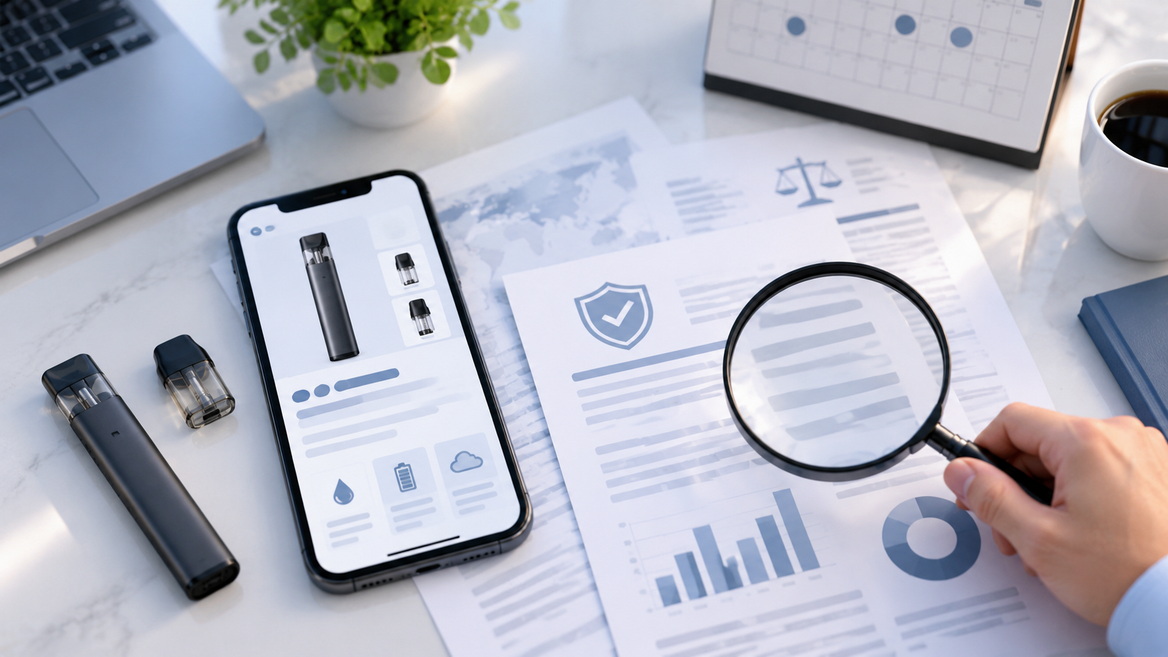
A practical reading method is to write down the exact promise before evaluating it.
For example:
| Marketing statement | What it actually establishes | What remains unanswered |
|---|---|---|
| "Nicotine-free" | A claim about nicotine content | Whether the claim is accurate; what else is inhaled |
| "Compliant with standards" | A claim about specified requirements | Which standard, which product version, and what supporting evidence exists |
| "Designed for quitting" | An intended-use statement | Whether effectiveness has been established |
| "Premium materials" | A general quality description | Which materials, which tests, and which exposure conditions |
| "Ships internationally" | A seller's stated delivery capability | Whether import and supply are lawful at the destination |
For vaping products, the first three distinctions are particularly consequential: AIHW warns that nicotine-free labelling may be inaccurate, while the TGA distinguishes compliance and lawful access from approval and clinical suitability. [tga.gov]
A long battery-life claim cannot establish cessation effectiveness. Attractive packaging cannot establish ingredient accuracy. A smooth checkout cannot establish lawful access.
The evaluation question should match the claim. The TGA's own framework keeps technical product standards, therapeutic access, and product approval distinct; consumers benefit from maintaining the same separation. [tga.gov]
A personal story may help explain what someone found difficult or convenient. It cannot determine whether another person should use a medicine or whether an overseas purchase is lawful.
For those questions, the relevant starting points are official access guidance and a qualified health professional. TGA consumer guidance specifically directs people considering therapeutic vapes to a medical practitioner, nurse practitioner, or pharmacist. [tga.gov]
One of the most useful checks is also one of the easiest to skip: determine whether a page describes today's rules or an older system.
An old article can be genuine and still be unsuitable for a current decision. Australian vaping requirements have changed, including strengthened product standards that took effect in July 2025. [tga.gov]
Use a simple three-part check:
1. Identify the page's publication or update date.
2. Establish which country and jurisdiction it addresses.
3. Compare its central claim with current official guidance.
For example, a page suggesting that an Australian prescription permits personal purchases from an overseas vape website conflicts with the TGA's current consumer guidance. [tga.gov]
The hidden trap is not always a counterfeit product. Sometimes it is authentic information that has outlived the rules it describes.
Vaping has become more common in Australia over the longer term, but that does not establish that any particular product is effective or appropriate.
AIHW reported that daily e-cigarette use increased from 0.5% in 2016 to 3.5% in 2022–2023. Over the same period, daily tobacco smoking declined from 12% to 8.3%. These figures describe population behaviour, not a controlled comparison of quitting methods. [aihw.gov]
The distinction matters because a marketing article can easily turn "more people use this category" into "this category works better." The survey figures do not establish that conclusion.
There is also an important difference between prevalence and market share:
- Prevalence describes how many people report a behaviour.
- Market share describes a business's or product's portion of a defined market.
- Neither number, by itself, establishes a product's safety or effectiveness.
This guide uses the dated AIHW figures transparently rather than presenting them as a 2026 store ranking or current commercial market-share estimate. [aihw.gov]

Australian government guidance distinguishes several quitting approaches, including stopping suddenly, gradually reducing use, NRT, prescription medicines, and behavioural support. [health.gov]
Before comparing products, write a one-sentence goal:
- "I want to stop smoking."
- "I want help with nicotine withdrawal."
- "I want to stop vaping."
- "I need support with the situations that trigger my use."
Those goals may overlap, but they are not identical. Making the goal explicit provides a clearer starting point for a conversation with a healthcare professional.
The TGA states that therapeutic vapes are not first-line treatment for smoking cessation or nicotine-dependence management. Its guidance identifies behavioural support and approved NRT among first-line approaches. [tga.gov]
This does not mean every person needs the same plan. It means the initial conversation should focus on the available treatment options, personal circumstances, and support needs—not on which device looks most appealing.
"Nicotine alternatives" is not one product category, and a retailer ranking cannot resolve questions about treatment suitability, nicotine content, or legal access.
For Australian readers, the central access rule is clear: therapeutic vapes are available through participating pharmacies where clinically appropriate, while personal purchases from overseas vape websites are prohibited—even with a prescription. [tga.gov]
If your goal is to stop smoking or vaping, start with a quit plan and a discussion with a qualified health professional. Quitline, available on 13 7848, is another source of support. That approach puts the decision on a firmer foundation than popularity scores, packaging claims, or overseas shipping promises. [health.gov]
A useful cost discussion includes more than the price of one package.
Ask a pharmacist or prescriber whether subsidies apply, what follow-up is needed, and how the proposed approach fits the intended quit plan. Australian government guidance notes that some NRT products are available at reduced cost through the PBS for eligible Australians. [health.gov]
That discussion is more informative than comparing unsupported "cost per use" claims across unrelated product categories.
No. NRT products contain nicotine and are intended to reduce cravings and withdrawal symptoms. The phrase "nicotine alternatives" is therefore too broad to establish a product's ingredients or purpose. Check the category rather than relying on the search term. [health.gov]
No. The TGA states that consumers cannot purchase vapes from overseas retailers or websites for personal use, even with a prescription. A seller's willingness to ship does not change that restriction. [tga.gov]
No. The TGA states that retailers other than participating pharmacies cannot sell vapes regardless of nicotine content. Separately, a nicotine-free label does not establish that a product is harmless or accurately labelled. [tga.gov]
No. Notification and ARTG inclusion are different. The TGA explains that therapeutic vapes remain unapproved goods and have not undergone its evaluation for inclusion in the ARTG for smoking cessation or nicotine-dependence management. [tga.gov]
Australian government guidance recommends making a quit plan and exploring available support. A doctor, pharmacist, or other appropriate health professional can discuss treatment options. Quitline also provides counselling and information on 13 7848, and government guidance identifies digital tools such as My QuitBuddy and QuitCoach. [health.gov]
- TGA consumer guidance: access pathways, personal importation restrictions, unapproved-product status, and support information. [tga.gov]
- TGA product standards update: strengthened requirements effective from 1 July 2025. [tga.gov]
- Australian Government quitting methods: NRT, behavioural support, and other cessation approaches. [health.gov]
- Australian Government quit-planning guidance: triggers, preparation, and available support. [health.gov]
- AIHW population research: electronic cigarette use in Australia in 2022–2023. [aihw.gov]
- Australian Government contact information: Quitline and other support services. [health.gov]
This website contains products intended for adults only.
Are you 18 years of age or older?
WARNING: This product contains nicotine. Nicotine is an addictive chemical.


