
Language
Views: 221 Author: 7DaysVape Publish Time: 2026-10-03 Origin: Site


Content Menu
● Hookah Bong vs Shisha Bong: Is There a Real Difference?
● Why Water-Cooled Smoke Can Feel Smoother
● Which Setup Is Less Likely to Feel Harsh?
>> Factors That Usually Increase Harshness
>> Factors That Can Make Pulls Feel Softer
● The Charcoal Issue: Why It Matters More Than Many Users Expect
● Chronic Throat Sensitivity: When "Smoother" Is the Wrong Goal
● Expert Perspective: The Sensory Trap of "Smoothness"
● Safer Comfort Strategies for Sensitive Throats
● Final Verdict: Hookah Bong vs Shisha Bong
● FAQ
>> 1. Is a hookah bong different from a shisha bong?
>> 2. Does water make hookah smoke safer for the throat?
>> 3. Why does shisha smoke sometimes feel smoother than cigarette smoke?
>> 4. Can charcoal make throat irritation worse?
>> 5. Is nicotine-free herbal shisha safe for chronic throat sensitivity?
>> 6. What symptoms mean I should stop using a hookah immediately?
>> 7. What is the best smoking setup for a chronically sensitive throat?
For people with chronic throat sensitivity, the short answer is simple: a hookah bong and a shisha bong are usually two names for the same basic waterpipe-style setup, so neither is a reliably "smooth" or throat-friendly choice. Water may make the smoke feel cooler and less harsh on the first inhale, but it does not remove the toxic chemicals, carbon monoxide, nicotine, fine particles, or irritation risk that can aggravate a sensitive throat. [cdc]
If throat discomfort is persistent, recurrent, or accompanied by hoarseness, cough, wheezing, chest tightness, shortness of breath, or pain when swallowing, the best decision is to stop inhaling smoke and seek medical advice. A smoother sensation is not the same thing as lower exposure or lower risk.

In most consumer conversations, hookah bong and shisha bong refer to a similar device: a waterpipe that draws smoke through a water base before it travels through a hose and mouthpiece.
The terminology can vary by region, retailer, and user community:
| Term | What It Commonly Means | Typical Fuel or Material | Main Consideration for Sensitive Throats |
|---|---|---|---|
| Hookah bong | A water-filtered smoking setup, often used as a broad informal label | Charcoal-heated shisha tobacco, herbal blends, or other smoking materials | Smoke may feel cooled, but irritation and toxic exposure remain |
| Shisha bong | Usually another informal name for a hookah or waterpipe used with shisha | Often flavored shisha tobacco heated by charcoal | Flavouring can mask harshness without making inhalation safer |
| Traditional hookah | A multi-part waterpipe with bowl, stem, base, hose, and mouthpiece | Shisha tobacco and charcoal | Long sessions can substantially increase total smoke exposure |
| Electronic vape device | A battery-powered aerosol device rather than a charcoal-heated waterpipe | E-liquid or prefilled pod/disposable product | Not smoke, but aerosol can still irritate the throat and is not risk-free |
The most important point is that the label on the device does not determine throat comfort nearly as much as the material being inhaled, heating method, session duration, puff intensity, and individual health condition.
A person may describe shisha bong pulls as smoother because the water cools the smoke. But cooling can reduce the immediate burning sensation while making it easier to inhale more deeply or for longer. That sensory difference can be misleading.
A hookah-style setup changes the feel of an inhale in several ways:
- The water can cool the smoke before it reaches the mouth and throat.
- A long hose allows some additional cooling before inhalation.
- Flavoured shisha may taste sweet or mild compared with unflavoured smoke.
- The large water base and bubbling sound can create an impression of filtration.
- Lower perceived harshness may encourage deeper, longer, or more frequent puffs.
This is why someone with a mildly irritated throat may initially believe a shisha bong is easier to tolerate than a dry smoking method. However, a less aggressive sensation does not mean the throat lining is protected.
The U.S. Centers for Disease Control and Prevention states that the water in a hookah does not filter smoke, and hookah smoke can still contain nicotine, tar, heavy metals, carbon monoxide, and cancer-causing chemicals. The charcoal used for heating contributes additional carbon monoxide and other harmful substances. [cdc]
That distinction matters for chronic throat sensitivity. A throat can react not only to heat, but also to:
- Fine particulate matter
- Drying effects of smoke
- Chemical irritants
- Flavouring by-products
- Carbon monoxide exposure
- Frequent coughing or forceful inhalation
- Reflux-related throat inflammation
- Underlying allergies, infection, asthma, or vocal strain
In practical terms, a cooler pull can be more comfortable in the moment while still being a poor fit for someone whose throat is already inflamed.

If the comparison is strictly between a standard hookah bong and a standard shisha bong, there is no universal winner because they are generally the same category of device.
Instead, the perceived harshness usually depends on setup quality and use behavior.
A pull may feel sharper, hotter, drier, or more irritating when there is:
- Overheated shisha or poorly managed charcoal
- Excessive charcoal placed directly over the bowl
- A dirty hose, base, stem, or mouthpiece
- Stale water or residue in the base
- A blocked airflow path that requires hard inhalation
- A dry bowl with insufficient moisture
- Very long or frequent sessions
- Deep inhalation when the throat already feels sore
- Sharing mouthpieces, which can increase exposure to infectious organisms
- Strong mint, cinnamon, citrus, menthol, or highly concentrated flavour profiles that feel "cool" but may sting sensitive tissue
Some users try to reduce the immediate harshness by using a clean device, modest heat, adequate airflow, and shorter sessions. These changes may improve comfort, but they do not make smoking safe or suitable for chronic throat irritation.
A more comfortable pull may involve:
1. Using fresh, cool water in the base.
2. Cleaning the stem, hose, base, bowl, and mouthpiece after use.
3. Avoiding excessive charcoal heat and burned-tasting shisha.
4. Taking smaller, less forceful puffs rather than deep inhalations.
5. Avoiding back-to-back sessions.
6. Stopping immediately if coughing, burning, dizziness, nausea, headache, wheezing, or chest discomfort develops.
These are comfort-management measures, not health protections.
For a chronic throat-sensitive user, the biggest overlooked difference may not be hookah bong versus shisha bong. It may be charcoal-heated smoke versus no smoke at all.
Charcoal is commonly used to heat shisha tobacco. That combustion process can produce carbon monoxide, metals, particulate matter, and other chemicals. The U.S. Food and Drug Administration warns that hookah smoke still contains high levels of toxic chemicals, and notes that hookah users can absorb more carbon monoxide than cigarette smokers because sessions are often prolonged. [fda]
The CDC reports that, during one hookah session, a user may be exposed to nearly nine times more carbon monoxide and 1.7 times more nicotine than from one cigarette. [cdc]
This does not mean every session produces identical exposure. Device size, charcoal type, bowl preparation, ventilation, tobacco quantity, puff frequency, and session length all matter. Still, the central message is clear:
> The water chamber does not neutralize the effects of charcoal combustion.
For someone who is sensitive to throat irritation, carbon monoxide is not only a throat issue. Symptoms associated with higher exposure can include headache, dizziness, weakness, nausea, chest discomfort, and confusion. Severe exposure can cause loss of consciousness or death. [cdc]
If these symptoms occur during or after hookah use, stop immediately, move to fresh air, and seek urgent medical care or local emergency guidance.
Chronic throat sensitivity can mean different things for different people. It may involve frequent scratchiness, mucus, throat clearing, dry cough, burning, voice fatigue, hoarseness, pain after inhalation, or a feeling of tightness.
Common non-smoking contributors can include:
- Seasonal or environmental allergies
- Acid reflux or laryngopharyngeal reflux
- Dry indoor air
- Post-nasal drip
- Respiratory infection
- Asthma or airway hyperresponsiveness
- Vocal overuse
- Medication side effects
- Ongoing smoke or aerosol exposure
Because the cause varies, choosing a "smoother" smoking device can delay the more useful question: Why is the throat repeatedly irritated in the first place?
The European Respiratory Society's review of waterpipe smoking links regular use with respiratory symptoms, reduced lung function, and increased risk of lung disease. It also notes the presence of nicotine, tar, polyaromatic hydrocarbons, and heavy metals in waterpipe smoke. [publications.ersnet]
For a person who already has throat symptoms, adding an inhaled irritant often makes it harder to identify triggers and recover.
Use this table as a reality check before choosing either setup.
| Situation | Best Choice | Why |
|---|---|---|
| You have an active sore throat, hoarseness, cough, or burning | Avoid hookah and shisha bong use | Inhaled smoke can worsen irritation and delay recovery |
| You experience recurring throat sensitivity | Pause use and discuss symptoms with a clinician | Persistent symptoms may have an underlying cause unrelated to the device |
| You want a smoother social experience | Consider non-inhaled alternatives | Water cooling changes feel, not the underlying smoke exposure |
| You get headaches, dizziness, nausea, or weakness during a session | Stop immediately and get fresh air | These can be warning signs of carbon monoxide exposure |
| You use tobacco-containing shisha | Avoid assuming water makes it low-risk | Water does not remove the major toxic components |
| You use "herbal" or nicotine-free shisha | Do not assume it is harmless | Combustion smoke and charcoal-related toxicants can still be present |
From a product-experience perspective, smoothness is often judged by three sensations: lower heat, less scratchiness, and a pleasant flavour. Those factors can shape purchase decisions, especially for adults who find conventional smoke too harsh.
But from a respiratory-health perspective, smoothness can be a poor safety signal.
The American Heart Association has noted that the sweetened aroma and reduced harshness of waterpipe tobacco can mask the irritant quality of the smoke, making it easier to start and continue using it. It also reports substantially higher average tar and carbon monoxide yields for a waterpipe session than for a cigarette comparison. [ahajournals]
That is why a chronic throat-sensitive consumer should not use "I can barely feel it" as the main decision standard.
A better standard is:
- Does this cause symptoms during or after use?
- Does it increase coughing, hoarseness, mucus, or throat clearing?
- Does it leave me dizzy, nauseated, short of breath, or headachy?
- Am I using it more often because it feels mild?
- Is the symptom pattern improving when I avoid inhaled products?
If the answer suggests repeated irritation, the responsible choice is to stop exposure rather than optimize the setup.
If the goal is to protect a sensitive throat, the most effective strategy is not a different waterpipe configuration. It is reducing or eliminating exposure to smoke and other inhaled irritants.
Consider these lower-risk comfort steps:
- Take a break from smoking and vaping while throat symptoms are active.
- Hydrate regularly, especially in dry indoor environments.
- Avoid smoky venues and secondhand hookah smoke.
- Use a clean, humidified environment if dry air is a trigger.
- Track food-related symptoms, especially if reflux may contribute to throat burning or hoarseness.
- Avoid sharing mouthpieces, even when the device appears clean.
- Speak with a clinician if symptoms persist for more than a few weeks, recur often, or affect breathing, swallowing, or voice quality.
For tobacco users who want to stop, evidence-based cessation support is more likely to improve long-term respiratory comfort than changing from one smoking format to another.
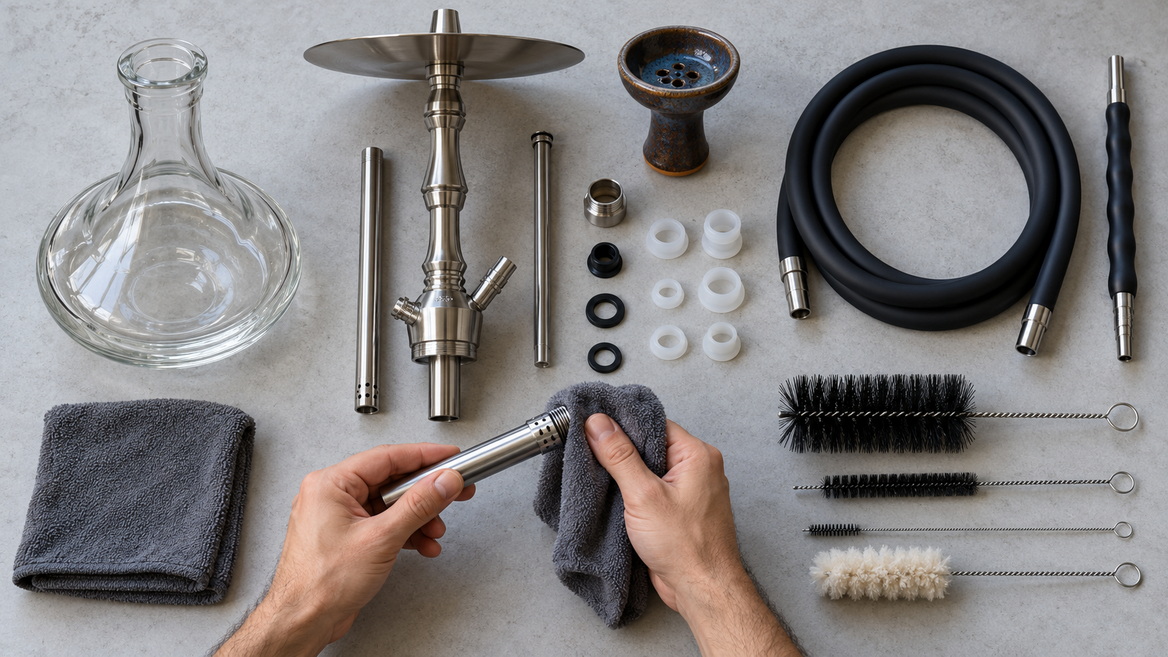
A hookah bong and a shisha bong generally do not offer meaningfully different protection for someone with chronic throat sensitivity. Both rely on water cooling that may make smoke feel smoother, but neither water filtration nor flavouring removes the harmful compounds associated with hookah smoke.
For the smoothest sensation, a well-maintained waterpipe with controlled heat may feel less harsh than a hot, dirty, poorly prepared setup.
For the best choice for throat sensitivity, avoid smoke inhalation altogether. Persistent throat symptoms deserve attention, not a more efficient way to tolerate irritation.
If you are an adult consumer comparing inhalation products, prioritize transparent product information, responsible use guidance, clean accessories, and realistic expectations. Never treat water filtration, sweet flavour, or a gentle pull as proof that a product is low-risk.
Usually, no. Both phrases commonly describe a waterpipe-style device used to draw smoke through water. The exact name may vary by location, retailer, or product design.
No. Water can cool smoke and change how it feels, but it does not remove major toxic substances from hookah smoke. The CDC specifically states that hookah water does not filter the smoke. [cdc]
Water cooling, sweetened flavouring, and lower perceived harshness can make shisha smoke feel smoother. That sensory effect does not mean lower toxic exposure. [ahajournals]
Yes. Charcoal adds combustion-related pollutants, including carbon monoxide and other toxic substances. Overheating can also create hotter, harsher smoke and a burned taste. [cdc]
No. Even without nicotine, burning material and charcoal can produce smoke and irritants. "Nicotine-free" does not mean "throat-safe" or "risk-free."
Stop if you experience severe throat burning, persistent coughing, wheezing, chest pain, shortness of breath, headache, dizziness, nausea, weakness, confusion, or faintness. Seek urgent medical attention for serious or worsening symptoms, especially symptoms that may indicate carbon monoxide exposure. [cdc]
There is no smoke-based setup that can be considered throat-friendly for chronic sensitivity. Reducing or avoiding smoke exposure is the more protective option.
1. Centers for Disease Control and Prevention. [Hookahs | Smoking and Tobacco Use]
2. U.S. Food and Drug Administration. [Hookah Tobacco (Shisha or Waterpipe Tobacco)]
3. World Health Organization, Eastern Mediterranean Regional Office. [Advisory Note on Waterpipe Tobacco Smoking: Second Edition]
4. European Respiratory Society. [Waterpipe Smoking: A Review of Pulmonary and Health Effects]
5. American Heart Association. [Water Pipe (Hookah) Smoking and Cardiovascular Disease Risk]
6. Centers for Disease Control and Prevention. [Carbon Monoxide Poisoning Basics]
7. Mayo Clinic. [Hookah Smoking: Is It Safer Than Cigarette Smoking?]
8. American Lung Association. [Facts About Hookah]
This website contains products intended for adults only.
Are you 18 years of age or older?
WARNING: This product contains nicotine. Nicotine is an addictive chemical.


