
Language
Views: 247 Author: 7DaysVape Publish Time: 2026-09-15 Origin: Site


Content Menu
● What Is a Vape Cart Battery?
● How Does a 510 Thread Vape Battery Work?
● Why Voltage Matters for Vape Cartridges
>> A Practical Voltage-Test Method
● Button-Activated vs Draw-Activated Vape Batteries
● Choosing the Right Vape Cart Battery
>> Check Cartridge Compatibility First
>> Prioritise Practical Safety Features
● How to Use a Vape Battery Safely
● Common Vape Battery Problems and Fixes
>> The Battery Blinks but Will Not Fire
>> The Battery Activates but Produces Little Vapour
● How to Make a Vape Cart Battery Last Longer
>> Better Habits for Battery Longevity
● Travel, Storage, and Responsible Disposal
● Legal Access and Product Responsibility in Australia
● Find a Compatible Vape Battery for Your Setup
>> What is a 510 thread vape battery?
>> What voltage should I use for a vape cartridge?
>> Why is my vape battery blinking?
>> Can I use any cartridge with a 510 battery?
>> How long does a vape battery last?
>> Should I charge my vape battery overnight?
>> Why does my cartridge taste burnt?
>> Are disposable vapes legal to buy online in Australia?
A dependable vape cart battery can make the difference between a smooth, consistent session and a cartridge that tastes weak, overheats, or stops working too soon. This guide explains how 510 thread vape batteries work, how to choose compatible hardware, and how to use rechargeable vape batteries responsibly—while noting that product availability and legal access vary by location.
For adult consumers, the best battery is not always the most powerful one. It is the one that matches your cartridge, offers practical safety features, and is simple to charge and carry. Whether you are comparing a pen-style E Vape battery, a compact box-style device, or a rechargeable battery for a compatible cartridge, this guide will help you make a more informed decision.
> Important: Electronic cigarettes and vaping products are not risk-free. Nicotine is addictive, and e-cigarette aerosol is not harmless water vapour. Adults should follow local laws, product instructions, and battery-safety guidance. In Australia, vape access and supply are regulated differently from many other markets.
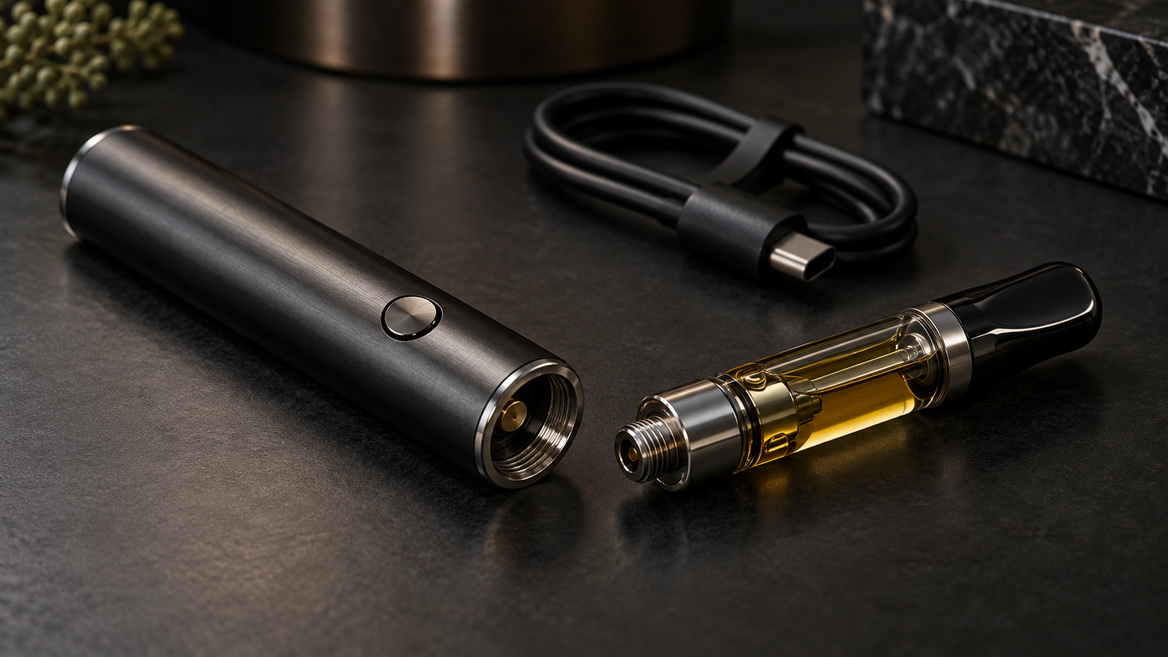
A vape cart battery is the rechargeable power unit that heats a compatible cartridge or atomiser. When activated, the battery sends electrical power to the cartridge's heating element. The heating element then warms the liquid inside the cartridge and creates an aerosol for inhalation.
Many cartridge batteries use the widely recognised 510 thread connection. This is a small, screw-style connection found on a broad range of cartridges and batteries. However, "510 compatible" does not automatically mean every cartridge will work perfectly with every device.
A good setup depends on more than thread size. It also depends on:
- Cartridge diameter and length
- Airflow placement
- Recommended voltage range
- Oil or e-liquid thickness
- Battery contact-pin alignment
- Whether the device uses button activation or draw activation
- The local legal status of the device and cartridge
In practical terms, a vape battery should fit securely, maintain stable electrical contact, and heat the cartridge at a controlled level. Too little power may produce weak vapour. Too much power can create a burnt taste, damage the wick, or shorten the life of the cartridge.
A 510 thread vape battery typically includes a lithium-ion cell, a threaded connection, a centre contact pin, a control board, and a charging port. Some models also include a button, LED indicator, preheat mode, voltage adjustment, and short-circuit protection.
When you inhale on a draw-activated battery—or press the button on a manual model—the device completes an electrical circuit. Power flows from the battery to the cartridge's heating element.
The basic process is straightforward:
1. The cartridge connects to the battery.
2. The battery detects activation.
3. Electrical current reaches the heating element.
4. The element warms the liquid in the cartridge.
5. The device stops heating when you stop inhaling or release the button.
The control board is important because it helps regulate output and may provide protective features. Depending on the model, these can include:
- Low-voltage protection
- Overcharge protection
- Short-circuit protection
- Overheat protection
- Automatic shut-off after a set number of seconds
- Low-battery alerts
- Preheat function for thicker liquids
A battery should never become excessively hot during normal use. If it does, stop using it immediately and inspect the device, cartridge connection, and charging equipment.
Voltage controls how much electrical energy reaches the heating element. In most cases, lower voltage produces a cooler, gentler vapour, while higher voltage creates more heat and can produce a stronger vapour output.
The right setting depends on the cartridge's design and the liquid inside it.
| Voltage Range | Typical Experience | Best Use Case | Main Risk |
|---|---|---|---|
| 2.0–2.8V | Cooler, smoother, more flavour-focused | Delicate flavours and thinner liquids | Vapour may feel light |
| 2.8–3.4V | Balanced flavour and vapour | Everyday use with many compatible cartridges | Can become harsh if chain-vaped |
| 3.4–4.0V | Warmer vapour and stronger output | Some thicker liquids or users who prefer more intensity | Greater risk of burnt flavour |
| Above 4.0V | Very hot output | Only if specifically supported by the cartridge maker | May damage the cartridge or degrade flavour |
For most users, starting low is the smartest approach. Take a short puff, wait briefly, and increase gradually only if the cartridge is producing too little vapour.
Low and controlled output is usually better for flavour preservation and cartridge longevity.
Instead of immediately using the highest setting, use this simple approach:
1. Start at the lowest available voltage.
2. Take one short, gentle puff.
3. Wait 20 to 30 seconds.
4. Check flavour, warmth, and vapour output.
5. Increase one setting only if the vapour is too weak.
6. Stop increasing when the flavour becomes harsh or the device feels too warm.
This method helps avoid one of the most common user mistakes: overheating a cartridge before understanding how it performs at a lower setting.
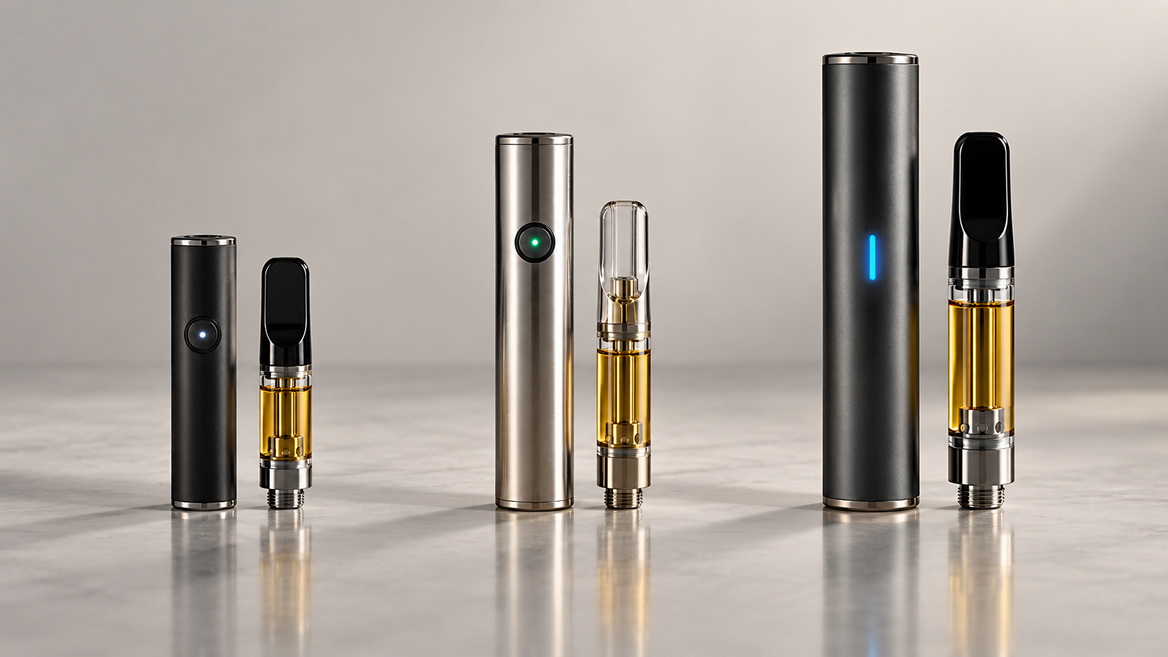
One of the first choices shoppers make is whether they prefer a button-activated battery or a draw-activated battery.
A button-activated device requires the user to press and hold a button while inhaling. Many models use five rapid clicks to turn the battery on or off.
Advantages:
- More direct control over activation
- Often includes variable-voltage options
- May include a preheat mode
- Can reduce accidental activation when switched off
- Often suits users who want adjustable performance
Considerations:
- Requires an extra step while using
- Can activate unintentionally if not locked before carrying
- Button and control-board quality vary between models
A draw-activated device turns on when the user inhales through the cartridge. These devices are often simple, compact, and easy to use.
Advantages:
- No button required during use
- Familiar, straightforward experience
- Often compact and beginner-friendly
- May suit users who prefer fewer controls
Considerations:
- Typically offers less output control
- Airflow sensors can be affected by condensation or leakage
- May be less suitable for cartridges that need a preheat function
The better option depends on personal preference. For users who want a simple setup, draw activation may feel more convenient. For users who want greater control over warmth and output, a button-activated, variable-voltage battery can be more practical.
A battery should be selected based on compatibility, safety, ease of use, and real-world durability—not only appearance or advertised capacity.
Before buying a battery, confirm the following:
- Is the connection a 510 thread?
- Does the cartridge sit flush with the battery?
- Does the battery support the cartridge's preferred output range?
- Is the cartridge too wide for the battery housing?
- Does the airflow remain open once attached?
- Does the cartridge use a standard centre-pin design?
Some compact "concealed" batteries are designed to protect the cartridge inside a small body. These can be useful for portability, but they may not fit wider or taller cartridges.
Battery capacity is usually measured in milliamp-hours, written as mAh. A larger mAh figure generally means more potential operating time between charges, although actual performance depends on voltage, puff length, cartridge resistance, temperature, and battery condition.
| Battery Capacity | Typical Suitability | Portability | Charging Frequency |
|---|---|---|---|
| 250–350 mAh | Light or occasional use | Very compact | More frequent |
| 350–500 mAh | Everyday portable use | Compact | Moderate |
| 500–650 mAh | Regular use | Medium | Less frequent |
| 650 mAh and above | Users prioritising run time | Larger device | Usually less frequent |
A higher-capacity battery is useful if you dislike recharging often. However, the smallest battery may be more comfortable for discreet, lightweight use.
When comparing electronic cigarettes and related accessories, battery protections should be a major consideration. Look for clear product information about:
- Overcharge protection
- Short-circuit protection
- Over-discharge protection
- Automatic cut-off timing
- USB-C charging or a reliable charging method
- Battery indicator lights
- Instructions for safe storage and charging
Avoid products that provide vague specifications or no usable instructions. Clear operating guidance is a positive sign that a manufacturer or retailer has considered how consumers will actually use the device.
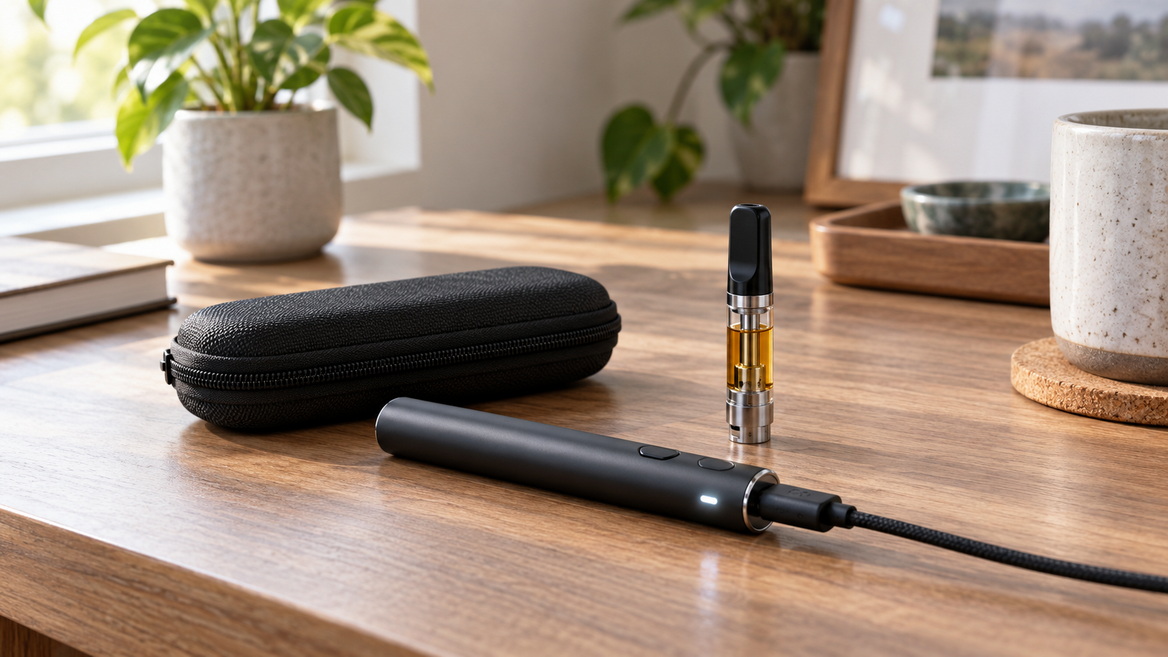
Even a compact vape battery contains a lithium-ion cell. Treat it as an electronic device, not as a disposable accessory.
Before using your battery, check these points:
- Ensure the cartridge is attached securely but not overtightened.
- Confirm that airflow holes are not blocked.
- Keep the connection area dry and free of residue.
- Start at a low voltage if the battery is adjustable.
- Use short puffs rather than repeated long activations.
- Stop if you notice unusual heat, smell, noise, swelling, or malfunction.
- Keep the device away from children and pets.
- Do not use a visibly damaged battery or cartridge.
Charging errors are among the most avoidable problems with rechargeable devices.
Use these habits to reduce risk:
1. Use the cable or charging method recommended for the battery.
2. Charge on a hard, stable, non-flammable surface.
3. Keep the battery away from direct sunlight, bedding, paper, or fabric while charging.
4. Do not leave a charging battery unattended for long periods.
5. Disconnect the device after it is fully charged.
6. Do not charge a battery that is damaged, wet, leaking, or unusually hot.
7. Avoid using damaged power adapters or frayed cables.
8. Store spare batteries and devices away from coins, keys, or other metal items.
Never continue charging a battery that becomes hot, swells, emits an unusual smell, or shows visible damage.
Many vape battery issues are caused by simple connection or maintenance problems. Before replacing a battery, work through this checklist.
Possible causes include a depleted battery, a poor connection, blocked airflow, or a cartridge that is no longer functional.
Try the following:
- Recharge the battery fully.
- Unscrew the cartridge and reconnect it gently.
- Clean the connection point with a dry cotton swab.
- Check whether the battery is locked.
- Ensure the cartridge centre pin is not recessed or damaged.
- Test the battery with another compatible cartridge, if available.
A burnt taste usually indicates that the heating element is running too hot, the wick is dry, or the cartridge is nearing the end of its usable life.
Possible solutions:
- Lower the voltage.
- Allow the cartridge to rest between puffs.
- Avoid long or repeated activations.
- Check whether the liquid level is too low.
- Replace the cartridge if the burnt taste continues.
Blinking lights often indicate a protection feature or connection problem.
Common reasons include:
- Low battery charge
- Short circuit
- Cartridge not detected
- Overtightened cartridge
- Poor centre-pin contact
- Device lock activated
Refer to the product manual for the exact light pattern. Manufacturers use different blink codes, so one device's three flashes may not mean the same thing as another device's three flashes.
Low vapour can result from low battery charge, low voltage, clogged airflow, cold liquid, or a worn cartridge.
If the device has a preheat mode, use it only as directed and briefly. A preheat function may help warm thicker liquid, but repeated use can make the cartridge too hot.
Battery lifespan is affected by heat, charging habits, storage conditions, and how hard the device is used. You cannot prevent all battery aging, but you can reduce unnecessary wear.
- Avoid fully draining the battery every day.
- Do not expose the device to high heat, including hot cars.
- Keep the connection threads clean.
- Use moderate voltage whenever possible.
- Avoid charging overnight.
- Do not leave the battery unused and completely discharged for long periods.
- Store the device upright when possible to help reduce leakage into the connection area.
- Replace the device if it becomes damaged, unreliable, or excessively warm.
Heat is especially important. High temperatures can affect both battery performance and cartridge quality. If your device has been in a hot environment, allow it to return to room temperature before charging or using it.
Vape batteries should be handled carefully when travelling. Airlines and transport authorities may have specific rules for electronic devices and lithium-ion batteries. Before travelling, review the rules of your airline and destination.
For storage:
- Keep the battery in a cool, dry place.
- Avoid direct sunlight and high-temperature environments.
- Turn off button-activated devices before carrying them.
- Keep cartridges and batteries upright where practical.
- Use a protective case for travel.
- Keep products out of reach of children and pets.
Do not throw rechargeable batteries into ordinary household rubbish if local recycling programmes accept electronic waste or batteries. Damaged or unwanted batteries should be disposed of through appropriate battery or e-waste collection channels where available.
For customers in Australia, vape rules are notably stricter than in many other countries. Australia regulates vaping goods as therapeutic products, and the supply of vapes is generally limited to participating pharmacies under specific conditions. Non-pharmacy retailers are not permitted to sell vaping goods, including nicotine-free products, and consumers cannot lawfully purchase vapes from overseas retail websites for personal use.
This means product information alone is not enough. Adult consumers should check the current rules in their state or territory and seek advice from a pharmacist or qualified health professional where appropriate.
Vaping products should not be used by children, teenagers, pregnant people, or people who do not currently smoke. They are not harmless, and nicotine can create dependence.
Choosing a vape cart battery is easier when you focus on the essentials: a secure fit, sensible voltage control, reliable charging, and clear safety information. A well-matched battery can help preserve flavour, reduce overheating, and make everyday use more consistent.
Before purchasing any Vape, Electronic Cigarettes, Disposable Vape, E Vape, or E-Liquid product, confirm that it is lawful in your location and appropriate for adult use. Then compare compatible options carefully, read the product specifications, and choose a device that supports your preferred cartridge style and daily routine.
For adult customers in regions where sale and use are permitted, explore compatible vape accessories and rechargeable battery options through 7DaysVape after checking all applicable local requirements.
A 510 thread vape battery is a rechargeable battery with a standard screw-style connection used by many compatible cartridges. Although 510 threading is common, cartridge size, airflow design, and voltage requirements can still vary.
Start with the lowest available setting, often around 2.0V to 2.8V, and increase slowly only if needed. Lower settings usually provide cooler vapour and may better protect flavour, while higher settings can create more heat and increase the risk of a burnt taste.
A blinking battery can indicate low charge, a poor cartridge connection, a short circuit, an activated lock, or an automatic safety cut-off. Check the product manual because LED codes vary by device.
Not always. Even if the thread is compatible, the cartridge may be too wide, may have a different airflow arrangement, or may perform poorly at the battery's available voltage. Confirm fit and recommended power range before use.
Daily run time depends on battery capacity, voltage, puff duration, cartridge resistance, and usage frequency. A battery's overall usable life also depends on charging habits, heat exposure, and physical condition.
It is better not to charge a vape battery overnight or leave it unattended for extended periods. Charge it on a stable, non-flammable surface and disconnect it after charging is complete.
A burnt taste can happen when the voltage is too high, the wick is dry, the liquid is low, or the cartridge is worn out. Lower the voltage, let the cartridge rest, and replace it if the taste does not improve.
Australia's rules are highly restrictive. Disposable and non-therapeutic vapes are prohibited, and vaping goods can generally only be supplied through participating pharmacies under the applicable therapeutic framework. Overseas retail purchases for personal use are not lawful.
- [VaporFi — Cart Battery Guide]
- [Australian Therapeutic Goods Administration — Vapes: Information for Individuals and Patients]
- [Australian Therapeutic Goods Administration — Changes to the Regulation of Vapes]
- [Australian Therapeutic Goods Administration — Product Standards for Unapproved Therapeutic Vapes]
- [Australian Government Department of Health — About Vaping and E-Cigarettes]
This website contains products intended for adults only.
Are you 18 years of age or older?
WARNING: This product contains nicotine. Nicotine is an addictive chemical.


