
Language
Views: 218 Author: 7DaysVape Publish Time: 2026-08-28 Origin: Site


Content Menu
● Start With the Coil's Recommended Wattage Range
● Match the Setting to Your E-Liquid
>> For Lower-Power Pod Systems
>> For Adjustable Tank Devices
● Set Airflow for Comfort, Not Maximum Output
● Recognise When a Coil Needs Replacing
● Everyday Device Care That Protects Performance
● Disposable Vape Devices: Do Not Attempt to Modify Settings
● Legal and Health Considerations for Australian Readers
● A Practical Everyday Settings Checklist
>> What wattage should I use for everyday vaping?
>> Why does my vape taste burnt at the correct wattage?
>> Should I keep airflow open or closed?
>> Can I refill or recharge a disposable vape?
>> How often should I replace a vape coil?
>> Are online vape sales legal in Australia?
>> What should I do with a used e-cigarette device?
Choosing the best vape settings for everyday use should not mean chasing the biggest cloud or the highest number on a screen. For adult smokers and existing adult vapers using an electronic cigarette or refillable vape device, the right setting is usually the one that delivers consistent performance without overheating the coil, wasting e-liquid, or making the inhale unpleasant.
This guide explains how everyday vape settings work across common e-liquid devices, including pod systems, refillable vape kits, and adjustable devices. It focuses on practical use: matching wattage to a coil, setting airflow, recognising warning signs, maintaining a device, and following local laws.
Before making any decision, check the device manual, the coil's printed wattage range, and the rules that apply where you live. In Australia, vaping products are regulated as therapeutic goods and are supplied through participating pharmacies under specific conditions.

The most reliable starting point is not a universal wattage number. It is the range printed on the coil itself or listed in the manufacturer's instructions.
A coil is the heating element inside a pod or tank. When power passes through it, the coil heats e-liquid held in the surrounding wick. If the power is too low, vapour may feel weak and the flavour may seem muted. If it is too high, the wick can dry out faster than it absorbs e-liquid, creating an unpleasant burnt taste.
For everyday use, begin at the low end of the coil's stated range. Take a few short, gentle puffs and increase gradually only if the device is producing weak vapour or insufficient flavour.
| Coil label | Sensible starting point | Everyday adjustment approach |
|---|---|---|
| 10–14 W | 10 W | Increase in 1 W steps if needed |
| 15–20 W | 15 W | Increase slowly after several puffs |
| 20–30 W | 20 W | Keep airflow open enough to prevent excess heat |
| 30 W and above | Lowest stated wattage | Check e-liquid compatibility and battery guidance first |
Never exceed the coil's stated maximum wattage. A higher setting does not automatically produce a better experience. It can shorten coil life, use more e-liquid, increase device heat, and make the vapour harsher.
E-liquid thickness affects how quickly liquid reaches the coil. The two common carrier ingredients are propylene glycol (PG) and vegetable glycerine (VG). Their ratio can influence throat sensation, visible vapour, flavour delivery, and wick performance.
A thinner e-liquid, often with a higher PG proportion, generally works better in lower-power pod devices and tighter airflow setups. A thicker e-liquid, often with a higher VG proportion, is commonly used with coils designed for higher power and more airflow.
Lower-power pod systems are usually designed for a restricted, cigarette-like draw. Their settings commonly fall at the lower end of a device's power range.
For daily consistency:
- Use the manufacturer-compatible pod or coil.
- Start at the lowest recommended wattage.
- Keep airflow partly closed if the device has an airflow control.
- Avoid taking repeated long puffs in quick succession.
- Allow time between puffs so the wick can re-saturate.
If a pod device gurgles, leaks, or spits hot droplets, check whether the pod has been overfilled, whether the coil is worn, or whether the power level is too low for the installed coil.
Adjustable tank devices may offer more control, but they also require more attention. A larger coil and more open airflow can support greater vapour output, yet those setups generally consume more e-liquid and battery power.
Use a gradual method:
1. Confirm the coil's recommended range.
2. Fill the tank and allow a new coil to sit for several minutes before use.
3. Start at the lowest recommended setting.
4. Take two or three short puffs.
5. Raise power in small increments only when the vapour remains cool, clean, and consistent.
6. Stop increasing if the flavour becomes harsh, the device becomes unusually hot, or vapour feels too warm.
Airflow controls how much outside air mixes with vapour during an inhale. It changes the resistance of the draw, vapour temperature, and overall feel.
A more closed airflow setting creates a tighter draw and can make vapour feel warmer. A more open setting creates a looser draw and can cool the vapour, although it may also require a coil and wattage level designed for that airflow.
A practical rule is simple: adjust one variable at a time. If you change wattage, do not immediately change airflow as well. Take several puffs first, then assess whether the device feels too warm, too airy, too harsh, or too restricted.
| If you notice… | Try this first |
|---|---|
| Vapour is too hot | Reduce wattage slightly or open airflow |
| Draw feels too tight | Open airflow in small steps |
| Vapour feels weak | Confirm coil range, then increase wattage gradually |
| Harsh or burnt flavour | Stop using the device; check liquid level, coil condition, and wattage |
| Gurgling or spitback | Check for flooding, overfilling, or a worn coil |
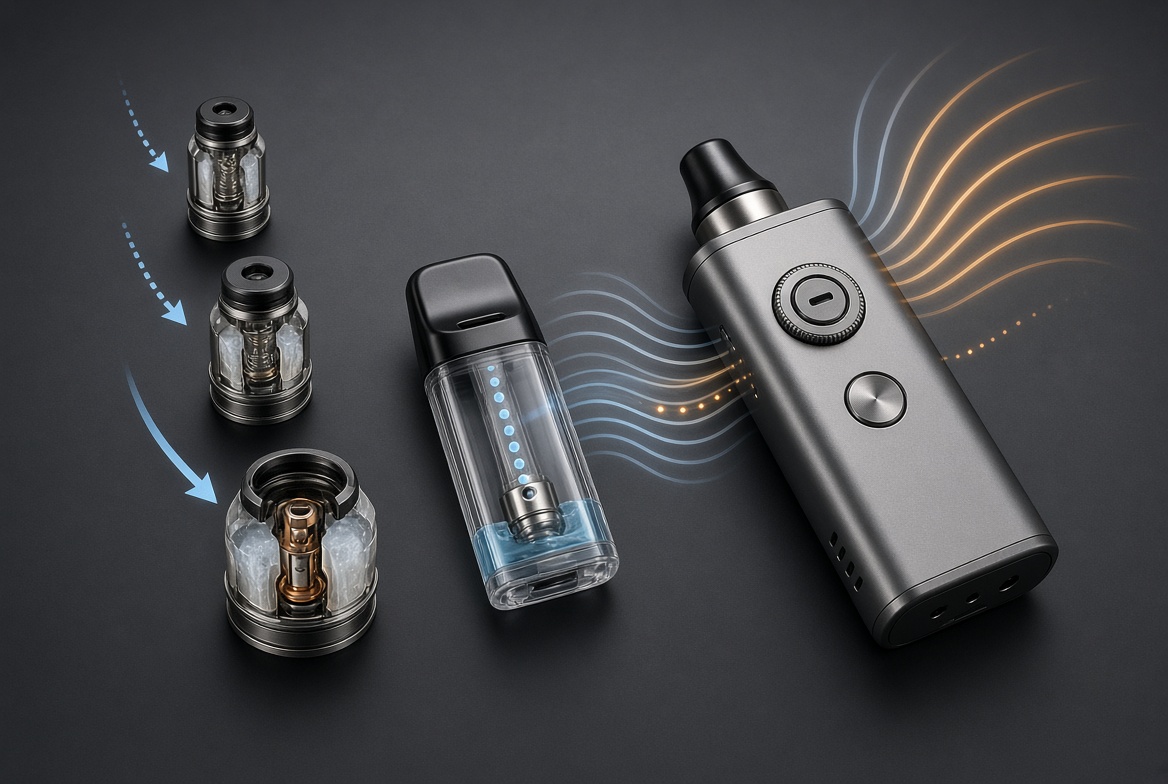
A worn coil can make even a correctly configured vape device perform poorly. Replacing it promptly is usually more effective than continually changing wattage settings.
Common signs include:
- A persistent burnt, sour, or stale flavour.
- Reduced flavour despite a full pod or tank.
- Less vapour than usual at the same setting.
- Gurgling, leaking, or e-liquid collecting in the mouthpiece.
- Darkened e-liquid soon after filling.
- A device that needs increasing power just to feel normal.
Coil life varies widely. It depends on e-liquid type, puff frequency, power level, liquid sweetness, device maintenance, and the length of each inhale. Very sweet e-liquids can leave residue on a coil more quickly, while high power can reduce the wick's lifespan.
When installing a new coil, fill the pod or tank and wait several minutes before vaping. This allows the wick to absorb e-liquid fully. Starting too soon can permanently damage the wick.
Small maintenance habits can prevent many common issues. They also help users identify a genuine hardware problem before attempting to change settings.
- Wipe e-liquid residue from the pod, tank base, and battery contacts.
- Check the pod or tank for cracks, loose seals, or visible leaks.
- Keep the mouthpiece clean.
- Ensure charging ports are dry and free from debris.
- Store e-liquid and devices away from heat, direct sun, children, and pets.
- Replace damaged pods, tanks, charging cables, or batteries rather than continuing to use them.
Do not charge a damaged, wet, swollen, or excessively hot device. Lithium-ion batteries can present a fire risk if they are damaged, improperly charged, or disposed of incorrectly. Follow the supplied charging instructions and use only compatible equipment.
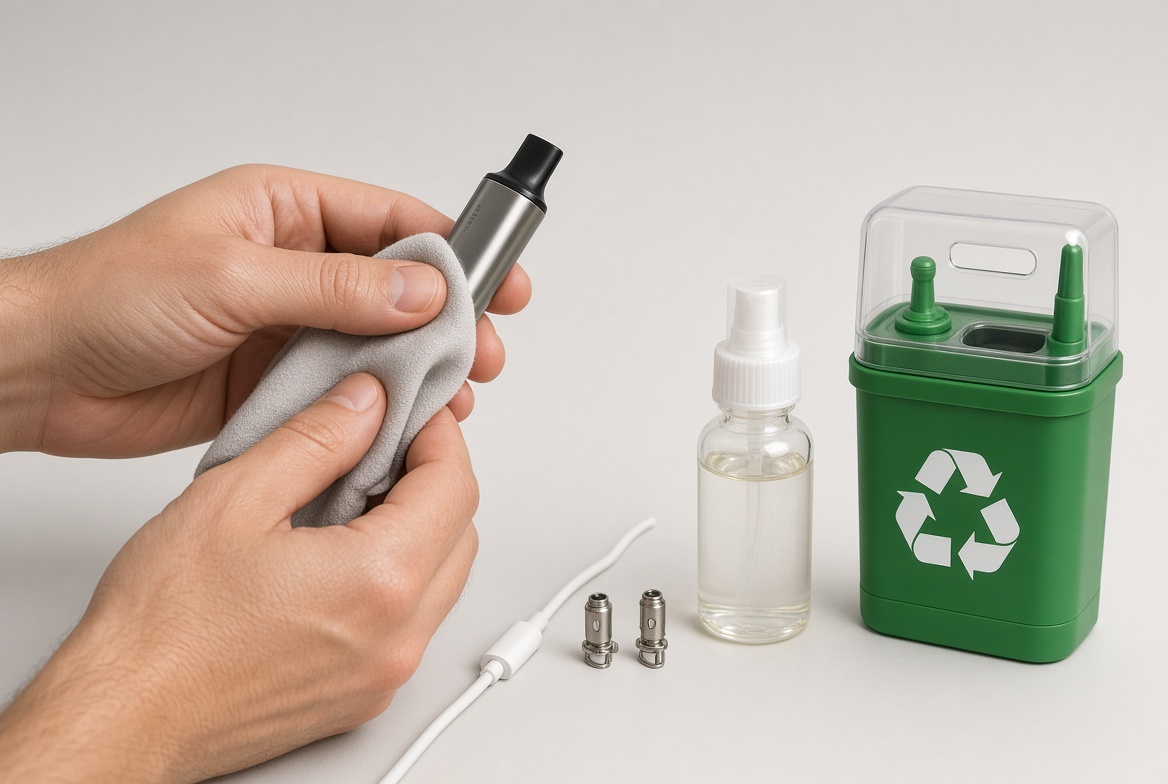
Disposable vape devices are not designed to be rebuilt, refilled, or modified. Attempting to open, recharge, puncture, or alter a disposable device can create safety risks involving lithium batteries and e-liquid exposure.
The U.S. Environmental Protection Agency notes that e-cigarettes can contain both lithium batteries and nicotine, meaning they require careful disposal. Devices should not be placed loosely in ordinary rubbish where batteries can short-circuit or become damaged.
Check your local recycling or hazardous-waste program for the appropriate disposal route. Never throw devices into fire, crush them, or leave them where children or animals can access them.
For Australians, product settings are only one part of responsible decision-making. Current national rules place vaping products within a therapeutic framework.
Australia's Department of Health states that vaping products, whether or not they contain nicotine, may only be sold through pharmacies for smoking cessation or nicotine-dependence management. Ordinary retailers, including vape shops, tobacconists, and convenience stores, cannot legally sell these products. Adults may be able to obtain certain therapeutic vapes with nicotine concentrations of 20 mg/mL or less from participating pharmacies without a prescription, subject to applicable conditions and state or territory rules.
If you smoke and are considering nicotine vaping as part of an attempt to quit, speak with a pharmacist or qualified health professional about your circumstances. If you do not smoke, do not start vaping. Nicotine can cause dependence, and electronic cigarettes are not risk-free.
Before each session, use this quick check:
1. Confirm the device is intact, clean, and not unusually hot.
2. Check that the pod or tank contains enough e-liquid.
3. Confirm the coil is within its recommended wattage range.
4. Start at the lower end of that range after fitting a new coil.
5. Adjust power in small increments only.
6. Set airflow gradually based on draw resistance and vapour temperature.
7. Stop immediately if you notice burnt flavour, leakage, heat, or battery damage.
8. Follow applicable local rules and product instructions.
The best everyday vape settings are generally the most stable—not necessarily the most powerful. A suitable coil, compatible e-liquid, moderate power, sensible airflow, and routine maintenance will usually matter more than any single wattage number.
Use the lower end of the wattage range printed on your coil or stated in the manufacturer's instructions. Increase gradually only if performance remains weak and the device stays cool and comfortable.
The coil may be worn, the wick may not have been saturated before use, the e-liquid level may be too low, or repeated long puffs may have dried the wick faster than it can absorb liquid. Stop using the device and inspect or replace the coil.
Use a more closed airflow for a tighter draw and a more open airflow for a looser, cooler draw. Make small adjustments and change only one setting at a time.
Do not attempt to refill, open, modify, puncture, or recharge a disposable device unless its manufacturer explicitly states that it is rechargeable and provides instructions. Altering a device can create battery and leakage risks.
Replace a coil when flavour becomes burnt, stale, or weak; when vapour output falls noticeably; or when leaking and gurgling persist after basic cleaning. The exact interval depends on device use, e-liquid, and power level.
Australia regulates vaping products as therapeutic goods. The Australian Government states that consumer supply is limited to participating pharmacies, while ordinary retailers—including vape shops—cannot legally sell vaping products. Requirements can vary by state or territory.
Do not place it loosely in household waste. Check local battery, e-waste, or hazardous-waste disposal guidance. E-cigarette devices can contain lithium batteries and nicotine residues.
- [Australian Government Department of Health, Vaping Laws]
- [Therapeutic Goods Administration, Vapes: Information for Pharmacists]
- [Therapeutic Goods Administration, Vapes: Compliance and Enforcement]
- [U.S. Environmental Protection Agency, How to Safely Dispose of E-Cigarettes]
- [U.S. Food and Drug Administration, E-Cigarettes, Vapes and ENDS]
- [Planet of the Vapes, The Best Vape Settings for Everyday Use]
This website contains products intended for adults only.
Are you 18 years of age or older?
WARNING: This product contains nicotine. Nicotine is an addictive chemical.


