
Language
Views: 212 Author: 7DaysVape Publish Time: 2026-08-29 Origin: Site


Content Menu
● Quick Answer: Disposable vs Refillable Vape
>> Typical Features of Disposable Vapes
>> Common Types of Refillable Vape Devices
● Disposable Vape vs Refillable Vape: Side-by-Side Comparison
● Disposable Vape: Key Advantages and Limitations
>> Why Some Adult Users Choose Disposable Vapes
>> Where Disposable Vapes Fall Short
● Refillable Vape: Key Advantages and Limitations
>> Why Refillable Vapes Can Offer Better Long-Term Value
>> What You Need to Be Ready For
● Cost Comparison: Which Vape Format Costs Less?
>> Example: How to Compare Your Monthly Spend
● Flavour, Vapour, and Performance Differences
>> Consistency Over Device Life
● Environmental Considerations: The Often-Missed Difference
>> A More Responsible Device Routine
● Which Vape Should You Choose?
>> Choose a Disposable Vape If You Value
>> Choose a Refillable Vape If You Value
● A Practical Checklist Before You Buy
● Final Verdict: Disposable Vape or Refillable Vape?
>> Is a disposable vape easier to use than a refillable vape?
>> Are refillable vapes cheaper than disposable vapes?
>> Can I refill a disposable vape?
>> Do refillable vapes produce less waste?
>> What is the best refillable vape for a beginner?
>> Are disposable vapes legal in Australia?
>> How often should I replace a refillable vape pod or coil?
Choosing between a disposable vape and a refillable vape is no longer just about convenience or flavour. It affects your daily routine, long-term spending, maintenance needs, product waste, and—especially for Australian consumers—whether the product can be accessed and used within the applicable rules.
At 7DaysVape, we believe an informed adult consumer makes better choices. This guide compares disposable vapes and refillable vapes from practical, financial, performance, and lifestyle perspectives. It is written for adult smokers and adult vape users who are evaluating device formats, not for non-smokers, young people, or anyone who does not currently use nicotine.

A disposable vape is usually the simpler option: it arrives pre-filled, pre-charged, and ready to use. It may suit an adult user who values a compact, low-maintenance format and does not want to refill e-liquid or replace coils.
A refillable vape generally offers more control. You can recharge the device, refill compatible e-liquid, select a preferred nicotine strength where lawful, and often choose between different pod resistances or airflow settings. It usually requires more initial learning, but it can offer better value and reduce the number of complete devices discarded over time.
For many experienced adult users, a refillable pod system is the more practical long-term format. For someone comparing formats for the first time, the right choice depends on legal availability, intended usage, budget, comfort with maintenance, and personal preferences.
A disposable vape is a self-contained electronic cigarette designed for limited use. It normally combines a battery, heating element, e-liquid reservoir, and mouthpiece in one compact unit.
The device is typically activated by inhalation. There are no buttons to configure, no tanks to fill, and usually no parts intended for replacement. Once the e-liquid is depleted, the battery stops working, or the device no longer produces vapour, the entire unit reaches the end of its usable life.
- Pre-filled e-liquid with no manual refilling required
- Draw-activated operation with no button pressing or setting adjustment
- Compact form factor designed for portability
- Minimal maintenance during its usable life
- Fixed coil and airflow in most models
- Limited product life because the full device is discarded after use
Disposable vapes are commonly associated with a straightforward experience. The user opens the packaging, removes any protective seals, and uses the device as designed.
However, simplicity comes with trade-offs. The user has limited influence over e-liquid selection, device power, coil resistance, airflow, or the way the device performs over time.
A refillable vape is a reusable electronic cigarette that allows the user to replenish e-liquid rather than replace the entire device. Depending on the design, it may use refillable pods, refillable cartridges, or a larger tank.
Most refillable devices include a rechargeable battery and a pod or tank that can be filled with compatible e-liquid. Some use built-in coils, while others use replaceable coil heads. Entry-level pod systems are usually the easiest refillable devices for adults who want a simpler routine.
| Device Type | Best Known For | Typical User Experience |
|---|---|---|
| Refillable pod system | Simplicity and portability | Easy to carry, lower maintenance, beginner-friendly |
| Open-pod vape | E-liquid flexibility | Lets users refill a compatible pod |
| Replaceable-coil pod kit | Balance of convenience and control | Refill pod and replace coil when needed |
| Vape pen | Familiar cylindrical design | Straightforward but often less compact |
| Tank or mod system | Power and customisation | More settings, more parts, more technical knowledge |
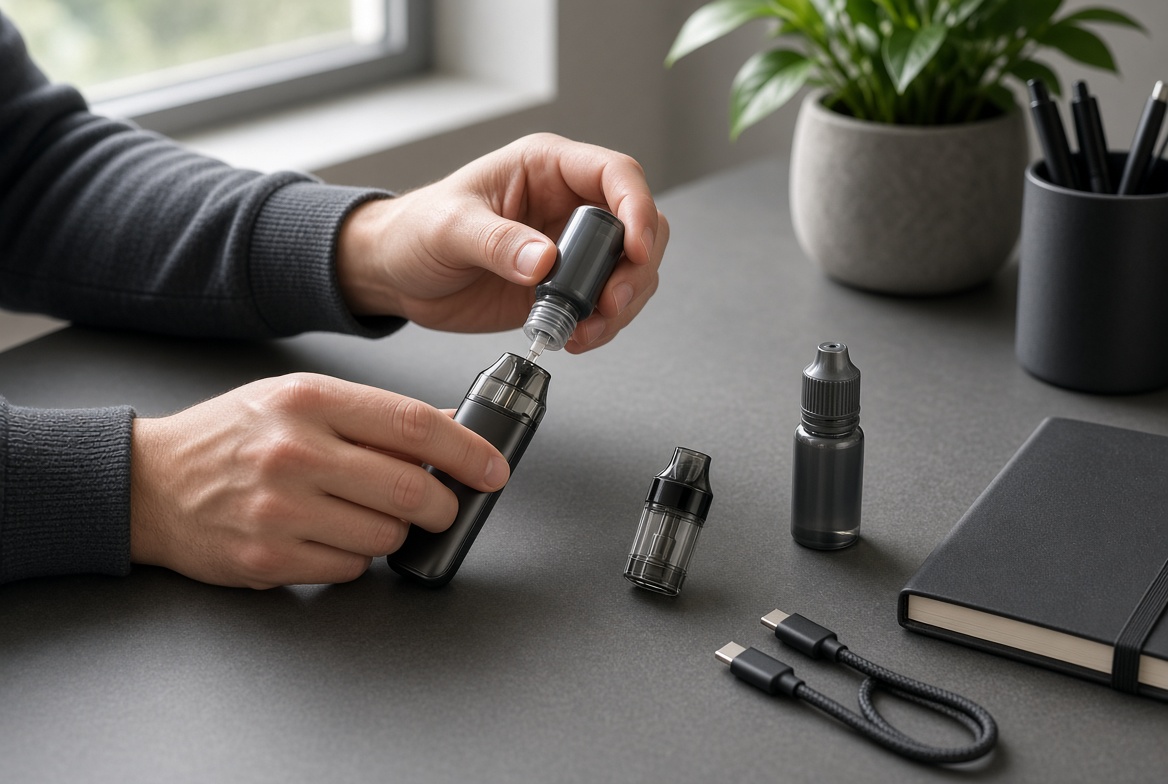
A refillable vape requires basic care. You will need to charge the battery, refill e-liquid carefully, keep the pod or tank clean, and replace consumable components when flavour or vapour performance declines.
That additional effort is not necessarily a disadvantage. For many users, it is the reason refillable devices deliver a more personalised experience.
The table below highlights the major differences between the two device categories.
| Factor | Disposable Vape | Refillable Vape |
|---|---|---|
| Setup | Ready to use after opening | Requires charging, filling, and occasional setup |
| Maintenance | Very low during use | Requires refilling, cleaning, and part replacement |
| Upfront cost | Often lower per device | Usually higher for the initial device |
| Long-term cost | Can become expensive with repeated purchases | Often lower over time, depending on use and consumables |
| E-liquid choice | Fixed flavour and formulation | Wider choice of compatible e-liquids |
| Nicotine flexibility | Fixed per device | May offer more options where legally permitted |
| Battery | Usually integrated and limited-life | Rechargeable and designed for repeated use |
| Customisation | Limited | Pod, coil, airflow, power, and e-liquid options may be available |
| Waste profile | Entire device becomes waste | Device body is reused; pods, coils, and bottles still create waste |
| Learning curve | Very low | Low to moderate, depending on the device |
| Portability | Usually excellent | Often excellent with pod systems; varies with larger kits |
| Legal availability in Australia | Single-use disposable vapes are not available through pharmacies | Access is limited to therapeutic pathways and pharmacy supply rules |
The key takeaway is simple: disposable vapes prioritise immediate convenience, while refillable vapes prioritise repeat use, flexibility, and longer-term control.
The biggest advantage is ease of use. A disposable vape eliminates several steps that can feel unfamiliar to a person moving away from cigarettes or trying a vape format for the first time.
No refilling. There is no need to open a pod, handle e-liquid, or worry about filling ports.
No coil changes. The coil is built into the device, so there are no separate replacement parts during normal use.
Low commitment. Buying one device can feel less complicated than choosing a kit, pods, coils, chargers, and e-liquid.
Travel-friendly size. Many disposable devices are lightweight and pocketable.
Consistent starting experience. The device is configured by the manufacturer, so there are fewer variables for the user to manage.
The same closed design that makes disposable vapes easy also limits what the user can control.
Higher repeat-purchase cost. A low individual purchase price may appear attractive, but repeated buying can add up quickly.
No adjustment options. You cannot normally alter the airflow, power output, e-liquid composition, or coil resistance.
Limited lifespan. Once the battery or liquid is exhausted, the full device is no longer usable.
Potential battery waste. Many single-use devices contain lithium-ion batteries. These should not be placed casually into household rubbish because damaged batteries can create fire and waste-management risks.
Less predictable availability. Legal rules can change quickly across markets, and disposable products have faced increasing restrictions in several jurisdictions.
For an adult user who values an uncomplicated experience above all else, disposable devices may appear appealing. But the format is not automatically the best fit for regular, long-term use.
A refillable vape separates the reusable device from the consumable e-liquid. This changes both the ownership experience and the cost structure.
Lower ongoing device replacement. You keep using the same battery device rather than replacing a complete unit every time.
More e-liquid flexibility. Where permitted, adults can choose compatible e-liquid options based on flavour, nicotine level, PG/VG ratio, and desired vapour style.
Better personal control. Many refillable pod systems offer multiple pod resistances, airflow settings, or output modes.
Potentially lower cost over time. The exact figure depends on consumption, e-liquid pricing, pod lifespan, and coil replacement frequency. Still, a reusable format often spreads the initial device cost across a longer period.
Reduced complete-device disposal. A refillable vape still produces waste through pods, coils, and bottles, but it does not require disposal of the battery body after every cycle.
Refillable devices are not difficult, but they do require a small amount of routine care.
- Charge the device using an appropriate cable and power source.
- Fill the pod or tank without overfilling.
- Allow a new coil or pod to saturate before use if required by the product instructions.
- Replace the pod or coil when flavour tastes burnt, muted, or inconsistent.
- Clean condensation from connection points.
- Keep e-liquid and devices away from children and pets.
A basic pod system reduces most of the complexity. It can be a sensible middle ground for an adult user who wants a reusable device without moving into advanced hardware.
The answer depends on how often you use the product, how much e-liquid you consume, and which device type you select. However, the cost pattern is usually clear.
A disposable vape may have a lower entry price because there is no separate device purchase. But each replacement means buying another battery, heating system, casing, and pre-filled reservoir.
A refillable vape generally costs more at the beginning because you purchase the device and e-liquid separately. After that, the regular costs are usually e-liquid and replacement pods or coils.
Instead of comparing only the price on a single product page, assess your likely cost over 30 days.
Monthly cost = Device cost allocation + E-liquid cost + Pod/coil cost + Replacement device cost
For disposable products, the replacement device cost is often the main recurring expense. For refillable products, e-liquid and consumables are usually the recurring expenses.
1. Record how many disposable devices you would normally use each week.
2. Multiply that number by the price per device.
3. Estimate the monthly total.
4. Compare it with a refillable kit, compatible e-liquid, and replacement pod or coil costs.
5. Factor in the practical value of different flavours, device performance, and maintenance time.
The purpose is not to assume that every refillable kit costs less. It is to compare the full ownership cycle rather than the first purchase alone.
Disposable vapes are generally designed to produce a consistent, controlled experience from the first puff to the last. The flavour profile and draw are fixed by the manufacturer.
Refillable vapes can provide a more tailored experience, but performance depends on selecting compatible components and using them correctly.
With a disposable vape, you select a finished product. If you dislike the flavour or find it too strong, there is little you can change.
With a refillable device, compatible e-liquid selection becomes part of the experience. Adults may prefer different flavour families, including tobacco-style, menthol-style, fruit-style, or unflavoured options, subject to local product rules.
Vapour production depends on several factors:
- Coil resistance
- Device power output
- Airflow design
- E-liquid composition
- Battery condition
- How the user inhales
A compact pod device is often intended for a tighter, cigarette-like mouth-to-lung draw. Larger refillable systems may support a looser restricted-direct-lung or direct-lung style, although these are usually more advanced and may consume more e-liquid.
A disposable vape may feel consistent because it is preconfigured. Yet, as battery charge declines or e-liquid runs low, vapour and flavour can change.
A refillable vape can remain consistent for longer when it is properly maintained. Replacing a worn pod or coil and keeping the battery charged can restore performance without replacing the whole device.
One of the most important differences between disposable and refillable vapes is what happens after use.
A disposable device commonly combines plastic, metal, electronics, e-liquid residue, and a lithium-ion battery. Because these materials are integrated, the device can be difficult to recycle correctly. Throwing it into general rubbish may create avoidable waste and battery-handling risks.
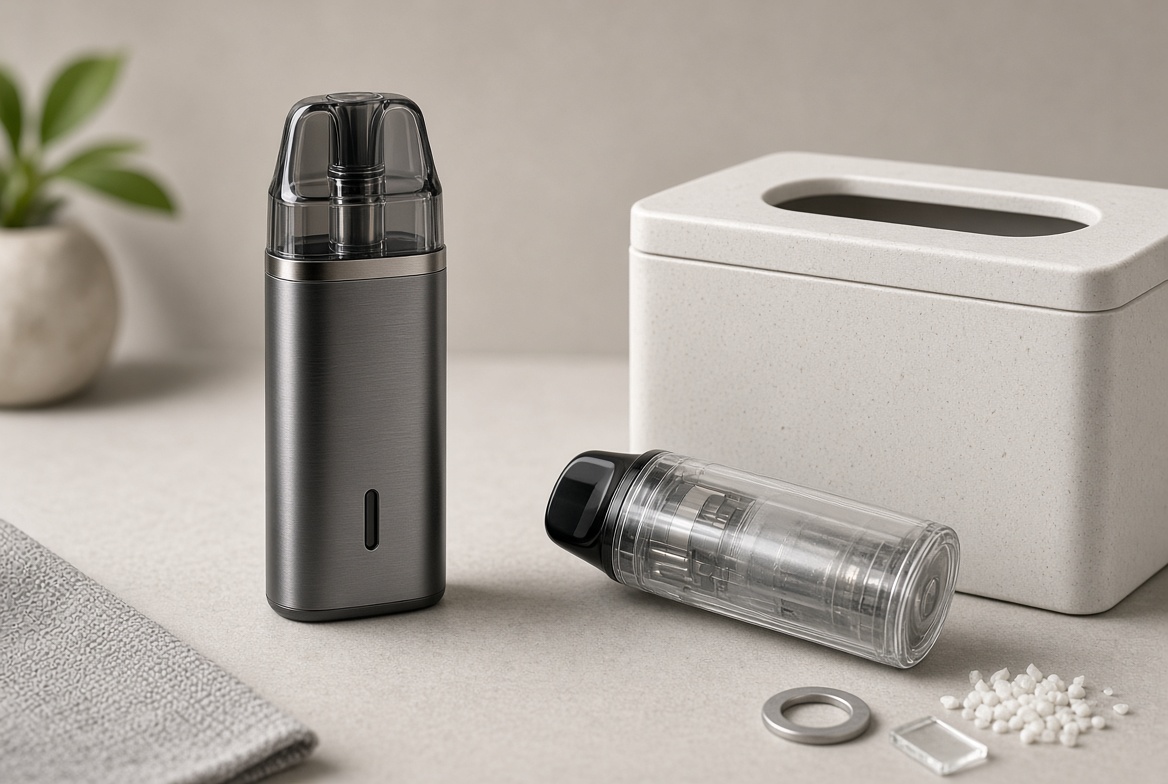
A refillable device is not waste-free. Pods, coils, e-liquid bottles, and packaging still require responsible disposal. However, the rechargeable battery device can stay in use for a much longer period.
- Do not put damaged lithium-ion batteries in household waste.
- Follow local e-waste or battery-recycling guidance.
- Keep used e-liquid containers closed and away from children and animals.
- Never use a leaking, damaged, swollen, or overheating device.
- Replace pods and coils according to the manufacturer's instructions.
- Buy only from sellers that provide clear product information and age-restricted access.
The best environmental choice is not simply a product label. It is the combination of choosing a durable format where appropriate, using products responsibly, and disposing of components through suitable local channels.
There is no universal winner. The best option depends on your experience level, usage pattern, local rules, and willingness to handle simple upkeep.
- A device that is ready to use with minimal setup
- No refilling or component replacement
- A compact, uncomplicated format
- A one-product purchasing experience
However, confirm legal availability first. In Australia, single-use disposable vapes are not available for purchase through pharmacies, and other retail pathways are restricted.
- A rechargeable device for repeat use
- More control over compatible e-liquid and device setup
- Potentially better long-term value
- Less complete-device waste over time
- The ability to replace a pod or coil instead of a full device
For many adult users, a simple refillable pod system offers the most balanced path. It is easier to operate than a large mod kit while offering more flexibility than a single-use device.
Before selecting any electronic cigarette or vape product, use this checklist.
1. Confirm local legal requirements. Rules differ by country, state, and territory. Do not rely on outdated product listings or social media claims.
2. Choose a format that matches your routine. A device should fit the amount of maintenance you are realistically willing to perform.
3. Check product transparency. Look for clear specifications, compatibility information, charging guidance, and safety warnings.
4. Consider the full ownership cost. Compare 30-day use rather than only the initial purchase price.
5. Plan for disposal. Know how you will handle batteries, used devices, pods, and e-liquid bottles.
6. Use only as intended. Follow manufacturer instructions and stop using products that are damaged, leaking, overheating, or malfunctioning.
7. Keep all vape products secure. Nicotine-containing products and e-liquids can be harmful if swallowed or exposed to children and pets.
Disposable vapes are built around convenience. They minimise setup and maintenance but offer limited control, create complete-device waste, and may carry higher repeat costs for frequent users.
Refillable vapes require a little more attention, but they usually provide greater flexibility, longer device life, and a more personalised experience. A well-designed refillable pod kit can be a practical option for adult users who want a compact device without the technical demands of advanced vape hardware.
For adult consumers evaluating electronic cigarettes, the strongest decision is an informed one: verify local rules, prioritise safe and transparent products, and choose the device format that you can use and maintain responsibly.
Explore 7DaysVape's device and accessory range only where permitted, compare compatible options carefully, and choose a format that fits your routine—not just the first-day price.
Yes. A disposable vape is generally easier because it is pre-filled and preconfigured. A refillable vape requires charging, refilling, and occasional pod or coil replacement, although modern pod systems are designed to keep these steps simple.
Refillable vapes often cost less over an extended period because the battery device is reused and only e-liquid or consumable components need replacement. Actual costs depend on usage frequency, device type, e-liquid price, and pod or coil lifespan.
Most disposable vapes are not intended to be refilled. Attempting to open, refill, modify, or recharge a device not designed for those purposes can cause leakage, malfunction, battery damage, or other safety concerns.
They can reduce the number of complete devices discarded because the rechargeable battery body is used repeatedly. However, refillable systems still create waste from pods, coils, bottles, packaging, and eventually the device itself.
A simple refillable pod system is often the most accessible choice for an adult beginner. Look for clear filling instructions, compatible pods, straightforward charging, and minimal controls. Avoid buying based on appearance alone; compatibility and product support matter more.
Australia has strict national rules for vaping products. The Australian Government states that vaping products can only be sold through pharmacies for smoking cessation or nicotine-dependence management, and single-use disposable vapes cannot be purchased in pharmacies. State and territory rules can add further restrictions, so consumers should verify the current requirements before making decisions.
Replacement timing varies by device, e-liquid, and usage frequency. Common signs include burnt taste, reduced flavour, less vapour, gurgling, leaking, or a darker appearance inside the pod. Follow the device manufacturer's specific care instructions.
1. [Australian Government Department of Health, Disability and Ageing — About vaping and e-cigarettes]
2. [Therapeutic Goods Administration — Nicotine vaping laws are changing]
3. [Australian Drug Foundation — Australian vaping rules and regulations]
4. [Australian Drug Foundation — Vaping in Australia]
5. [UNSW Sydney National Drug and Alcohol Research Centre — E-cigarettes]
6. [Positive Choices — The environmental impacts of e-cigarettes and vaping explained]
7. [BBC News — How does the disposable vape ban work, and how harmful is vaping?]
8. [VapeSourcing — Disposable VS Refillable Vape: Which One Should I Choose?]
This website contains products intended for adults only.
Are you 18 years of age or older?
WARNING: This product contains nicotine. Nicotine is an addictive chemical.


