
Language
Views: 261 Author: 7DaysVape Publish Time: 2026-09-06 Origin: Site


Content Menu
● Do Vapes Smell Like Cigarettes?
● Why Does Vape Aerosol Have a Smell?
>> Flavour Has the Biggest Effect
>> Higher Power Often Means More Noticeable Vapour
>> A Burnt Coil Creates a Different Problem
● How Long Does Vape Smell Last Indoors?
>> Cleaning and Storage Habits
● What Makes a Vape Smell Stronger?
>> 5. Old Pods, Coils, and Dirty Mouthpieces
● How to Reduce Vape Odour Responsibly
>> Choose the Right Location First
>> Reduce Residue Instead of Masking It
>> Store E-Liquid and Devices Properly
● Does Vaping Leave Residue on Clothes and Furniture?
● A Practical Vape Odour Checklist
● Vaping Laws and Responsible Product Choices in Australia
>> 1. Does a Disposable Vape smell?
>> 2. Can someone smell vape aerosol from another room?
>> 3. Does vape smell stay on clothes?
>> 4. Why does my Vape smell burnt?
>> 5. Does an air purifier remove vape smell?
>> 6. Is vaping indoors legal in Australia?
>> 7. Can I use room spray to remove vape odour?
>> 8. What is the best way to store E-Liquid and Vape devices?
For adult vapers, understanding vape odour matters for comfort, courtesy, and responsible use. Whether you use an Electronic Cigarette, a refillable Vape device, an E Vape pod system, or flavoured E-Liquid, this guide explains what creates the smell, how long it can last, and how to reduce it without assuming that a lighter scent means zero impact on people nearby.
> Important: A mild or pleasant scent does not mean vaping is invisible, harmless, or suitable for every setting. Always respect local laws, venue rules, household agreements, and the people around you.

A Vape does not usually smell like a burning cigarette because it produces an aerosol rather than tobacco smoke. Cigarettes burn tobacco through combustion. That process creates ash, tar, and a dense mixture of smoke chemicals that can settle on clothes, walls, upholstery, hair, and car interiors.
Electronic Cigarettes heat E-Liquid into an inhalable aerosol. Because there is no burning tobacco, users and bystanders may notice a sweeter, fruitier, mintier, or more neutral scent instead of the familiar stale odour associated with cigarettes.
However, "less smoky" does not mean "odour-free." Most Disposable Vape and refillable Vape products can create a noticeable scent, especially in enclosed or poorly ventilated rooms.
| Product or activity | Typical scent profile | How long it may be noticed | Likelihood of lingering on fabrics |
|---|---|---|---|
| Combustible cigarette | Burnt tobacco, ash, stale smoke | Long-lasting | High |
| Disposable Vape | Sweet, fruity, icy, candy-like, or minty | Usually brief, but variable | Low to moderate |
| Refillable Vape with E-Liquid | Depends heavily on flavour and power setting | Usually brief, but variable | Low to moderate |
| Unused E-Liquid or leaking pod | Concentrated flavour or chemical-like scent | Can remain until cleaned | Moderate to high near the spill |
| Device residue or old pod | Stale, sweet, burnt, or sticky smell | Can persist in the device or case | Moderate |
The most useful rule is simple: the more aerosol produced, the more scent people can notice. A compact pod device used briefly near an open window is very different from a high-output device producing dense clouds in a small bedroom or car.
Vape odour comes from the ingredients in E-Liquid, the heating process, and residue left on the device or nearby surfaces.
Most E-Liquid formulations contain propylene glycol (PG), vegetable glycerine (VG), flavourings, and—where legal and applicable—nicotine. When the liquid is heated, its ingredients become an aerosol. The aroma people notice is often linked most strongly to the flavouring compounds.
Different E-Liquid categories create different scent impressions:
- Fruit flavours may smell sweet, tropical, citrusy, berry-like, or candy-like.
- Dessert flavours can create heavier notes resembling vanilla, cream, pastry, caramel, or confectionery.
- Mint and menthol flavours may leave a cool, crisp, or medicinal scent.
- Tobacco flavours may smell earthier or drier, but they do not normally replicate the smell of burning tobacco.
- Unflavoured E-Liquid can be less noticeable, although it may still have a faint sweet or neutral aerosol scent.
A scent that feels pleasant to the user may be distracting or unwelcome to someone else. This matters in shared homes, workplaces, vehicles, apartment corridors, hotels, and public spaces.
More heat generally turns more E-Liquid into aerosol. Devices with adjustable wattage, open airflow, large coils, or high-VG E-Liquid often produce more visible clouds. More visible aerosol can mean a more noticeable smell.
By contrast, lower-output pod systems often generate less aerosol per puff. That does not make them scent-free, but it can reduce how strongly a flavour travels through a room.
A burnt or worn coil can create a sharp, unpleasant smell and taste. This is not the same as normal flavoured vapour. It may happen when:
- The pod or tank is nearly empty.
- The coil has not been fully saturated before use.
- The device is used at a power level that is too high.
- The coil has reached the end of its working life.
- Thick E-Liquid does not wick properly in a low-power device.
If your Vape starts smelling burnt, stop using it immediately. Check the liquid level, inspect the pod or coil, and follow the manufacturer's instructions before using the device again.
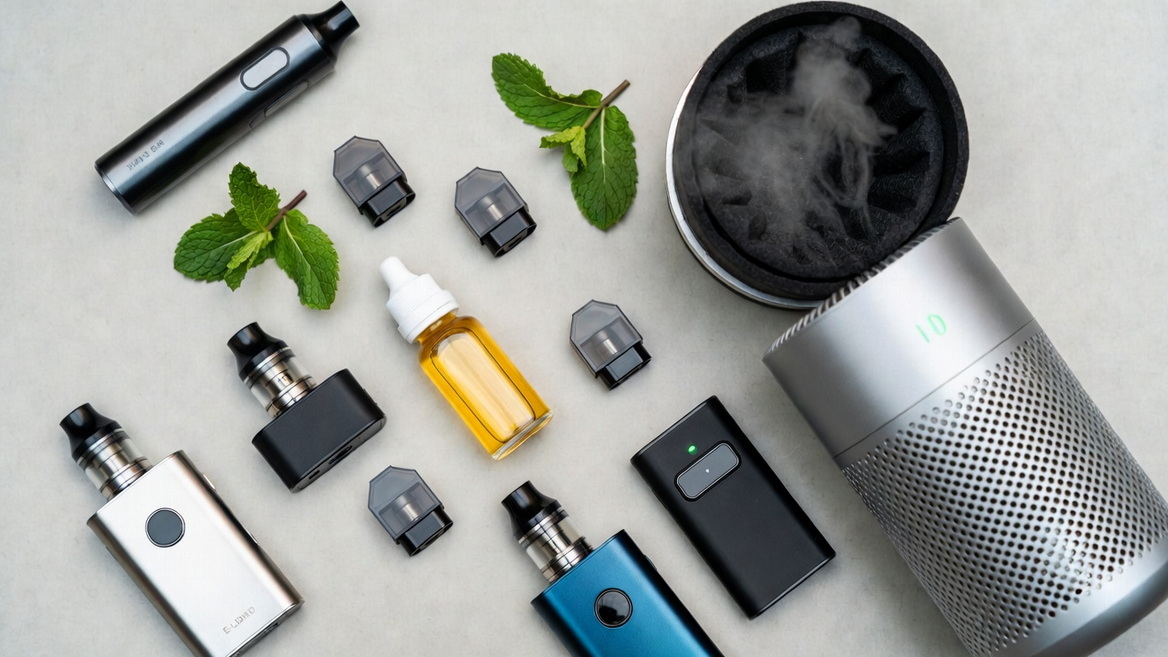
There is no single answer because indoor odour depends on the environment. In a well-ventilated space, a light scent from a few puffs may fade relatively quickly. In a closed car, small bathroom, bedroom, stairwell, or shared apartment, the scent can remain noticeable for longer.
Several factors determine how long the smell lasts.
A large room with open windows and fresh airflow disperses aerosol more effectively than a small closed space. But "dispersed" does not mean "removed." Air movement can also carry the scent into other rooms, hallways, or neighbouring areas.
Avoid assuming that an open window makes indoor vaping unnoticeable. In apartments or shared properties, air can travel through doors, vents, and gaps around windows.
One short session may leave little detectable odour. Repeated use over hours or days can build up residue, especially when aerosol repeatedly contacts soft furnishings, bedding, curtains, carpets, or vehicle interiors.
A high-cloud device used at high wattage will usually be easier to smell than a small, low-output E Vape device. Dense clouds do not only affect visibility; they also increase the amount of flavoured aerosol released into the space.
Often, the smell people associate with vaping does not come only from exhaled aerosol. It can come from a leaking Disposable Vape, a sticky refill bottle, an old pod, a used coil, or residue inside a pocket, handbag, desk drawer, or car console.
If you are trying to understand why a Vape smells more noticeable on certain days or in certain places, check these common causes.
Creamy, candy, bakery, and dessert-inspired E-Liquid flavours can be more persistent than subtle mint or lightly flavoured options. These profiles may be pleasant, but their aroma can be more obvious in shared spaces.
Higher wattage typically produces warmer, denser aerosol. If your device allows adjustment, use only the manufacturer-recommended settings for the installed pod or coil.
Do not lower settings beyond what the device can support merely to reduce odour. A poor power match can reduce satisfaction, create weak performance, or contribute to leaking and coil problems.
Cars, bathrooms, small bedrooms, lifts, corridors, and enclosed workspaces trap odours. A scented aerosol can become especially noticeable in these environments.
A leak is often more persistent than the aerosol itself. E-Liquid can collect under a pod, around charging ports, inside protective cases, or on surfaces. Besides creating an odour issue, leaked liquid should be cleaned carefully and kept away from children and pets.
Residue can oxidise, collect dust, and develop a stale smell. Regular cleaning helps maintain product performance and reduces unwanted odours from storage.
The best approach is not to "hide" Vape odour in places where vaping is prohibited or where people have asked you not to vape. Instead, reduce unnecessary exposure and use products only in locations where it is lawful and permitted.
Here are practical ways adult users can manage odour more responsibly.
The most effective odour-control decision happens before you use the device.
- Follow no-vaping policies in homes, workplaces, schools, hotels, restaurants, public transport, and other shared spaces.
- Do not vape near children, pregnant people, pets, or anyone who has asked not to be exposed.
- Avoid vaping in cars, even with windows open, particularly when passengers are present.
- Check local rules before travelling, as Vape laws vary significantly by country, state, and territory.
- Do not rely on fragrance sprays to make indoor vaping acceptable to others.
For Australian readers, this is particularly important. Vaping products are heavily regulated, and the legal supply framework is tied to therapeutic use and pharmacy access. Rules can also differ across states and territories.
A clean device is less likely to smell stale, leak, or develop a burnt taste.
Use this simple maintenance routine:
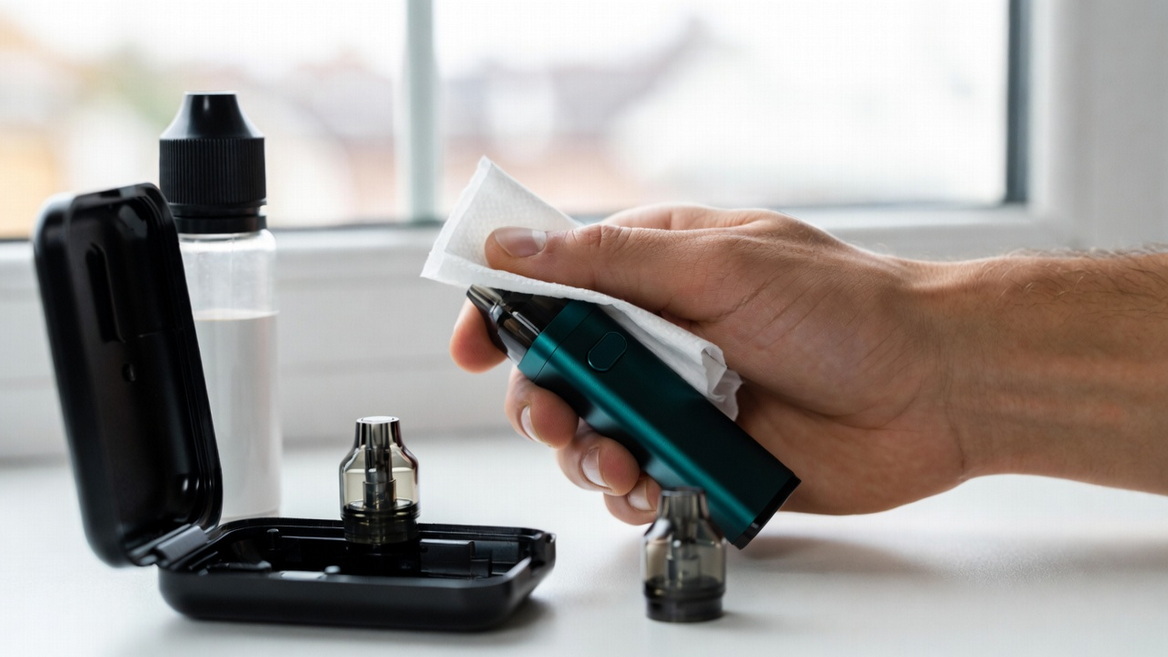
1. Wipe the mouthpiece daily with a clean, dry tissue or manufacturer-approved wipe.
2. Check the pod connection for condensation or E-Liquid residue.
3. Keep E-Liquid away from heat and direct sunlight to protect product quality.
4. Replace coils or pods when flavour drops or a burnt taste develops.
5. Clean leaks promptly using a disposable tissue, then wash your hands thoroughly.
6. Store devices upright where possible and keep them away from children and pets.
Never immerse a rechargeable Electronic Cigarette in water, and do not use harsh chemicals on battery contacts or inside the device.
Room sprays, candles, incense, and strongly scented diffusers may cover an odour temporarily, but they do not remove the underlying particles or residue. Combining multiple fragrances can also make a room feel more overpowering.
For general odour control, source reduction and fresh air are more useful than simply adding another scent.
If you use an air cleaner, understand what it can and cannot do. Mechanical particle filters can help reduce airborne particles, while activated-carbon-based filters are more relevant for certain gases and odours. Still, air cleaning is not a substitute for avoiding indoor exposure in the first place.
Use a secure case or closed storage container to minimise accidental leaks and lingering scents in bags, drawers, or vehicles.
Good storage practices include:
- Keep E-Liquid bottles tightly closed.
- Store products in a cool, dry location.
- Do not leave devices in direct sunlight or a hot car.
- Keep all vaping products locked away from children and pets.
- Inspect Disposable Vape products for damage before use.
- Dispose of used devices according to local battery and e-waste requirements.
Vape aerosol is less likely than cigarette smoke to leave the familiar yellowing and stale-smoke smell associated with tobacco combustion. However, repeated indoor vaping can still introduce aerosol components into indoor air and onto surfaces.
That is why a room may develop a faint sweet, stale, or "vape-like" smell over time, even when no one is actively using an Electronic Cigarette. This can be more noticeable on soft items such as curtains, bedding, cushions, vehicle seats, and carpets.
If a room or car smells persistently sweet or stale, clean the likely sources rather than simply adding fragrance:
- Wash removable fabric items according to their care labels.
- Vacuum carpets and upholstered furniture.
- Wipe hard surfaces where condensation may settle.
- Clean device cases, charging areas, and storage drawers.
- Remove leaking products, empty bottles, used pods, and old coils.
- Ventilate the space after cleaning.
Before using a Vape in any setting, consider this quick checklist:
| Question | Why it matters |
|---|---|
| Is vaping legal and allowed here? | Local laws and property rules may prohibit it |
| Is anyone nearby who could be exposed? | Courtesy and indoor-air considerations matter |
| Is this an enclosed space? | Odours and aerosol are more likely to accumulate |
| Is my device leaking or tasting burnt? | Residue and damaged coils can create stronger smells |
| Is the pod or E-Liquid securely stored? | Proper storage helps prevent leaks and odours |
| Am I using a high-output setting? | More aerosol generally means more noticeable scent |
| Can I wait until I am in an appropriate location? | This is usually the most respectful choice |
For an online retailer serving adult consumers, legal context should be clear rather than hidden in fine print. Australia's vape regulations have changed substantially, and the rules apply to nicotine and non-nicotine vaping products.
Under Australia's national framework, vapes are regulated as therapeutic goods. Legal access is generally connected to smoking cessation or nicotine-dependence management through pharmacies, subject to Commonwealth, state, and territory requirements. The availability of particular products, nicotine strengths, flavours, and device types can vary by jurisdiction.
For example, Western Australia applies additional restrictions and does not permit the supply of Disposable Vape products. Adults should verify current requirements with official health authorities and consult an appropriate healthcare professional or pharmacist when considering therapeutic vaping products.
A responsible product decision is not only about flavour, cloud size, or convenience. It also includes:
- Confirming that the product can be lawfully supplied where you live.
- Purchasing only from lawful channels.
- Checking age restrictions and identity requirements.
- Reviewing battery safety and disposal instructions.
- Understanding nicotine content and intended use.
- Seeking professional support if your goal is to stop smoking or manage nicotine dependence.
So, do vapes smell? Yes, but usually differently from cigarettes. A Vape can create a sweet, minty, fruity, tobacco-like, or stale scent depending on the E-Liquid, device, setting, and cleaning habits. The odour may fade faster than cigarette smoke, yet it can still be noticed by other people and can build up in enclosed areas over repeated use.
The most responsible way to manage vape odour is to avoid using Electronic Cigarettes indoors or in shared spaces where vaping is not permitted. Keep your device clean, address leaks quickly, store E-Liquid carefully, and remember that reduced smell is not the same as no exposure.
For adult consumers in markets where products can be legally supplied, choose vaping products carefully, follow all product instructions, and place consideration for others ahead of convenience.
Yes. A Disposable Vape can produce a noticeable scent, usually related to its flavour profile. Fruity, sweet, icy, and dessert-style flavours may be more noticeable than subtle or unflavoured products. The scent is often less like cigarette smoke, but it can still linger in enclosed spaces.
They may be able to, particularly in small homes, apartments, vehicles, or buildings with shared airflow. Open doors, ventilation systems, hallways, and gaps around windows can allow scented aerosol to travel beyond the immediate room.
Vape aerosol is generally less likely than cigarette smoke to produce a strong, long-lasting odour on clothing. However, frequent indoor vaping, high-output devices, sweet flavours, and poor ventilation can leave a faint scent or residue on fabrics over time.
A burnt smell may indicate that the coil or pod is dry, worn out, overheated, or being used outside its recommended power range. Stop using the device, check the E-Liquid level, replace the coil or pod if needed, and follow the manufacturer's guidance.
An air cleaner may reduce some airborne particles, and activated carbon may help with certain odours and gases. However, air cleaning does not eliminate all aerosol exposure and should not be treated as permission to vape indoors where it is prohibited or unwelcome.
Australian rules are strict and can vary by state and territory. National laws regulate vaping products as therapeutic goods, while states and territories may impose additional requirements. Check current official government guidance for your location before purchasing, carrying, or using vaping products.
Room spray mainly adds fragrance; it does not reliably remove the aerosol or residue causing the smell. Ventilation, cleaning leaks, maintaining the device, and avoiding indoor use are more practical approaches.
Keep E-Liquid bottles closed tightly and store devices in a cool, dry, secure place away from direct sunlight, heat, children, and pets. Check for leaks regularly and dispose of batteries and used devices through suitable e-waste channels where available.
1. [Planet of the Vapes — Do Dry Herb Vaporizers Smell?]
3. [U.S. Environmental Protection Agency — Guide to Air Cleaners in the Home]
4. [Australian Government Department of Health, Disability and Ageing — Vaping Laws]
5. [Therapeutic Goods Administration — Therapeutic Vaping Goods]
This website contains products intended for adults only.
Are you 18 years of age or older?
WARNING: This product contains nicotine. Nicotine is an addictive chemical.


