
Language
Views: 223 Author: Vera Publish Time: 2026-11-02 Origin: Site


Content Menu
● What Are Electronic Cigarettes, and How Do They Work?
● Disposable Vape, Pod System, and Refillable Device: Key Differences
>> Why Product Categories Should Not Be Ranked Together Without Context
● What Health Evidence Actually Supports
>> Why Complete Substitution and Dual Use Are Different
● Australian Vaping Rules: What Adult Readers Need to Know
>> When Is a Prescription Required?
>> What Changed With Product Standards?
● How to Evaluate Vape Claims Without Relying on Rankings
>> Separate Specifications From Measured Results
>> Treat Customer Reviews as Experiences, Not Clinical Evidence
>> Check Whether the Article Is Actually Current
● Battery and E-Liquid Safety: Practical Precautions
>> Follow the Manufacturer's Battery Instructions
>> Prevent Accidental Liquid Exposure
● A Five-Step Information Checklist
>> 1. Are Electronic Cigarettes Just Water Vapor?
>> 2. Is a Nicotine-Free Vape Automatically Safe?
>> 3. Can Adults Buy Vapes From Any Australian Retailer?
>> 4. Do All Adults Need a Prescription in Australia?
>> 5. Does a Higher Wattage Mean a Better Device?
>> 6. Is Smoking and Vaping Together a Good Health Strategy?
>> 7. What Should I Do Before Acting on a Vape Recommendation?
Electronic cigarettes—also called vapes or e-cigarettes—are battery-powered devices that heat a liquid to produce an inhalable aerosol. Terms such as disposable vape, pod system, and e-liquid describe different parts of this product category, not different levels of safety. For adult readers, understanding these distinctions is more useful than relying on a "best vape" ranking.
This guide explains device categories, how to evaluate product claims, important safety considerations, and Australia's pharmacy-based access framework. It does not rank products or recommend starting vaping.

An electronic cigarette generally combines a battery, a heating element, and a reservoir containing e-liquid. When activated, the heating element produces an aerosol that the user inhales.
The word "vapor" can create a misleading impression. The aerosol is not simply harmless water vapor. Depending on the product and conditions of use, it can contain nicotine and other potentially harmful substances.
Most e-cigarettes contain nicotine, which is highly addictive. However, the absence of nicotine does not establish that a product is harmless, nor does a "nicotine-free" label determine whether it can legally be sold in a particular country.
E-liquid is the fluid used in an electronic cigarette. Its stated ingredients and nicotine concentration are separate from the device's electrical specifications.
When reviewing documentation, distinguish between:
- Liquid volume: how much fluid a container or reservoir holds.
- Nicotine concentration: the amount of nicotine per unit of liquid.
- Battery capacity: an electrical specification, not a nicotine measurement.
- Power output: a device operating characteristic, not a health rating.
A larger battery or higher power rating does not demonstrate lower exposure, better manufacturing quality, or greater suitability for an individual.
Device categories describe construction and maintenance requirements. They should not be treated as a simple ladder from "beginner" to "better."
| Device category | General design | Important information to check |
|---|---|---|
| Disposable vape | Designed for disposal after its usable liquid or service life is exhausted | Local legality, disposal instructions, and battery handling |
| Closed-pod system | Uses replaceable, prefilled cartridges | Cartridge compatibility and manufacturer documentation |
| Refillable pod system | Uses a reservoir intended for refilling | Maintenance instructions and compatible components |
| Tank-based device | Uses a separate tank, often with replaceable heating components | Battery requirements, component compatibility, and operating instructions |
Some disposable products have rechargeable batteries. Rechargeability alone does not mean a device is refillable, repairable, or suitable for repeated reuse.
A small pod device and a larger tank-based device can involve different operating requirements. Comparing them solely through battery capacity, maximum wattage, or advertised puff counts leaves important questions unanswered.
A useful comparison should explain what was assessed, under which conditions, and with what limitations. It should not assume that a more complicated device is more appropriate or that a simpler design removes health risks.
The central distinction is between relative exposure and absolute safety.
Public-health guidance recognizes that e-cigarettes may potentially benefit adults who smoke and are not pregnant when used as a complete substitute for smoked tobacco. That statement does not mean vaping is harmless, suitable for everyone, or advisable for people who do not smoke.
Safety cannot be established by flavor descriptions, visible aerosol, customer ratings, or a device's technical specifications.
No. E-cigarette aerosol can contain harmful and potentially harmful substances. Nicotine can cause dependence, and exposure presents particular concerns for young people and pregnancy.
Electronic cigarettes should not be used by young people or pregnant women. Adults who do not use tobacco should not interpret discussion of smoking substitution as a reason to begin vaping.
Dual use means continuing to smoke cigarettes while also using e-cigarettes.
This distinction matters because adding vaping without stopping smoking is not an effective way to protect health. Continuing to smoke—even at a lower level—retains important risks.
For an adult who smokes, an individual cessation plan should address smoking completely, nicotine dependence, available treatments, and follow-up. A pharmacist or qualified healthcare professional can help assess those issues without relying on product advertising.
Public-health authorities continue to investigate both short-term and long-term effects. Product designs and patterns of use also vary.
That uncertainty should not be converted into either "proven safe" or an unsupported claim that every product produces identical exposure. Responsible communication separates established findings from unresolved questions.
Australia regulates therapeutic vapes through a pharmacy-based framework. Overseas retail availability does not establish that a product can lawfully be sold or supplied in Australia.
According to the Therapeutic Goods Administration, therapeutic vapes for smoking cessation or managing nicotine dependence are available through participating pharmacies where clinically appropriate. Non-pharmacy retailers cannot legally sell vapes in Australia, including products that do not contain nicotine.
Under the national framework, adults aged 18 or older may be able to access therapeutic vapes containing 20 mg/mL of nicotine or less without a prescription through a participating pharmacy.
This is subject to clinical assessment, applicable conditions, and state or territory requirements. It is not unrestricted retail access.
Products containing more than 20 mg/mL require a prescription. Other circumstances can also require one, and local requirements may be stricter.
Pharmacists are not obliged to stock or supply these products.
Strengthened standards for therapeutic vaping goods took effect from 1 July 2025. Pharmacies can supply only products that meet the applicable strengthened standards.
However, compliance should not be described as proof that vaping is risk-free. Regulatory requirements, clinical appropriateness, and individual health risks are different questions.
Before making decisions, consult the current national guidance and the rules applying in your state or territory.
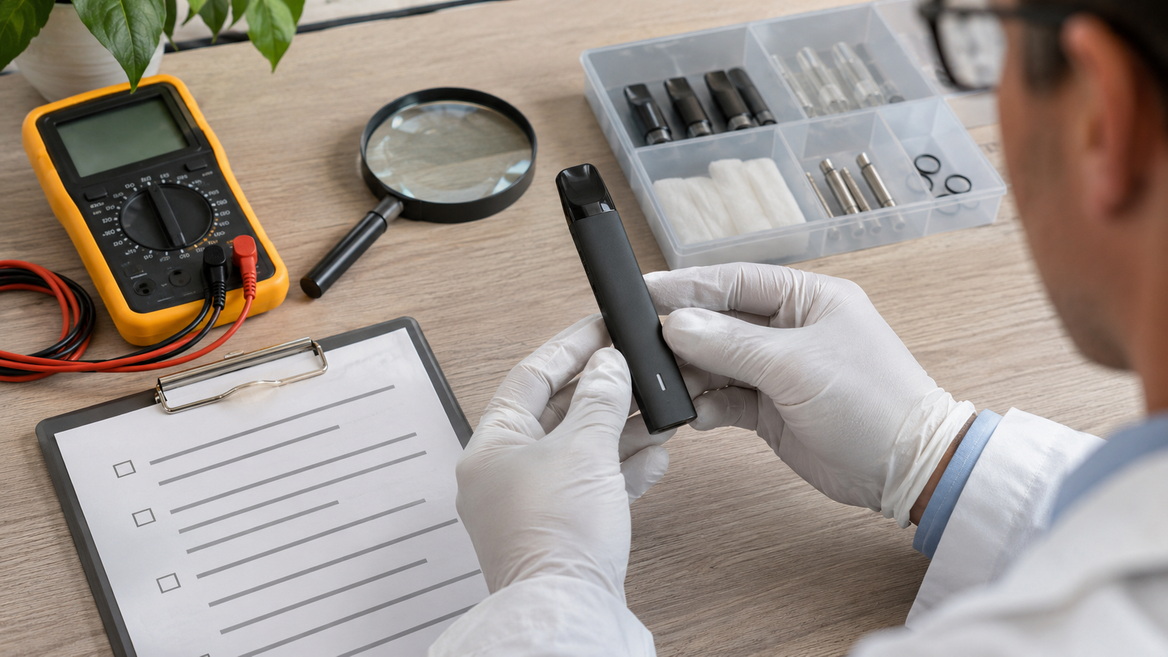
A confident headline is not a testing method. Before accepting a product comparison, ask what evidence supports its conclusions.
Manufacturer specifications describe claimed characteristics. Independent testing should explain what investigators actually measured.
For example, "all-day battery life" is incomplete without information about usage frequency, operating settings, and the condition of the tested device.
Similarly, a "leak-proof" claim should not be treated as established unless the evaluation explains the test conditions and limitations.
A transparent article should identify:
1. Who performed the assessment.
2. When testing occurred.
3. Which devices or samples were tested.
4. What conditions and methods were used.
5. Whether products were supplied or purchased.
6. Which results came from manufacturers rather than testing.
Without these details, readers should treat broad performance judgments cautiously.
A review may describe a customer's experience with packaging, reliability, or service. It cannot establish that a product is medically appropriate or safe.
Look for dates, specific circumstances, and clear descriptions of the issue. Repeated complaints may justify further investigation, but they do not automatically identify the technical cause.
A responsible editor should not invent reviews, merge several comments into an unattributed testimonial, or imply that verified-purchase status proves technical accuracy.
No customer reviews were supplied for this article, so none have been presented as evidence.
A recent publication date is not enough. Check whether the body still refers to earlier years, discontinued products, or outdated regulations.
This matters especially when a global article is republished for Australian readers. A device's appearance in an overseas comparison does not establish lawful local availability.
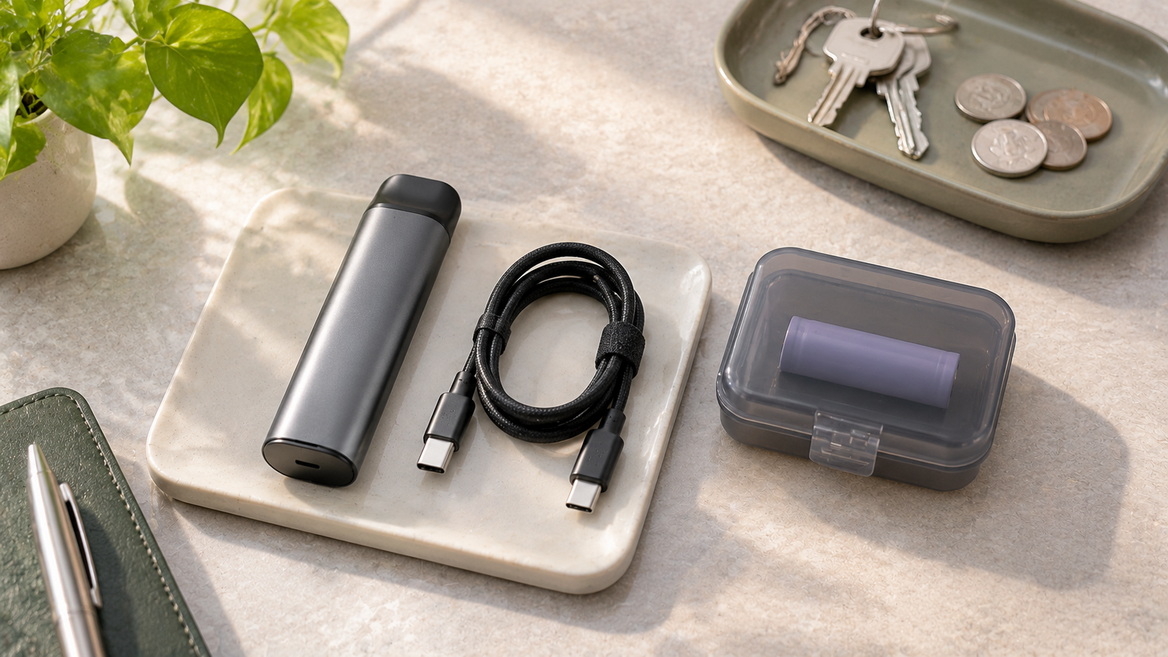
Electronic cigarettes combine electrical components with liquids that may contain nicotine. Handling precautions matter independently of any debate about smoking substitution.
The U.S. Food and Drug Administration advises users to read device instructions and use only recommended batteries.
Its precautions include:
- Do not mix battery brands, different charge levels, or old and new batteries.
- Charge on a clean, flat surface where the device remains visible.
- Keep charging devices away from easily combustible materials.
- Avoid extreme temperatures and direct sunlight.
- Do not use vapes near flammable gases or liquids.
- Follow appropriate disposal instructions.
A charger or battery that physically fits should not automatically be assumed compatible. Consult the manufacturer when instructions are unclear.
Vaping liquid can cause poisoning through swallowing or exposure involving skin or eyes. Children and adults have experienced such exposures.
Keep products inaccessible to children and follow their storage instructions. If an exposure occurs, seek prompt advice from a local poison information service or healthcare professional.
Do not rely on a favorable online review to assess an exposure or decide whether medical attention is needed.
Before relying on any electronic-cigarette article or product claim:
1. Check the jurisdiction. Confirm that the information applies where you live.
2. Identify the evidence. Separate manufacturer claims, measured results, and personal opinions.
3. Review health limitations. Look for addiction risks, uncertainty, and clear audience restrictions.
4. Verify documentation. Read compatibility, maintenance, charging, and disposal instructions.
5. Seek qualified guidance. Discuss smoking cessation and nicotine dependence with a pharmacist or healthcare professional.
This approach does not select a "best" product. It helps prevent unsupported claims from replacing informed decisions.
No. They produce an aerosol that can contain nicotine and other harmful or potentially harmful substances. The absence of smoke does not make the aerosol harmless.
No. Removing nicotine does not establish the safety of other inhaled substances or eliminate electrical hazards. In Australia, nicotine-free status also does not create an exemption allowing ordinary retailers to sell vapes.
No. Australia uses a pharmacy-based framework for therapeutic vaping goods. Participating pharmacies may supply them where clinically appropriate and subject to applicable requirements.
Not necessarily. Some adults aged 18 or older may access products containing 20 mg/mL nicotine or less through a participating pharmacist without a prescription. Conditions and state or territory requirements apply.
No. Maximum power is an electrical specification, not evidence of safety, reliability, or suitability. Meaningful evaluation requires defined criteria and documented testing.
Dual use is not an effective way to protect health. Adults who smoke should seek support for stopping smoking completely rather than assuming that adding vaping removes smoking-related risks.
Check current local rules, examine the evidence behind the recommendation, and discuss smoking cessation or nicotine dependence with a qualified professional. Avoid starting vaping if you do not currently use tobacco.
- Therapeutic Goods Administration. [Vapes: information for individuals and patients]. Australian access pathways, pharmacy supply, and prescription requirements. [tga.gov]
- Therapeutic Goods Administration. [Changes to the regulation of vapes]. National framework and state or territory qualifications. [tga.gov]
- Therapeutic Goods Administration. [New standards for nicotine vaping products from July 2025]. Strengthened therapeutic product standards. [tga.gov]
- Centers for Disease Control and Prevention. [Health Effects of Vaping]. Health risks, nicotine dependence, complete substitution, and accidental exposure. [cdc]
- Centers for Disease Control and Prevention. [About E-Cigarettes (Vapes)]. Device overview and aerosol-related information. [cdc]
- Centers for Disease Control and Prevention. [E-Cigarette Use Among Adults]. Dual use and the importance of stopping smoking completely. [cdc]
- U.S. Food and Drug Administration. [Tips to Help Avoid Vape Battery Fires or Explosions]. Battery compatibility, charging, storage, and disposal precautions. [fda]
This website contains products intended for adults only.
Are you 18 years of age or older?
WARNING: This product contains nicotine. Nicotine is an addictive chemical.


