
Language
Views: 254 Author: 7DaysVape Publish Time: 2026-10-31 Origin: Site


Content Menu
● IGET Bar Plus S3 vs Ingot 9000: The Evidence-Based Comparison
● What Does a Smart Vape Display Actually Measure?
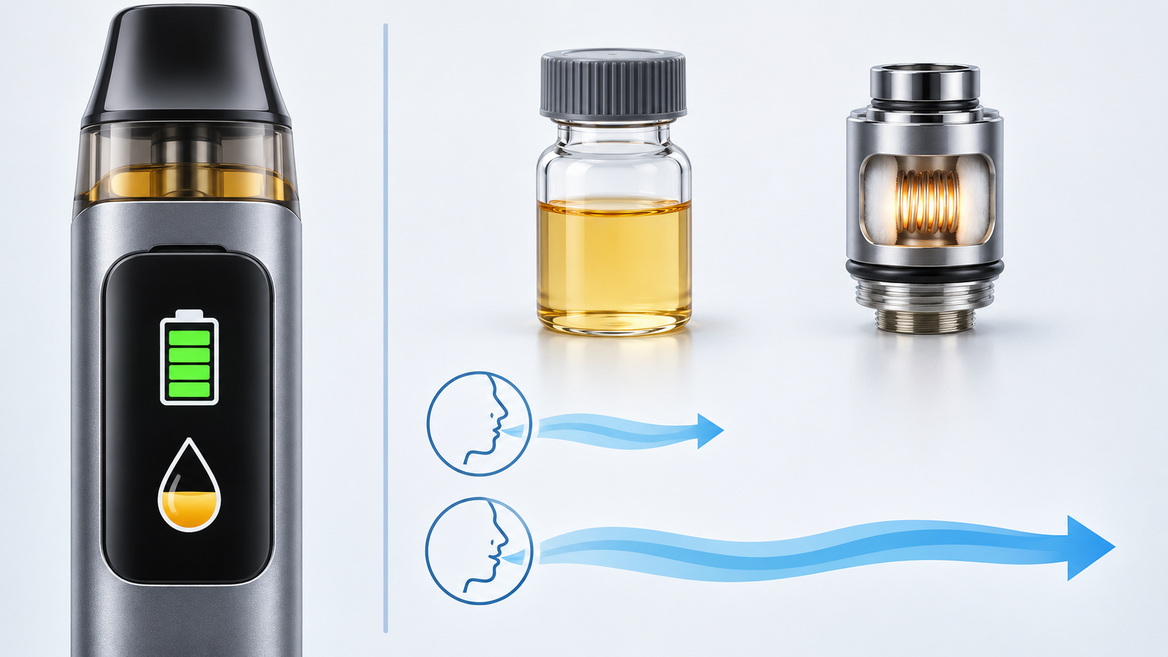
>> Battery Status Measures Available Power
>> Liquid Status Describes Remaining Supply
>> Puff Counts Describe Events, Not Equal Doses
● Why Nicotine Intake Cannot Be Calculated From a Screen Alone
>> Nicotine Concentration Is Only One Variable
>> Longer Puffs Can Undermine a Simple Reduction Target
>> Changing Devices Creates Another Measurement Problem
● IGET Bar Plus S3: What Matters for Nicotine Reduction?
>> Replaceable Pods Do Not Guarantee a Strength Ladder
>> Pod Longevity Is Not a Dependence Score
● Ingot 9000: What Its LED Display Can and Cannot Tell You
>> Visible Information Is Not Necessarily Validated Information
>> A Fixed Prefilled Product Limits Strength Adjustment
● A Better Accuracy Test: Three Questions Every Tracking Claim Should Answer
>> 1. Does It Record Behaviour Correctly?
>> 2. Does It Measure Consumption Reliably?
>> 3. Does It Predict Nicotine Exposure?
● A Practical Monitoring Framework for Adults Who Already Vape
>> Step 1: Establish Your Current Pattern
>> Step 2: Discuss a Suitable Reduction Approach
>> Step 3: Watch for Compensatory Use
>> Step 4: Protect Against Returning to Smoking
● Australia: Why the Supply Pathway Matters
● Final Assessment: Prioritise a Supported Plan Over a Display
>> 1. Is Ingot 9000 more accurate than IGET Bar Plus S3 for tracking nicotine?
>> 2. Does IGET Bar Plus S3 have a nicotine-tracking screen?
>> 3. Can I calculate nicotine intake from puff count?
>> 4. Does a longer-lasting disposable vape help with tapering?
>> 5. Is reducing nicotine strength enough?
>> 6. Can Australian consumers buy these products from any online retailer?
When comparing IGET Bar Plus S3 vs Ingot 9000 for tapering off nicotine, the most important finding is straightforward: neither device has independently verified evidence demonstrating accurate measurement of nicotine intake. A battery indicator, liquid-level display, or advertised puff count cannot tell you how much nicotine your body absorbs.
There is also a problem with the comparison's premise. ALIBARBAR describes the Ingot 9000 as having an LED display for battery and liquid levels. However, the available IGET Bar Plus S3 information does not establish a comparable, validated nicotine-tracking system.
For adults already using electronic cigarettes, that distinction matters more than screen size or advertised capacity. This comparison examines the documented features, explains the measurement limitations, and outlines a more useful approach to monitoring nicotine reduction.

The IGET Bar Plus S3 is generally described as a rechargeable device using replaceable, prefilled pods. The Ingot 9000 is described as a prefilled disposable vape with an LED status display.
Those differences affect everyday operation, but they do not establish which product measures nicotine exposure more accurately.
| Comparison point | IGET Bar Plus S3 | ALIBARBAR Ingot 9000 |
|---|---|---|
| Published product format | Rechargeable base with replaceable pods | Prefilled disposable device |
| Advertised puff capacity | Up to 10,000 for S3 pods | Up to 9,000 |
| Display evidence | Comparable nicotine-tracking display not established | Battery and liquid-level LED display advertised |
| Verified daily puff logging | Not established in reviewed material | Not established in reviewed material |
| Measurement of absorbed nicotine | Not demonstrated | Not demonstrated |
| Independent tracking-accuracy comparison | None identified | None identified |
| Evidence supporting a tapering advantage | Not established | Not established |
Product descriptions can vary across sellers and versions. Confirm the exact model and packaging rather than transferring specifications from another device with a similar name.
The practical verdict is unproven: neither product can responsibly be named the more accurate nicotine-tapering tracker.
A useful comparison separates three functions that are often grouped together under "smart tracking."
A battery indicator helps explain whether a device is approaching depletion. It does not measure nicotine concentration, inhaled aerosol, or nicotine absorbed into the bloodstream.
A battery reading of 50% does not mean half the nicotine remains. Battery consumption and liquid consumption are different processes.
For someone monitoring dependence, battery information is an operational convenience—not a progress measurement.
The Ingot 9000's advertised liquid indicator provides information about remaining liquid. However, the reviewed material does not establish its calibration method, measurement resolution, or error range.
It should therefore be treated as a status indicator, not a laboratory instrument.
Even an accurate measurement of liquid consumption would not directly measure absorbed nicotine. Liquid nicotine content, aerosol delivery, and absorption are related but distinct quantities.
An advertised "9,000 puffs" or "10,000 puffs" is a product-capacity claim. It is not automatically a live counter, daily usage log, or nicotine-dose calculator.
Even a device that correctly counts every activation faces another limitation: puffs are not interchangeable units.
A brief draw and a longer draw may both count as one puff while producing different nicotine exposure. That makes puff totals potentially useful for observing habits, but insufficient for measuring dose.

Research on electronic cigarettes shows that nicotine delivery depends on several interacting factors:
- E-liquid nicotine concentration.
- Device power and aerosol production.
- Puff duration.
- User experience and inhalation behaviour.
This explains why comparing two devices by screen information alone creates false precision.
A concentration label describes nicotine in the liquid, usually expressed in milligrams per millilitre. It does not describe the amount absorbed during each use.
For example, liquid labelled 20 mg/mL contains 20 milligrams of nicotine per millilitre. That does not mean a person absorbs 20 milligrams after consuming one millilitre.
Some nicotine remains outside the absorbed dose. Delivery also depends on the device and how it is used.
Imagine an adult who reduces daily puff count from 100 to 80 but begins taking substantially longer draws.
The counter would show a 20% reduction in puff events. It would not prove a 20% reduction in nicotine intake.
This is an illustrative example, not a measured result for either product. Its purpose is to show why a behaviour metric should not be presented as a biological measurement.
Moving between the IGET Bar Plus S3 and Ingot 9000 changes more than the number printed on the packaging.
Different hardware and use patterns may change delivery. Consequently, the same daily puff count on two products does not establish equivalent exposure.
A credible tapering assessment needs context, not just a smaller number.
The IGET Bar Plus S3's replaceable-pod format is its most relevant structural difference from a disposable device.
However, replacing a pod is not the same as reducing nicotine strength.
A device can support multiple pods without offering a suitable sequence of lower nicotine concentrations.
Before describing any pod system as useful for tapering, establish:
1. Which nicotine concentrations actually exist.
2. Whether those concentrations are reliably labelled.
3. Whether compatible options are lawfully available locally.
4. Whether a clinician considers the approach appropriate.
The reviewed material does not establish a clinically supported S3 strength-reduction programme.
Recording how long a pod lasts may help identify broad changes in behaviour.
However, longer pod life does not independently prove lower absorbed nicotine. Changes in draw duration, use of other nicotine products, and differences between pods can affect interpretation.
My assessment prioritises transparent measurements over convenient assumptions. The S3's modular format does not, by itself, establish superior monitoring accuracy.
The Ingot 9000 has the clearer documented display proposition: its brand description identifies battery and liquid-level information.
That answers a device-status question. It does not answer a nicotine-dose question.
A changing indicator can make consumption feel measurable. Nevertheless, a numerical or graphical display requires validation before its output can support precise claims.
Important unanswered questions include:
- Does the indicator measure liquid directly or estimate remaining supply?
- How closely does it match actual liquid depletion?
- Does accuracy change during the device's lifespan?
- Has an independent organisation tested it?
Without those answers, "more informative" should not become "more accurate for tapering."
If a specific prefilled device is available only at one nicotine concentration, its screen cannot create lower-strength options.
That is an important distinction between monitoring consumption and controlling concentration.
Neither a remaining-liquid symbol nor a larger advertised puff capacity solves the problem of finding an appropriate, legally supplied nicotine-reduction pathway.
A meaningful tracking system needs more than a screen. It needs evidence at three levels.
For puff tracking, a study should compare recorded activations against an independent reference.
It should examine missed events, false events, short draws, longer draws, and consistency between devices.
A product-capacity estimate does not satisfy this requirement.
For liquid tracking, validation should compare displayed changes with independently measured liquid consumption across repeated trials.
The manufacturer should explain resolution and error limits. A rough "full-to-empty" indicator should not be interpreted as a precise daily consumption record.
This is a separate, more demanding question.
Researchers would need to relate device measurements to nicotine exposure under defined conditions. Even then, differences between users would require careful interpretation.
Published research has evaluated specialised puff-recording systems. However, findings for a research device cannot be transferred automatically to IGET Bar Plus S3 or Ingot 9000.
A useful reduction record combines behaviour, symptoms, and professional guidance. It does not depend on treating a consumer display as a medical instrument.
Record a representative baseline before interpreting changes.
Useful fields include:
| Record | Why it helps |
|---|---|
| Product and labelled concentration | Identifies what you are using |
| Approximate sessions or puffs | Shows behavioural frequency |
| Typical draw pattern | Adds context to puff totals |
| Time to first use | Helps describe daily dependence patterns |
| Cravings and withdrawal symptoms | Shows whether changes are manageable |
| Cigarettes or other nicotine products | Prevents an incomplete picture |
The aim is a more complete discussion with a healthcare professional—not a self-calculated nicotine dose.
Gradual reduction can involve lowering nicotine strength, extending intervals between use, or creating vape-free periods.
However, the appropriate approach depends on the person. There is no verified universal schedule for either device in this comparison.
A pharmacist or clinician can also discuss nicotine replacement therapy and other suitable support.
A lower concentration does not always translate into proportionately lower intake.
If you start vaping more frequently or taking longer draws, the change may be harder to interpret. Increased cravings can also indicate that the reduction is difficult to sustain.
Review the plan rather than assuming that a lower label guarantees progress.
For adults who previously smoked, stopping vaping and preventing smoking relapse are connected but separate priorities.
Seek professional support if cutting down creates strong urges to smoke. A screen target should never become more important than maintaining a workable cessation plan.
For Australian readers, this comparison cannot be separated from local regulation.
Australian rules restrict the sale of vaping goods to participating pharmacies for therapeutic purposes. General online retail availability does not establish lawful Australian supply.
Eligible adults may access certain therapeutic vapes containing 20 mg/mL nicotine or less without a prescription through a pharmacist, subject to conditions and local requirements. Other circumstances require a prescription.
Therapeutic vapes are not first-line treatment, and products supplied through these pathways remain distinct from medicines evaluated and included in the Australian Register of Therapeutic Goods.
For 7DaysVape's Australian-facing educational content, this means avoiding suggestions that either named product is an approved cessation treatment or an ordinary online retail option for Australian consumers.
The Ingot 9000 has documented battery and liquid-level display features. The reviewed IGET Bar Plus S3 information does not establish an equivalent validated tracking system.
Neither has demonstrated superior accuracy for measuring nicotine intake or guiding nicotine tapering.
If your goal is to reduce dependence, take your product label and a short usage record to a pharmacist or clinician. Ask about a lawful, supported plan that addresses cravings, nicotine strength, and smoking-relapse risk—not simply the number shown on a device.
There is insufficient evidence to say so. Its advertised display concerns battery and liquid levels, not validated absorbed nicotine. No independent head-to-head accuracy study was identified.
The reviewed material does not establish a validated nicotine-tracking screen. Do not confuse an advertised puff capacity, product name, or indicator light with a daily nicotine-monitoring function.
Not reliably. Nicotine delivery varies with concentration, device characteristics, and puff duration. Puff counts can describe behaviour but cannot independently establish absorbed dose.
Longer product life does not demonstrate better nicotine reduction. Tapering requires attention to concentration, behaviour, symptoms, and appropriate support—not simply the interval between replacements.
Not always. Some people compensate by vaping more. Monitor changes in use and cravings, and discuss a manageable approach with a healthcare professional.
No. Australia restricts vaping-goods sales to participating pharmacies under therapeutic supply rules. A website listing does not prove that a product or supply arrangement complies.
1. ALIBARBAR. "INGOT 9000." Brand product description identifying an LED display for battery and liquid levels. Commercial feature information, not independent accuracy validation. [alibarbar]
2. IGET Vape. "IGET BAR PLUS S3 POD." Commercial product listing describing S3 pod features; not evidence of nicotine-tracking accuracy or cessation effectiveness. [igetvapels]
3. IGETYES. "IGET Bar Plus Review: Worth It? Costs, Pods & Specs." Secondary commercial description of the rechargeable pod format, advertised capacities, and screen limitations. Specifications require model-level verification. [igetyes]
4. "What factors reliably predict electronic cigarette nicotine delivery?" Research record hosted by CDC Stacks. Examines associations between nicotine delivery, liquid concentration, and puff duration. [stacks.cdc]
5. "Interactive effects of protonated nicotine concentration and device power on nicotine delivery and puff topography." PubMed research record. Examines the interaction between device power, nicotine concentration, and user behaviour. [pubmed.ncbi.nlm.nih]
6. "A Novel Puff Recording Electronic Nicotine Delivery System…" JMIR Formative Research, 2023. Evaluates a specialised recording system; its findings do not validate the two commercial products compared here. [formative.jmir]
7. NHS Better Health. "How to quit vaping." Guidance on gradual reduction, compensatory vaping, and discussing nicotine replacement therapy with a professional. [nhs]
8. Therapeutic Goods Administration. "Vapes: information for individuals and patients." Australian patient guidance on pharmacy access, prescription pathways, and treatment limitations. [tga.gov]
9. Therapeutic Goods Administration. "Supplying therapeutic vapes in pharmacies." Regulatory guidance covering pharmacy-only supply, therapeutic purposes, and supply conditions. [tga.gov]
This website contains products intended for adults only.
Are you 18 years of age or older?
WARNING: This product contains nicotine. Nicotine is an addictive chemical.


