
Language
Views: 221 Author: 7DaysVape Publish Time: 2026-10-29 Origin: Site


Content Menu
>> Why Product Categories Matter
● What the Earlier PAX Era Pro Guide Establishes
>> Separate Historical Features from Current Availability
● Temperature Controls: What They Do Not Prove
>> Precision Is Not the Same as Safety
● Dose Control: Why the Wording Requires Care
>> Three Different Claims to Keep Separate
● Product Information: What Is Worth Checking?
>> A Useful Documentation Checklist
● Health Risks: What the Lung-Injury Evidence Shows
>> What Readers Should Take Away
● PAX Era Pro Safety: Device Problems Are Not Performance Challenges
>> Follow Model-Specific Maintenance Instructions
● Australia: Device Availability Is Not Regulatory Approval
>> Devices and Filled Pods Are Different Regulatory Questions
>> What Australian Readers Should Verify
● How to Judge Reviews Without Mistaking Opinion for Evidence
>> What Makes a Review More Informative?
● Before Relying on a PAX Era Pro Guide
>> Is the PAX Era Pro the same as a nicotine electronic cigarette?
>> Can ordinary e-liquid be treated as compatible?
>> Does dose control guarantee a medically precise dose?
>> Does a temperature setting prove that inhalation is safe?
>> Are historical app instructions necessarily current?
>> Is the PAX Era Pro approved for supply in Australia?
>> Does this article include firsthand testing or verified customer reviews?
The PAX Era Pro is a pod-based vaporizer associated with cannabis extracts. Understanding that product category is essential before interpreting its features, reading an older user guide, or comparing it with electronic cigarettes. A familiar shape does not mean different devices accept the same substances, carry the same risks, or follow the same regulations.
This PAX Era Pro guide examines the device's documented features, explains the limits of temperature and dose-control claims, and highlights questions Australian readers should consider. It is an informational overview, not a hands-on review, medical recommendation, or instruction for consuming cannabis.
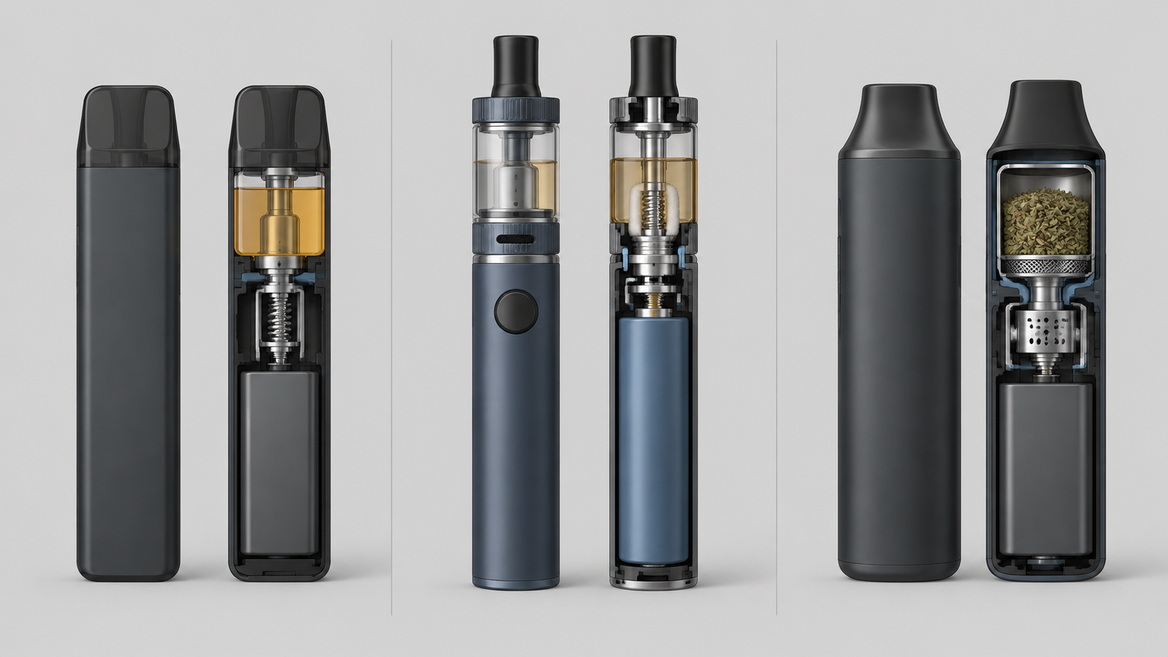
The PAX Era Pro belongs to the PAX Era pod ecosystem. The original retailer guide describes a rechargeable device used with PAX pods, alongside onboard controls and app-related features.
That makes it different from a general-purpose refillable device. It should not be treated as a universal container for e-liquid, loose plant material, or other substances.
The word "vape" covers products with different intended uses. Broad terminology can obscure important differences.
| Product category | Relevant distinction |
|---|---|
| PAX Era Pro | A device associated with the PAX Era pod ecosystem |
| Nicotine electronic cigarette | A device intended for a nicotine-vaping application |
| Disposable vape | A product format, not proof of its contents or legal status |
| Dry-herb vaporizer | A device designed around plant material rather than a prefilled extract pod |
| E-liquid | A substance category, not a guarantee of device compatibility |
A product's appearance, charging connection, or marketing language does not establish compatibility. The relevant evidence is its intended purpose and model-specific documentation.
The original article describes USB-C charging, pod recognition, preset temperature settings, and additional controls through PAX software. It also discusses brightness, vibration feedback, and a feature described as dosage control.
These descriptions help establish what the retailer reported when the article was written. They do not independently confirm present-day software support, regional access, or medical performance.
The article carries a March 2022 publication date. Software-dependent information deserves particular caution because an older description cannot establish whether the same functions remain accessible on a reader's current phone or browser.
Before relying on an app-related claim, check:
- Whether current documentation explicitly supports the Era Pro.
- Whether instructions concern the same model rather than another PAX device.
- Whether the relevant software works in the reader's region.
- Whether account, browser, or operating-system requirements have changed.
A manufacturer support page is the appropriate starting point, but a page linking to a manual is not itself evidence that every historical feature remains available.
The retailer guide lists preset temperatures and describes more precise software-based adjustment. These are device-control claims, not evidence that a particular setting is safe, medically suitable, or appropriate for an individual.
A displayed temperature also should not be interpreted as a direct measurement of the temperature reaching someone's lungs.
A control can be numerically precise without establishing a health benefit. Likewise, a lower setting should not automatically be described as harmless, and a higher setting should not be recommended simply because it produces a stronger experience.
The important editorial distinction is between explaining that a control exists and recommending how to intensify exposure.
This guide does not provide temperature recommendations, inhalation techniques, or advice for increasing substance delivery. For a prescribed medicinal product, questions about administration belong with the treating clinician and the applicable product instructions.
The earlier retailer article states that the device's dosage-control feature provides an "exact dose" each time. That wording is stronger than the evidence established by a retail guide.
A software-controlled session limit and a clinically validated administered dose are not interchangeable concepts.
1. Device control: the device limits operation according to a programmed setting.
2. Substance delivery: a defined quantity of a compound leaves the product.
3. Individual exposure: a defined quantity is absorbed by a particular person.
Evidence supporting the first claim does not automatically establish the second or third.
Without suitable validation, an article should not translate a device setting into a guaranteed cannabinoid dose or predictable medical effect.
For someone receiving prescribed medicinal cannabis, the practical question is whether the prescriber's instructions explicitly account for that product and device. A retailer's description should not replace that discussion.
Evaluating a pod requires more than recognizing the device brand. Hardware information and substance information answer different questions.
The device documentation concerns compatibility and operation. Product documentation concerns what a particular pod contains and how it is identified.
Where applicable and available, look for:
- A clearly identified manufacturer or responsible supplier.
- A product name and batch identifier.
- Ingredient and cannabinoid information.
- Relevant expiry and storage information.
- Instructions that match the exact product.
- Testing documentation that clearly identifies the sample or batch tested.
These are questions for evaluating documentation, not a guarantee that any product is safe.
A laboratory report also has limits. It establishes findings for the sample and substances tested; it does not automatically establish comprehensive safety, lawful supply, or suitability for an individual patient.
Terms such as "premium," "clean," and "expert approved" should never substitute for identifiable evidence.
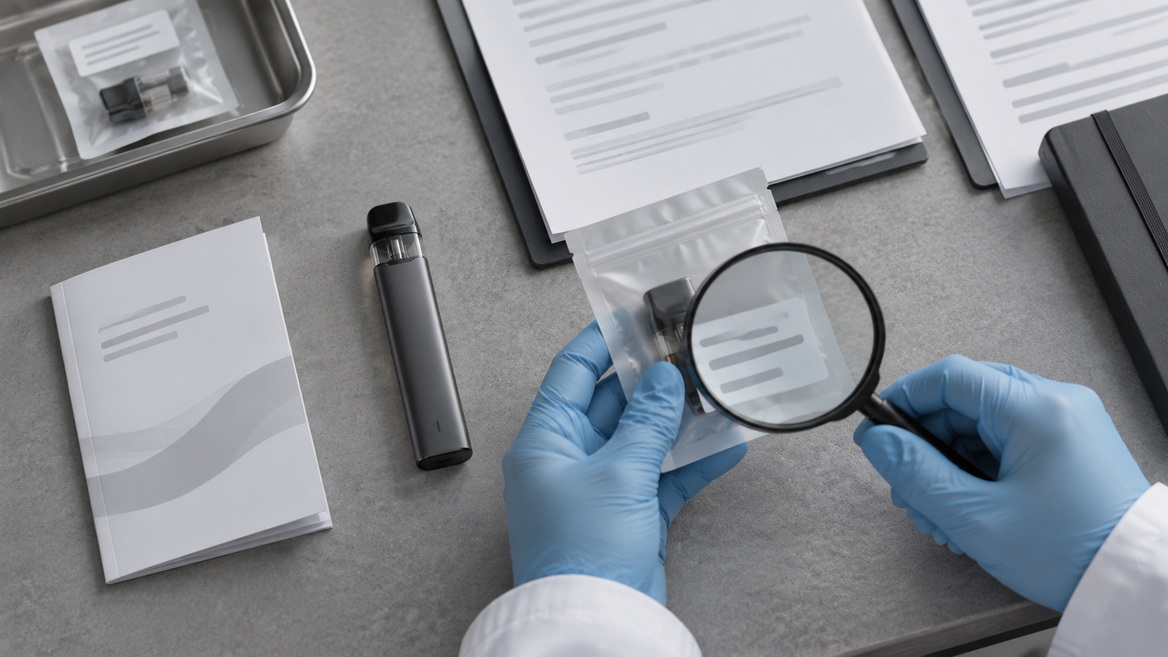
The United States outbreak of e-cigarette or vaping product use-associated lung injury, known as EVALI, provides important context.
Public-health investigations linked most outbreak cases to THC-containing vaping products, particularly products obtained through informal sources. Vitamin E acetate was strongly linked to the outbreak.
A study published in The New England Journal of Medicine detected vitamin E acetate in lung-fluid samples from 48 of 51 EVALI patients. It was not detected in samples from the healthy comparison group.
Those findings support concern about that substance and the outbreak. They do not establish that every cannabis-vaping product contains vitamin E acetate, or that one particular device caused those cases.
The distinction matters: meaningful safety communication explains both the finding and its limits.
FDA and CDC advice recommends against using THC-containing vaping products, particularly those obtained from informal sources. The agencies also advise that vitamin E acetate should not be added to vaping products.
Conversely, the absence of one identified additive should not be presented as proof that inhalation is harmless.
Breathing difficulties or other concerning symptoms following vaping warrant medical assessment, not an attempt to solve the problem by changing device settings.
A device that appears damaged, contaminated, or unreliable should be treated as a safety concern rather than an invitation to experiment.
This article does not reproduce repair techniques or improvisational cleaning suggestions from an older retail guide.
Use the current manufacturer instructions for cleaning, charging, storage, and inspection. Do not assume that advice written for another PAX model applies to the Era Pro.
Before following a maintenance suggestion, establish:
- Whether the manufacturer recommends the method.
- Whether it applies to the device or the removable pod.
- Whether it involves a liquid, solvent, or tool not approved in the instructions.
- Whether the problem instead requires manufacturer support.
The same principle applies to charging. A USB-C connection alone is not a complete charging specification.
When documentation is unclear, seek clarification from the manufacturer rather than improvising a procedure.
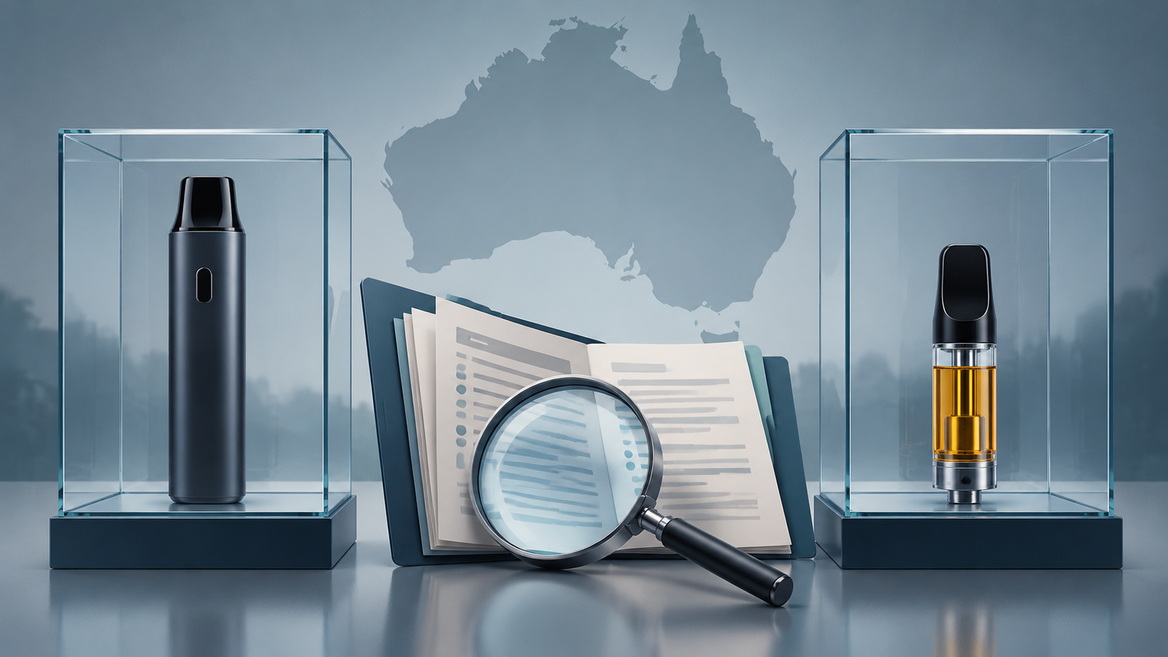
Australian readers need a country-specific perspective. A product description written for another market does not establish that the product may lawfully be imported, supplied, or advertised in Australia.
The Therapeutic Goods Administration distinguishes medicinal cannabis vaping devices from therapeutic vaping products intended for smoking cessation or nicotine dependence.
TGA guidance states that unfilled devices intended for medicinal cannabis, and certain associated components, fall within medicinal cannabis vaping-device requirements.
Products already containing medicinal cannabis, including filled pods or cartridges, are regulated as medicinal cannabis substances rather than simply as empty vaping devices.
Consequently, the regulatory position of a device does not automatically establish the position of its contents.
Check the applicable TGA information and obtain professional advice where necessary:
1. Is the question about an empty device or a substance-containing product?
2. Is the exact device included in the Australian Register of Therapeutic Goods?
3. If it is not included, is there a relevant lawful access pathway?
4. What requirements apply to the medicinal product itself?
5. Are claims about supply or advertising consistent with Australian rules?
This article does not establish an Australian approval or lawful supply pathway for the PAX Era Pro. Overseas availability is not sufficient evidence of either.
User reviews can help identify questions worth investigating, but they are not controlled safety studies.
A reviewer's report of convenient controls, connection difficulties, or device reliability describes an individual experience. It does not establish a universal outcome.
Useful reviews identify the exact model, explain the circumstances, and distinguish observation from interpretation. Commercial relationships and supplied review units should also be disclosed.
No verified user-review collection was provided for this article. Accordingly, it does not invent customer quotations, satisfaction percentages, or a consensus about performance.
It also does not claim personal testing. A documented editorial analysis is more credible than an unsupported first-person endorsement.
Start with the current manufacturer documentation, not a confident-sounding summary. Identify which statements concern hardware, which concern the pod's contents, and which make medical or regulatory claims.
For prescribed medicinal use, ask a qualified clinician or pharmacist to clarify product-specific questions. Australian readers should additionally check the relevant TGA guidance.
If the documentation cannot establish compatibility, lawful access, or an appropriate response to a device fault, do not fill the gap with assumptions.
No. The source guide describes a PAX pod-based device associated with cannabis extracts. Similar terminology or appearance does not establish the same intended use.
No. Do not infer compatibility from the general word "vape." Consult documentation for the exact device and pod.
The retailer article does not establish that. A programmed device limit should not be equated with a validated amount absorbed by an individual.
No. A temperature-control feature alone does not demonstrate clinical safety or establish an appropriate setting for a particular person.
No. Check current model-specific support information and relevant software requirements before relying on an older guide.
This article does not establish that status. Consult the current TGA register and guidance; overseas retail listings do not demonstrate Australian approval.
No. It is a source-based informational overview. No personal testing, verified review dataset, or customer consensus is claimed.
- Planet of the Vapes. "PAX Era Pro Complete User Guide." By Tyler Hixon, dated March 10, 2022. Source for historical device descriptions, software features, and the claims critically examined above. [planetofthevapes]
- PAX. "Era Pro User Guide." Official support page linking to the manufacturer's user guide and quick-start guide. [pax]
- PAX. "PAX App — Era Pro Support." Official support information concerning app features and account requirements. [pax]
- U.S. Food and Drug Administration. "Lung Injuries Associated with Use of Vaping Products." Source for EVALI findings and public-health recommendations concerning THC-containing products and vitamin E acetate. [fda]
- The New England Journal of Medicine. "Vitamin E Acetate in Bronchoalveolar-Lavage Fluid Associated with EVALI." Published February 20, 2020. Source for the 48-of-51 patient finding and its comparison group. [nejm]
- Therapeutic Goods Administration. "Medicinal Cannabis Vaping Devices: Information for Importers, Exporters and Manufacturers." Source for distinctions between devices and filled products, regulatory requirements, and access pathways. [tga.gov]
- Therapeutic Goods Administration. "Medicinal Cannabis Vaping Devices That Are Approved in Australia." Source for the role of the Australian Register of Therapeutic Goods and the current approved-device list. [tga.gov]
This website contains products intended for adults only.
Are you 18 years of age or older?
WARNING: This product contains nicotine. Nicotine is an addictive chemical.


