
Language
Views: 226 Author: 7DaysVape Publish Time: 2026-10-27 Origin: Site


Content Menu
● What Is a Variable Nicotine Vape?
>> Three Different Meanings of "Adjustable"
● How Electronic Cigarettes Deliver Nicotine
>> Why Adjustable Wattage Is Not Adjustable Concentration
>> Why Sensation Is an Unreliable Measuring Tool
● Can a Lower Nicotine Strength Reduce Dependence?
>> A More Useful Way to Discuss Reduction
● What Does the Evidence Say About Smoking Cessation?
>> What the Research Does Not Prove
● Health Risks That Adjustable Settings Do Not Remove
>> Why Long-Term Uncertainty Matters
● Variable Nicotine Vapes in Australia: The Rules Matter
>> When Is a Prescription Required?
>> Why Overseas Availability Does Not Establish Local Legality
● How to Evaluate Claims About Adjustable Nicotine
>> 1. Identify What the Control Actually Changes
>> 2. Look for Relevant Testing
>> 3. Separate Product Features From Health Outcomes
>> 4. Treat Reviews as Anecdotes
● Questions to Take to a Pharmacist or Doctor
>> Does a Variable Nicotine Vape Change Nicotine Per Puff?
>> Does Lower Wattage Mean Less Nicotine?
>> Is a Smoother Vape Lower in Nicotine?
>> Can Adjustable Nicotine Help Someone Quit Smoking?
>> Are Disposable Vapes Legal to Sell in Australia?
>> Does Nicotine-Free Mean Risk-Free?
● The Next Step: Seek an Individual Assessment
A variable nicotine vape is commonly described as an electronic cigarette that lets someone change nicotine strength. However, "adjustable nicotine" can refer to different things: changing the e-liquid concentration, changing aerosol output, or switching between product settings that have not been independently verified.
These differences matter. A lower setting does not necessarily mean a proportionally lower nicotine dose, and a smoother sensation does not establish that exposure has decreased.
This guide explains what variable nicotine vapes can—and cannot—tell users about nicotine delivery. It also examines health evidence, misleading product claims, and the Australian rules that make ordinary online retail advice inappropriate for local readers.
This information is intended for adults seeking to understand existing nicotine use. It is not an invitation for non-smokers to start vaping or a substitute for individual medical advice.
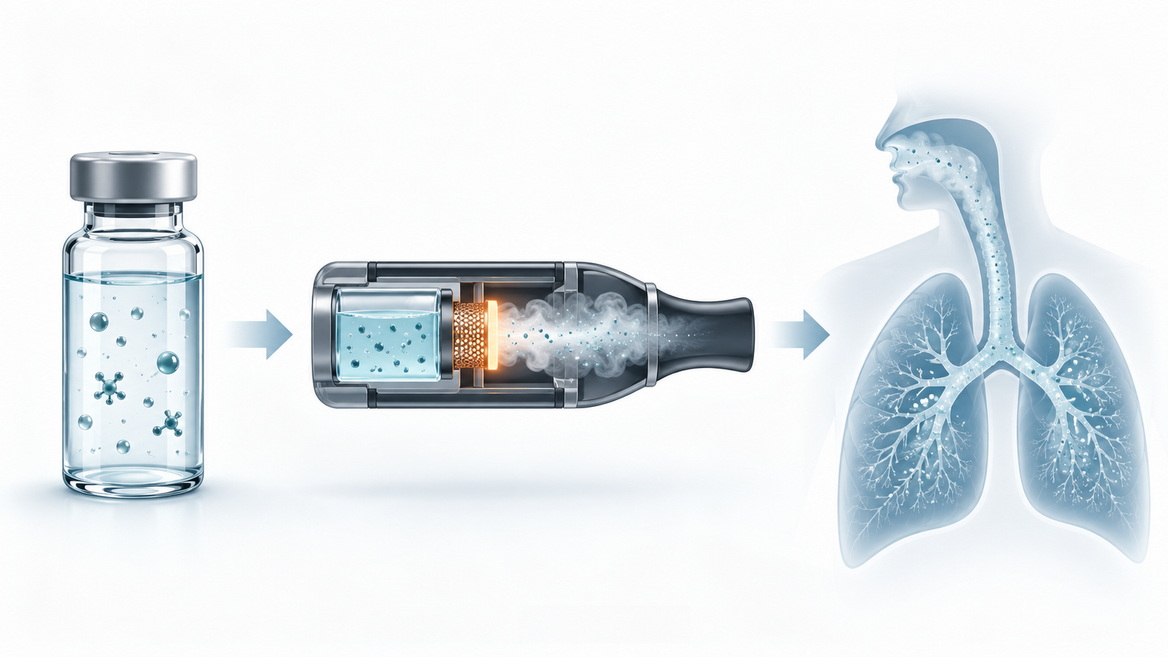
"Variable nicotine vape" is a marketing description rather than a guarantee of a particular technical system.
Some electronic cigarettes accommodate e-liquids with different labelled nicotine concentrations. Others offer adjustable power, airflow, or operating modes. These features can influence nicotine delivery, but they do not all change the nicotine concentration in the liquid.
The central distinction is between concentration and dose.
Concentration describes how much nicotine is present in a given volume of e-liquid. Dose describes the amount delivered or absorbed during use. Device performance and puffing behaviour help determine the relationship between them.
| Product description | What may change | What it does not establish |
|---|---|---|
| Different e-liquid strengths | Nicotine concentration in the liquid | Exact nicotine absorbed per puff |
| Adjustable wattage or output | Heating conditions and aerosol generation | A corresponding change in liquid concentration |
| Low, medium, or high modes | A manufacturer-defined operating setting | A standardised or clinically validated nicotine dose |
| Adjustable cooling or airflow | Sensation or airflow characteristics | Reliable nicotine reduction |
Before accepting a claim, identify the specific mechanism. A screen displaying "low" is not equivalent to a laboratory measurement.
Electronic cigarettes heat a liquid to create an inhalable aerosol. Where the liquid contains nicotine, some nicotine enters that aerosol and may subsequently be absorbed by the user.
The amount delivered depends on interacting factors, including:
- Nicotine concentration and formulation.
- Device power and heating characteristics.
- Liquid composition.
- Puff duration and frequency.
- Individual patterns of use.
This is why two people using the same labelled strength may experience different exposure. It also explains why different devices cannot be compared reliably using liquid strength alone.
Changing wattage does not rewrite the nicotine concentration printed on an e-liquid label. It changes the energy supplied to the heating system.
Research shows that power can substantially affect nicotine delivery. A device using a lower-concentration liquid can sometimes deliver more nicotine than another device using a higher-concentration liquid.
Consequently, "lower strength" and "lower exposure" are not interchangeable descriptions.
Throat sensation is not a validated nicotine meter. A comfortable, mild, or cool sensation cannot establish how much nicotine has entered the body.
Likewise, cloud size and perceived satisfaction do not provide a dependable dose measurement.
When reviewing an adjustable nicotine vape, the useful question is not simply, "Does this feel weaker?" It is, "What changed, and what evidence connects that change to nicotine delivery?"
Reducing nicotine exposure may be part of an individual treatment plan, but choosing a lower labelled concentration does not automatically reduce dependence.
People can change their behaviour when nicotine delivery changes. They may take longer puffs, use a device more frequently, or consume more liquid. Researchers describe this as compensatory behaviour.
Such compensation can make the reduction in actual nicotine intake smaller than the reduction suggested by the label.
For example, moving to a liquid with half the nicotine concentration does not prove that daily nicotine exposure has halved. The amount of liquid used and the device's operating conditions still matter.
A discussion with a healthcare professional can consider:
1. Whether cigarette smoking is continuing.
2. How frequently nicotine is being used.
3. Whether cravings or withdrawal symptoms are changing.
4. Whether liquid consumption has increased.
5. Whether the longer-term goal is smoking cessation, nicotine cessation, or both.
These are different goals. Stopping combustible cigarette use does not necessarily mean that nicotine dependence has ended.
There is no universal, evidence-based reduction schedule that can be inferred from a product's "low," "medium," and "high" settings.
Evidence about nicotine electronic cigarettes should be distinguished from claims about a particular adjustable device.
A systematic review updated in 2026 found high-certainty evidence that nicotine e-cigarettes help more people stop smoking than nicotine replacement therapy. Its public summary estimates that around 8 to 10 people in every 100 using nicotine e-cigarettes might stop smoking for at least six months, compared with around 6 in every 100 using nicotine replacement therapy.
These findings concern smoking cessation. They do not establish that every commercial vape is effective, that adjustable nicotine modes provide an additional benefit, or that vaping is harmless.
The review does not justify claims that:
- Every variable nicotine vape is a proven cessation treatment.
- A reduction mode reliably ends nicotine dependence.
- A disposable vape is appropriate for every adult smoker.
- Long-term health risks have been fully established.
- Non-smokers would benefit from starting.
Clinical evidence must be matched to the actual claim. General evidence about nicotine electronic cigarettes cannot validate an unrelated product feature.
Nicotine is addictive, and acute exposure can be toxic. It poses particular risks during pregnancy and to developing young people.
Electronic cigarette aerosol is not harmless water vapour. It can contain nicotine, fine particles, metals, and other potentially harmful substances.
A lower setting does not establish that these exposures have disappeared. Nor does a nicotine-free label establish that inhaling the resulting aerosol is safe.
Research has identified health concerns associated with vaping, while the full long-term effects remain under investigation.
A responsible explanation therefore avoids both extremes: presenting vaping as harmless or pretending that every question about its risks has already been answered.
For someone who does not smoke or use nicotine, these uncertainties are not a reason to experiment. For someone who smokes, treatment decisions should consider the available evidence, existing health conditions, and the objective of stopping smoking.

Australian readers need a different framework from the "buy online and customise" approach commonly used in international retail articles.
Australia restricts lawful consumer supply to therapeutic vaping goods supplied through pharmacies under applicable requirements. Non-therapeutic vapes and disposable single-use vapes are prohibited from commercial supply.
These restrictions apply irrespective of whether a prohibited disposable product contains nicotine.
Under the federal framework, participating pharmacists may supply eligible therapeutic vapes containing no more than 20 mg/mL nicotine to adults aged 18 or over without a prescription, where clinically appropriate and subject to state or territory requirements.
A pharmacist consultation is required for that pathway. Higher nicotine concentrations require a prescription, and local laws may impose stricter conditions.
Readers should not interpret "available without a prescription" as unrestricted access. Eligibility, professional assessment, product requirements, and jurisdiction-specific rules still apply.
A product listed by an overseas retailer is not necessarily lawful to obtain or supply in Australia.
Similarly, an age-verification checkbox or a nicotine-free claim does not override Australian restrictions.
Advertising is also restricted unless specifically authorised. Educational information and commercial promotion should therefore be reviewed separately rather than treated as interchangeable content.
A useful product assessment begins with evidence, not feature names.
Does it select a different liquid, change power, alter airflow, or adjust cooling?
If the mechanism is unclear, the nicotine-control claim remains unclear.
A claim about nicotine delivery should be supported by testing relevant to that claim.
A concentration test measures something different from aerosol nicotine output. Neither automatically establishes the amount absorbed by an individual during everyday use.
Check whether the manufacturer explains the measurement, test conditions, and limitations.
A puff counter records events; it does not necessarily measure absorbed nicotine.
Likewise, a display, chipset, or automatic mode does not establish clinical effectiveness.
Claims about managing dependence require stronger evidence than claims that a device has adjustable settings.
A genuine review can describe usability, such as whether a display is readable. It cannot establish a product's long-term safety or prove a reduction in nicotine exposure.
Statements such as "it felt smoother" or "I used it less often" may describe an individual experience, but they are not controlled evidence.
Credible editorial work keeps testimonials separate from medical and technical conclusions.

Before changing an existing nicotine-use plan, consider asking:
- What is the most appropriate treatment for my smoking or nicotine dependence?
- How should progress be assessed beyond the strength on a label?
- Could changes in my usage offset a lower concentration?
- Which options are lawful and clinically appropriate where I live?
- What should I do if cravings, withdrawal, or other symptoms worsen?
The aim is not to find the most impressive control panel. It is to establish a realistic plan with outcomes that can be assessed.
It may affect delivery, depending on its mechanism. However, a setting alone does not establish a precise dose. Nicotine concentration, device performance, and puffing behaviour all influence delivery.
Power influences nicotine output, but wattage alone cannot quantify exposure. Other factors—including liquid strength and the duration and frequency of puffs—also matter.
Not necessarily. Perceived smoothness is not a reliable measurement of nicotine concentration or absorbed dose. Sensory descriptions should not replace relevant testing.
Nicotine e-cigarettes have evidence supporting smoking cessation, but that does not establish an extra benefit from adjustable modes. Individual treatment decisions should be discussed with a healthcare professional.
Disposable single-use vapes cannot lawfully be commercially supplied in Australia. The restriction is not limited to nicotine-containing products.
No. Removing nicotine does not establish that an aerosol contains no harmful substances. Electronic cigarette aerosol is not simply water vapour.
1. VapeSourcing. "How Variable Nicotine Vapes Redefine Vaping Freedom?" Published November 21, 2025; updated December 3, 2025. Original article reviewed for this reconstruction; not treated as independent clinical evidence.
[https://vapesourcing.com/blog/how-variable-nicotine-vapes-redefine-vaping-freedom.html] [vapesourcing]
2. "What Is the Nicotine Delivery Profile of Electronic Cigarettes?" Review of device characteristics, liquid formulation, and user behaviour affecting nicotine delivery.
[https://pmc.ncbi.nlm.nih.gov/articles/PMC6814574/] [pmc.ncbi.nlm.nih]
3. Cochrane. "Can Electronic Cigarettes Help People Stop Smoking, and Do They Have Any Unwanted Effects When Used for This Purpose?" Updated August 26, 2026; evidence current to January 1, 2026.
[https://www.cochrane.org/evidence/CD010216_can-electronic-cigarettes-help-people-stop-smoking-and-do-they-have-any-unwanted-effects-when-used] [cochrane]
4. Centers for Disease Control and Prevention. "Health Effects of Vaping." Information on nicotine addiction, vulnerable populations, and acute exposure.
[https://www.cdc.gov/tobacco/e-cigarettes/health-effects.html] [cdc]
5. Centers for Disease Control and Prevention. "About E-Cigarettes (Vapes)." Explanation of aerosol generation and potentially harmful constituents.
[https://www.cdc.gov/tobacco/e-cigarettes/about.html] [cdc]
6. Therapeutic Goods Administration. "Changes to the Regulation of Vapes." Australian restrictions on supply, disposable products, and advertising.
[https://www.tga.gov.au/products/unapproved-therapeutic-goods/therapeutic-vaping-goods/vaping-hub/changes-regulation-vapes] [tga.gov]
7. Therapeutic Goods Administration. "Vapes: Information for Pharmacists." Pharmacy supply pathways, consultation requirements, and prescription thresholds.
[https://www.tga.gov.au/products/unapproved-therapeutic-goods/therapeutic-vaping-goods/vaping-hub/vapes-information-pharmacists] [tga.gov]
8. American Cancer Society. "E-Cigarettes and Vaping." Discussion of aerosol constituents, health concerns, and uncertainty about long-term effects.
[https://www.cancer.org/cancer/risk-prevention/tobacco/e-cigarettes-vaping.html] [cancer]
This website contains products intended for adults only.
Are you 18 years of age or older?
WARNING: This product contains nicotine. Nicotine is an addictive chemical.


