
Language
Views: 228 Author: Vera Publish Time: 2026-10-23 Origin: Site


Content Menu
● IGET Pod vs IGET Plus: What Exactly Is Being Compared?
>> "IGET Pod" Does Not Identify One Confirmed Device
>> Why Product Boundaries Matter
● Environmental Comparison at a Glance
● Does a Replaceable Pod System Reduce Waste?
>> Reusing a Battery Can Avoid Repeated Battery Disposal
>> Rechargeable Does Not Mean Waste-Free
● Why Neither Product Can Be Declared the Environmental Winner
● A More Useful Method: Track Waste Instead of Puff Claims
>> Why Advertised Puff Counts Are Insufficient
>> A Simple Battery-Discard Indicator
>> Track Collection, Not Just Consumption
● Why Vape Waste Needs Special Handling
>> Batteries Create a Disposal Problem
>> Residual Liquid Complicates Collection
● How to Dispose of an IGET Pod or IGET Plus Device
>> Step 1: Identify the Item Without Dismantling It
>> Step 2: Keep It Out of Household Bins
>> Step 3: Find a Service That Explicitly Accepts Vapes
>> Step 4: Check Before Using a Battery Collection Box
>> Step 5: Follow the Operator's Storage and Transport Instructions
>> Step 6: Confirm What Happens After Collection
● Australian Collection Options: Local Rules Matter
>> ACT Guidance Provides a Concrete Example
>> Do Not Generalise One Council's Arrangements Nationwide
● Environmental Handling Does Not Establish Legal Supply
● Questions Worth Asking About Environmental Claims
● Practical Action for Existing Owners
>> 1. Is an IGET Pod the Same as an IGET Plus Device?
>> 2. Is IGET Plus Proven to Be More Environmentally Friendly?
>> 3. Can Used Pods Go in Household Recycling?
>> 4. Can a Complete Vape Go in a Battery Recycling Box?
>> 5. Should I Open the Device to Remove Its Battery?
>> 6. Does a High Puff Count Prove Lower Waste?
>> 7. What If No Nearby Service Accepts Vapes?
An IGET Pod vs IGET Plus comparison needs to begin with an important distinction: a pod and a complete vaping device are not necessarily equivalent products. A meaningful environmental assessment depends on what each item contains, which components are reused, and where the waste actually goes.
For adults who already possess these products, the practical question is not which one deserves an "eco-friendly" label. It is how to identify the components, avoid unsafe disposal, and distinguish potential waste reduction from proven environmental benefits.
This article examines those issues without recommending a purchase. It draws on published product descriptions and Australian waste-management guidance, rather than hands-on testing or a product-specific lifecycle assessment.

"IGET Pod" is insufficiently specific to establish a single product specification. It may refer to a replacement cartridge rather than a complete electronic cigarette.
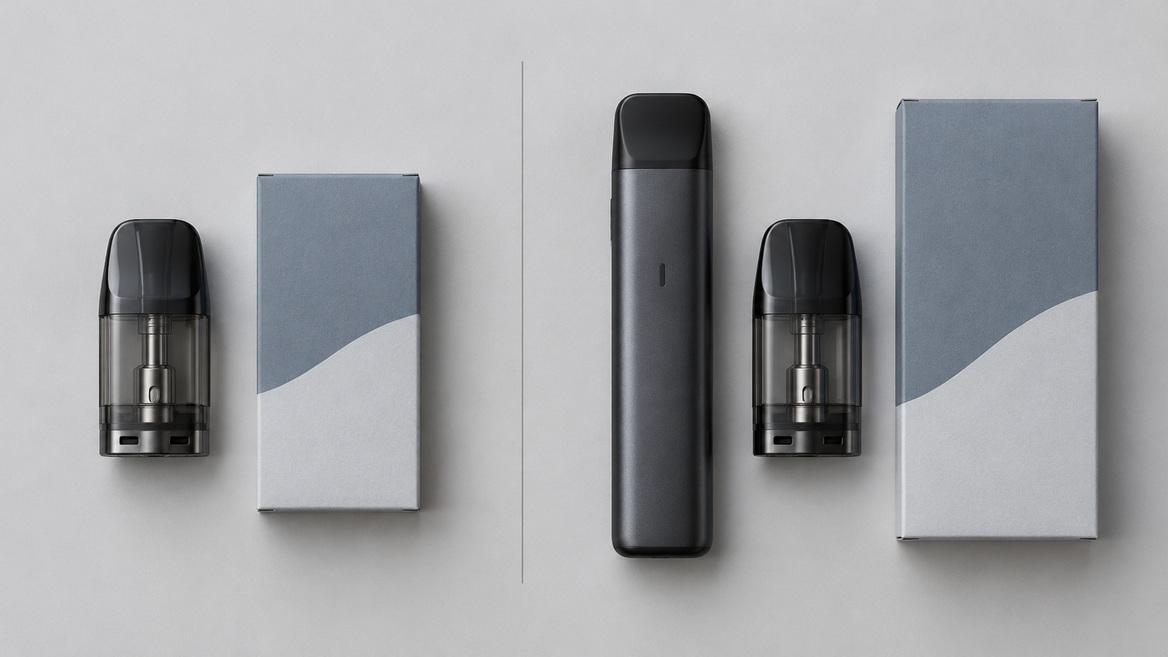
Likewise, "IGET Plus" should not automatically be treated as an exact model name. Published descriptions of the IGET Bar Plus identify a rechargeable base with replaceable, prefilled pods. That description provides context, but does not verify every product advertised under a shortened or similar name.
Before comparing waste, check the packaging for:
- The complete product name and model.
- Whether the item is a cartridge, device, or kit.
- Whether the battery remains in the base.
- Whether the pod is replaceable.
- Any manufacturer-issued handling instructions.
The comparison below therefore distinguishes a replacement pod from the reusable base associated with a replaceable-pod system. It does not assume that two independently verified devices have been tested.
Comparing one discarded cartridge against one complete device can produce a misleading result.
The cartridge may depend on a separate battery that eventually becomes waste. Conversely, counting an entire reusable base as waste after every cartridge change would exaggerate its disposal burden.
A fair assessment follows the whole system: cartridges, battery base, packaging, replacements, and collection arrangements.
| Assessment point | Replacement pod | Rechargeable base or complete system |
|---|---|---|
| What must be identified? | Cartridge construction and remaining contents | Battery location, electronics, and replaceable components |
| What becomes waste? | The spent cartridge and associated packaging | Eventually, the base; cartridges become waste separately |
| Does replacement avoid battery disposal? | Only if the battery remains in a separate reusable base | Potentially, across multiple cartridge changes |
| Is household recycling appropriate? | Do not assume acceptance | Battery-containing devices require designated handling |
| Is recyclability established? | Requires confirmation from a suitable operator | Depends on construction and local collection services |
| Can environmental superiority be claimed? | Not from cartridge size alone | Not from rechargeability alone |
Australian guidance treats discarded vapes as a specialist waste issue. The ACT Government specifically states that vapes must not enter household landfill, recycling, or green-waste bins. Planet Ark also directs users toward appropriate collection services rather than ordinary recycling.
Where the battery remains in a reusable base, replacing a cartridge does not require discarding that battery each time.
That is a meaningful design distinction. It separates the liquid-containing consumable from at least part of the electrical hardware.
However, it does not establish the total environmental impact of either product. A reusable base still becomes waste eventually, while cartridges and packaging continue to accumulate.
The defensible conclusion is narrow: retaining a functioning battery base can reduce the number of battery units discarded compared with repeatedly discarding complete battery-containing devices.
A charging port answers one question: whether the battery can be recharged.
It does not establish:
- Whether the liquid-containing component is replaceable.
- Whether the battery is safely removable.
- Whether replacement components are available.
- Whether a collection service accepts the device.
- Whether collected materials are actually recovered.
The central distinction is reusable, not simply rechargeable. Even then, reuse is only one part of an environmental assessment.
A credible IGET Pod vs IGET Plus environmental comparison would need more than promotional specifications.
It would require reliable information about:
1. Component weights and material composition.
2. Battery and base service life.
3. Cartridge consumption over a defined period.
4. Packaging quantities.
5. Manufacturing and transport impacts.
6. Collection rates and treatment outcomes.
The sources reviewed do not provide a verified, product-specific lifecycle assessment establishing an environmental winner.
That evidence gap matters. "Less battery waste per cartridge replacement" is a limited design observation. "Lower overall environmental impact" is a much broader claim.
Similarly, a product can be technically recyclable without having a practical collection route in a particular postcode.
An advertised puff figure does not reveal the weight of discarded materials, the number of batteries disposed of, or the proportion recovered.
For waste assessment, actual discarded components provide a clearer starting point.
An adult who already possesses these products can record the following without opening or dismantling anything:
| Item to record | What it helps establish |
|---|---|
| Spent cartridges | Number of consumable units discarded |
| Discarded battery bases | Frequency of electrical hardware replacement |
| Outer packaging | Additional material associated with replacements |
| Damaged devices | Items requiring separate handling advice |
| Items delivered to an accepting service | Waste reaching a confirmed collection route |
One useful measure is:
Battery units discarded ÷ cartridges consumed during the same period.
This is a proposed tracking method, not a published environmental rating.
If a battery remains in service throughout the observation period, the recorded battery-discard count is zero for that period. That does not mean the system has zero battery impact; the battery will eventually require disposal.
This distinction prevents a short observation window from becoming an exaggerated sustainability claim.
Also record whether discarded items reached a service that explicitly accepts them.
"Stored for future recycling" and "delivered to an accepting operator" describe different outcomes. Neither necessarily proves material recovery, but the second establishes that an actual collection step occurred.
This approach shifts attention from product slogans to observable waste-management behaviour.
Battery-containing devices do not belong in ordinary household recycling simply because their outer casing includes plastic or metal.
The ACT Government identifies fire risk as a reason to keep discarded vapes out of household bins. It directs embedded-battery devices toward designated hazardous-waste handling.
A detached cartridge may no longer contain the main battery, but that does not automatically make it suitable for kerbside recycling.
Discarded pods and devices may contain remaining liquid. Planet Ark's guidance distinguishes battery handling from the treatment of other vape components and advises checking suitable disposal services.
The practical implication is straightforward: identify the item accurately when asking for help.
A collection operator may treat these differently:
- A complete device with an embedded battery.
- A detached, used cartridge.
- A user-removable battery.
- A leaking or damaged device.
Do not assume one acceptance policy covers all four.
Read the label and packaging. Determine whether you have a cartridge, a battery-containing base, or a complete device.
Do not cut, crush, puncture, or force open an enclosure to investigate its construction.
A detachable pod does not prove that the battery inside the base is intended for user removal.
Do not place a discarded vape in household recycling, general rubbish, or green waste where local guidance prohibits it.
For cartridges and other separated components, seek specific instructions rather than assuming they can enter ordinary recycling.
Contact your council or consult a specialist recycling directory.
Ask:
> "Do you accept used vape cartridges and devices with embedded lithium batteries, and are there separate instructions for damaged or leaking items?"
Planet Ark notes that collection options vary. Some commercial services may charge a fee.
An ordinary battery drop-off point is not automatically suitable for a complete vape.
ACT guidance states that single-use vapes with embedded batteries are not accepted through the B-cycle program. Eligible removable batteries are a separate category.
Use a battery collection point only when the battery and the collection scheme's conditions match.
Ask the receiving service how to prepare and transport your particular items.
Tell the operator beforehand if anything is damaged, leaking, swollen, or unusually hot. Do not treat a damaged device as routine recyclable material.
Where possible, ask whether the service provides material recovery, hazardous-waste treatment, or another disposal pathway.
Safe collection is valuable, but it is not automatically equivalent to complete recycling.
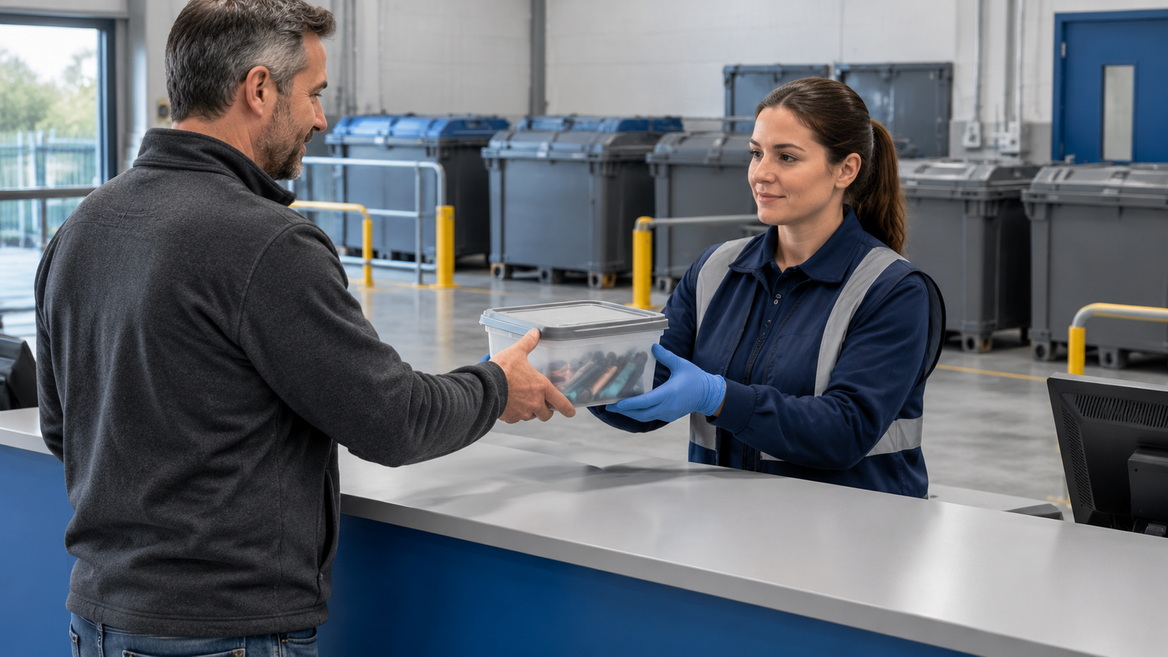
The ACT Government directs single-use vapes and embedded or damaged battery-operated devices to the hazardous-waste areas at its Resource Management Centres.
It separately identifies eligible removable household batteries as suitable for designated battery collection points.
This demonstrates why the physical construction matters: an intact embedded-battery device and a loose eligible battery may require different routes.
Planet Ark's Recycling Near You directory describes council collection locations, specialist services, and an NSW embedded-battery trial that includes vapes.
However, a collection arrangement in one area does not establish availability elsewhere. Trials, opening hours, accepted quantities, and item categories can change.
Check the current local service before making a trip.
Waste advice and product legality are separate issues.
The Australian Therapeutic Goods Administration states that personal importation of vaping goods is no longer allowed and that vaping goods can only be supplied to consumers through pharmacies.
It also states that advertising vaping goods is prohibited unless expressly permitted under a limited authorisation.
Consequently, overseas availability, a rechargeable design, or a recycling claim should not be treated as evidence that a product may lawfully be supplied to Australian consumers.
The regulator distinguishes personal possession from unlawful commercial activity. Its guidance states that the national laws do not criminalise individuals' genuine possession for personal use.
Before accepting a claim such as "eco-friendly pod" or "sustainable vape," ask:
- What exact comparison supports the claim?
- Does it concern battery waste, total material waste, or overall lifecycle impact?
- Is the evidence independently verified?
- Does it include cartridges and packaging?
- Is there an accessible collection route?
- Does "recyclable" describe technical possibility or demonstrated recovery?
From a waste-management perspective, a precise limitation is more useful than an impressive label.
A statement identifying which component is retained is informative. An unsupported promise of environmental superiority is not.
Identify the exact item you need to discard, then contact a local service that explicitly accepts that category of vape waste.
Confirm its preparation requirements before travelling. Keep whole devices out of ordinary battery collection boxes unless the operator specifically authorises them.
The immediate objective is responsible handling of existing waste—not replacing a functioning item solely because another product carries an environmental claim.
Not necessarily. "Pod" can describe a replacement cartridge, while published IGET Bar Plus descriptions refer to a system with a rechargeable base. Confirm the full model and package contents before comparing them.
The reviewed sources do not establish that conclusion through a verified product-specific lifecycle assessment. Retaining a battery base can avoid repeated battery disposal, but that alone does not establish overall environmental superiority.
Do not assume so. Cartridge construction and remaining contents can affect acceptance. Ask your council or specialist collection operator for instructions covering used vape cartridges specifically.
Not automatically. Embedded-battery devices differ from eligible loose batteries. ACT guidance specifically excludes single-use embedded-battery vapes from B-cycle collection and directs them to designated hazardous-waste facilities.
Do not force open, cut, or puncture a sealed device. Only follow user-removal procedures explicitly supported by the product instructions and accepted by the receiving collection service.
No. A puff claim does not establish material weight, battery-discard frequency, service life, or recovery rates. Those factors require separate evidence.
Contact your council for current guidance. Planet Ark recommends this when a suitable drop-off point or collection service cannot be found. Do not substitute household disposal for an unavailable collection route.
1. IGET-branded product listing. "IGET BAR PLUS." Used only for the published description of a rechargeable, replaceable-pod configuration; not independent environmental verification. [igetvape]
2. ACT Government, City Services. "Cigarette, cigars, e-cigs and vapes — Recyclopaedia." Guidance on household-bin exclusions, embedded batteries, and ACT hazardous-waste facilities. [cityservices.act.gov]
3. Planet Ark, Recycling Near You. "Vapes." Guidance on collection options, component-specific handling, local services, and contacting councils. [recyclingnearyou.com]
4. Planet Ark. "How to recycle vapes." Guidance on specialist recycling pathways and separating eligible battery handling from other vape waste. [planetark]
5. Therapeutic Goods Administration. "Vapes: compliance and enforcement." Updated 5 March 2026. Information on Australian supply, personal importation, advertising, and personal possession. [tga.gov]
6. Waste Management and Resource Recovery Association of Australia. "Producer Responsibility Needed for Vape Disposal." Industry context concerning embedded batteries and the challenges of managing vape waste. [wmrr.asn]
This website contains products intended for adults only.
Are you 18 years of age or older?
WARNING: This product contains nicotine. Nicotine is an addictive chemical.


