
Language
Views: 216 Author: 7DaysVape Publish Time: 2026-10-19 Origin: Site


Content Menu
● RDA, RTA, and RBA: Understanding the Differences
>> Why Is "RBA" Sometimes Ambiguous?
● What Older Rebuildable Guides Often Leave Out
>> Customisation Is Not Quality Assurance
>> Savings Claims Need Clear Boundaries
>> Learning Time Is Not a Safety Measure
● Health Risks: The Atomizer Is Only Part of the Picture
>> Vape Aerosol Is Not Harmless Water Vapour
>> Nicotine-Free Does Not Mean Risk-Free
>> Who Faces Particular Risks?
● Vape Battery Safety: Precautions Beyond Coil Design
>> Follow Manufacturer Instructions
>> Reduce Charging and Transport Hazards
● Australian Vape Regulations: What Readers Need to Know
>> Therapeutic Access Is Through Pharmacies
>> Overseas Personal Orders Are Prohibited
>> "Notified" Does Not Mean Fully Evaluated
● How to Evaluate Device Claims and User Reviews
● When to Seek Help Instead of Device Advice
>> Are Rebuildable Vapes Safer Than Other Electronic Cigarettes?
>> Does a Nicotine-Free Vape Produce Harmless Aerosol?
>> Can Australians Order Vapes From Overseas With a Prescription?
>> Is Every Product on the Notified Vape List TGA-Approved?
>> What Is the Most Useful Next Step for Someone Concerned About Dependence?
Rebuildable vapes are electronic cigarettes with atomizers designed to accommodate user-installed coils and wicking material. Terms such as RDA, RTA, and RBA describe different designs, not different levels of health protection. Understanding these distinctions helps readers interpret older guides without mistaking technical customisation for proven safety. [elementvape]
This guide explains the terminology, examines claims that deserve closer scrutiny, and outlines important Australian regulatory considerations. It does not provide coil-building instructions, electrical settings, or product recommendations.
The central principle is safety: understanding how a device works does not establish that its aerosol is harmless, its battery cannot fail, or its supply is lawful.

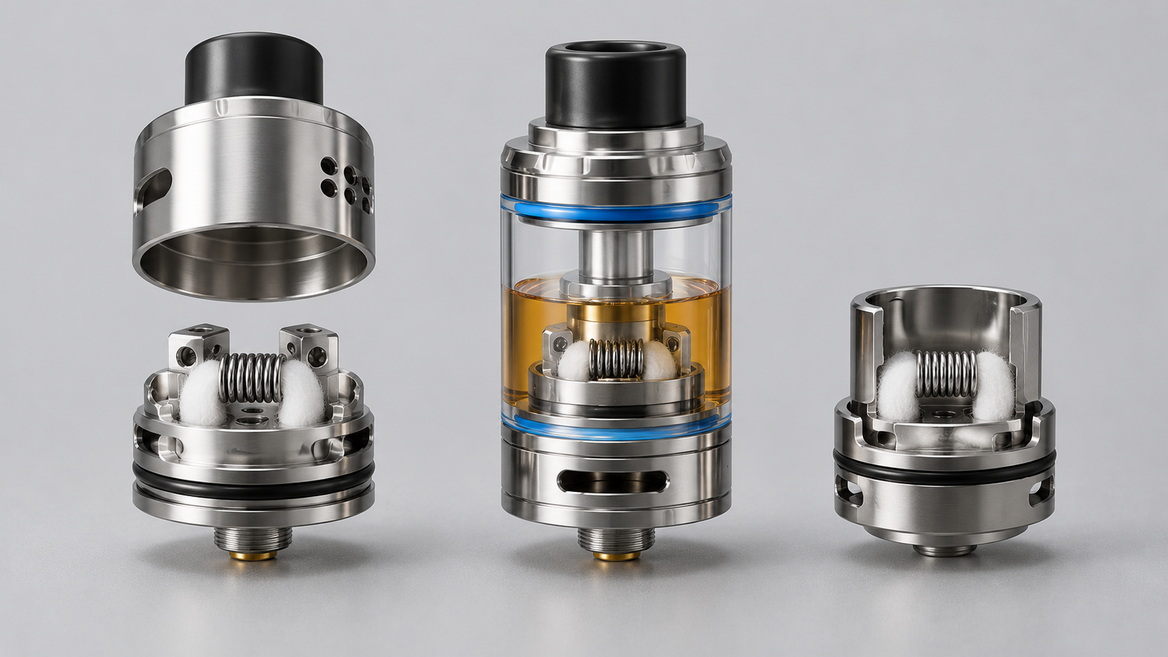
A typical electronic cigarette uses a battery-powered heating element to turn liquid into an inhalable aerosol. A rebuildable atomizer differs from a replaceable-coil system because its design accommodates separately installed coils and wicking material rather than only complete factory-made coil heads. [elementvape]
This distinction concerns construction and maintenance. It does not establish reduced exposure to harmful substances.
The original guide presents rebuilding primarily through performance, customisation, and potential savings. Those are not equivalent to clinical outcomes or verified electrical safety. A device may produce a preferred sensation while still exposing someone to nicotine, harmful aerosol constituents, or battery hazards. [elementvape]
For readers, the useful question is not simply, "How adjustable is this device?" It is, "Which claims describe its design, and which require independent health or safety evidence?"
These abbreviations are easy to confuse because one is an umbrella term while others describe particular arrangements.
| Term | Meaning | Main distinction | Important limitation |
|---|---|---|---|
| RDA | Rebuildable dripping atomizer | Liquid reaches exposed wicking rather than a conventional surrounding tank | Liquid handling and leakage remain relevant |
| RTA | Rebuildable tank atomizer | A reservoir supplies liquid to an enclosed rebuildable section | Having a tank does not prevent leakage |
| RBA | Rebuildable atomizer | Broad category; also used for a compatible rebuildable insert | Compatibility cannot be assumed |
These descriptions follow the terminology in the original guide; they are not recommendations to obtain or modify a device. [elementvape]
An RDA generally has a build deck and cap rather than the conventional reservoir arrangement found in an RTA. Some designs receive liquid from a separate bottle through a compatible bottom-feeding connection, often called a squonk system. These terms describe liquid delivery, not a demonstrated health advantage. [elementvape]
An RTA combines a rebuildable section with a liquid reservoir. The original article itself acknowledges that liquid supply can become inconsistent and that incorrect wicking can cause leakage. That makes its earlier suggestion that a well-built rebuildable will never leak particularly misleading. [elementvape]
RBA can refer to the overall rebuildable category or to an insert intended for a particular tank or pod. A shared label does not establish that two components belong together. Readers should distinguish broad terminology from the manufacturer's documentation for a specific product. [elementvape]
The original article links rebuilding with greater control over component quality. However, selecting materials or assembling components is not the same as independently testing a finished device.
A responsible explanation separates three questions:
- What is the component made from?
- Is it appropriate for the documented device configuration?
- What evidence supports claims about the resulting exposure or performance?
These questions should not be collapsed into an assumption that more personal involvement automatically means greater safety. The original guide does not provide independent testing that establishes that conclusion. [elementvape]
The original article suggests that recurring costs are largely wire and cotton, while also acknowledging equipment and tool costs. That is not a complete long-term cost comparison. Its savings claims are not accompanied by a defined usage period, replacement assumptions, or comparative calculations. [elementvape]
A meaningful comparison would identify its assumptions and include relevant equipment, consumables, replacements, and maintenance time. Without those boundaries, "cheaper" remains a conditional claim rather than a reliable conclusion for every reader.
A short assembly estimate does not show that a device has been independently checked for safe operation. Time spent on a task and evidence of safety are different measures.
The original guide provides assembly instructions, but it does not establish that completing those instructions removes battery, exposure, or leakage risks. Public safety guidance continues to recognise fires and injuries involving vaping devices. [elementvape]
Electronic cigarettes heat liquid to produce aerosol. According to the US Centers for Disease Control and Prevention, that aerosol can contain nicotine, cancer-causing chemicals, heavy metals, volatile organic compounds, and particles small enough to reach deep into the lungs. [cdc]
This is why a description of coils, tanks, or airflow cannot substitute for a health assessment. An article explaining device construction should not imply that understanding the hardware resolves uncertainty about inhaled substances.
The CDC also notes that researchers still have more to learn about both immediate and long-term health effects. Uncertainty should be stated plainly, rather than filled with reassuring product language. [cdc]
Removing nicotine does not establish that an aerosol contains no other harmful substances. Nicotine is one concern within a broader exposure picture, not the only factor that matters. [cdc]
Australian readers should also separate composition from legal access. Zero-nicotine therapeutic vapes remain vaping goods under the Australian framework, and access is restricted to pharmacies. "Nicotine-free" is not a general retail exemption. [tga.gov]
The CDC advises that electronic cigarettes should not be used by young people or during pregnancy. Nicotine is highly addictive, can harm adolescent brain development, and is toxic to developing fetuses. [cdc]
Risk comparisons also need context. The CDC says electronic cigarettes may potentially benefit adults who smoke and are not pregnant when used as a complete substitute for smoked tobacco. That does not mean vaping is safe or that using both products protects health. [cdc]
Battery failures can cause fires, explosions, and serious injuries. A technical discussion that focuses only on the atomizer misses this separate source of harm. [cdc]
The US Food and Drug Administration advises readers to understand the manufacturer's instructions and contact the manufacturer when instructions are missing or unclear. It also advises using only recommended batteries and avoiding combinations of different brands, charge levels, or old and new batteries. [fda]
This is a reason to avoid generic assurances based on appearance or a component fitting into place. Manufacturer documentation, not informal confidence, should guide compatibility and care.
FDA guidance includes the following precautions:
- Charge on a clean, flat surface away from easily ignited materials.
- Do not leave a device charging unattended or overnight.
- Protect devices from extreme temperatures.
- Keep loose batteries in a protective case, away from keys and coins.
- Follow guidance for damaged or wet batteries rather than continuing normal use. [fda]
These precautions reduce avoidable hazards; they do not guarantee that a battery cannot fail. Device safety features should likewise not be presented as permission to ignore damage or manufacturer warnings.
Australia's framework differs substantially from the retail environment described in many international hobbyist guides. Overseas availability does not establish lawful access in Australia.
The Therapeutic Goods Administration states that therapeutic vapes are available through participating pharmacies where clinically appropriate for smoking cessation or managing nicotine dependence. Other retailers cannot lawfully sell vapes in Australia, regardless of nicotine content. [tga.gov]
For adults aged 18 and over, a pharmacist may supply eligible products containing 20 mg/mL nicotine or less without a prescription where state or territory law permits and the required conditions are met. This involves clinical assessment, not unrestricted retail access. [tga.gov]
Higher concentrations require a prescription. Additional jurisdictional restrictions apply, and pharmacists are not required to stock therapeutic vapes. [tga.gov]
The TGA states that vapes cannot be purchased from overseas retailers or websites for personal use, even with a prescription. Historical guidance describing a prescription-based personal importation route should not be treated as current advice. [tga.gov]
This point is especially important when reading older articles. A page can remain accessible long after the access pathway it describes has changed.
Australia's notified vape list identifies goods that sponsors have declared meet applicable standards and that may be supplied through the relevant lawful pathways. Inclusion is not the same as evaluation for entry in the Australian Register of Therapeutic Goods. [tga.gov]
The TGA explains that these therapeutic vapes remain unapproved goods and have not been assessed by it for quality, safety, efficacy, or performance. Readers should not interpret "notified," "therapeutic," and "approved" as interchangeable descriptions. [tga.gov]

A review may describe an individual's experience. It cannot, by itself, establish long-term health effects, electrical compliance, or lawful Australian supply.
When reading an article or testimonial, ask:
1. Does it identify the exact product and publication date?
2. Does it separate personal preference from measured findings?
3. Does it explain the limits of its evidence?
4. Does it acknowledge commercial involvement?
5. Does it distinguish overseas availability from local access rules?
These are editorial checks, not a device certification process. Their purpose is to make unsupported conclusions easier to spot.
No user reviews were supplied for this article. Accordingly, it makes no claims about verified customer satisfaction, typical outcomes, or first-hand product testing.
Suspected nicotine poisoning requires medical attention, not hardware troubleshooting. Nicotine exposure can occur through ingestion, inhalation, or contact with skin or eyes. Symptoms can include nausea, vomiting, dizziness, and breathing difficulties. [tga.gov]
In Australia, the Poisons Information Centre can provide advice on 13 11 26. The TGA advises immediate medical attention when exposure or ingestion is suspected. [tga.gov]
For smoking cessation or nicotine dependence, speak with a doctor, nurse practitioner, or pharmacist about available treatments. The TGA does not consider therapeutic vapes a first-line treatment. Quitline, on 13 7848, provides confidential counselling for people seeking to quit smoking or vaping. [tga.gov]
A rebuildable design alone does not establish greater safety. The original guide provides no comparative health evidence showing that rebuilding eliminates aerosol or battery risks. [elementvape]
Yes. The original guide acknowledges that incorrect wicking can lead to leakage. Claims that rebuildables never leak therefore overstate what the article itself supports. [elementvape]
No such conclusion follows from removing nicotine. Aerosol can contain other harmful or potentially harmful substances, including particles, metals, and volatile organic compounds. [cdc]
No. The TGA states that overseas personal purchases are prohibited even with a prescription. Lawful therapeutic access is through the applicable Australian pharmacy pathways. [tga.gov]
No. Notification reflects a sponsor's declaration of compliance with applicable standards. It does not mean the product has been evaluated for inclusion in the Australian Register of Therapeutic Goods. [tga.gov]
Seek individual advice from a qualified health professional or contact Quitline. That allows discussion of cessation support and treatment options rather than assuming a different atomizer will address nicotine dependence. [tga.gov]
1. Element Vape. "Beginner's Guide to DIY Rebuildables." Published February 4, 2020. Original article reviewed for terminology, claims, and information gaps. [elementvape]
2. Centers for Disease Control and Prevention. "Health Effects of Vaping." Updated January 31, 2025. Source for aerosol constituents, nicotine risks, pregnancy considerations, and limits of comparative-risk claims. [cdc]
3. US Food and Drug Administration. "Tips to Help Avoid Vape Battery Fires or Explosions." Source for manufacturer guidance, battery selection, charging conditions, and temperature precautions. [fda]
4. US Food and Drug Administration. "5 Tips to Help Avoid Vape Battery Explosions." Safety factsheet covering battery transport, charging supervision, and damaged batteries. [fda]
5. Therapeutic Goods Administration. "Vapes: Information for Individuals and Patients." Source for Australian access pathways, personal importation restrictions, poisoning advice, and cessation support. [tga.gov]
6. Therapeutic Goods Administration. "Supplying Therapeutic Vapes in Pharmacies." Updated October 10, 2025. Source for pharmacy supply conditions, state and territory qualifications, zero-nicotine products, and the distinction between notification and approval. [tga.gov]
This website contains products intended for adults only.
Are you 18 years of age or older?
WARNING: This product contains nicotine. Nicotine is an addictive chemical.


