
Language
Views: 229 Author: 7DaysVape Publish Time: 2026-10-18 Origin: Site


Content Menu
● PAX 3 at a Glance: Understanding the Product Category
● What Older PAX 3 Reviews Leave Unanswered
>> Historical Prices Do Not Establish Current Value
>> Review Observations Are Not Universal Performance Guarantees
>> A Recent Page Date Does Not Refresh Every Claim
● PAX 3 Heating Design: What Conduction Means
>> Why This Matters for Interpreting Reviews
● PAX 3 Temperature Settings: What the Numbers Establish
>> Temperature Control Is Not Dose Control
● Battery Life and Charging: Why Published Figures Differ
>> Charging Estimates Are Not Consistent Across Sources
>> Battery Condition Matters More Than Historical Capacity
● PAX 3 App Support: Separate Core Controls From Software Features
>> Historical Workarounds Are Not Compatibility Guarantees
● Basic Kit vs Complete Kit: An Accessory Comparison
● Maintenance: What the Original Review Establishes
>> A Documentation-First Maintenance Checklist
● What Can Be Said About User Experience?
>> How Customer Feedback Should Be Evaluated
● Australian Readers: Product Classification Comes First
>> Is the PAX 3 still manufactured?
>> Can the PAX 3 use e-liquid?
>> Does the PAX 3 require an app?
>> How long does the PAX 3 battery last?
>> How long does charging take?
>> Does the ten-year warranty cover every device?
>> Does a dry-herb vaporizer eliminate health risks?
The PAX 3 is a discontinued portable dry-herb vaporizer with optional concentrate compatibility. This PAX 3 review examines its documented specifications, historical testing, maintenance requirements, and limitations. It also explains why the device should not be confused with electronic cigarettes, disposable vape products, or equipment designed for e-liquid.
The most important context is its discontinued status. Older reviews describe a current product with established accessories and software support. Readers today need a different assessment: what remains documented, which claims require qualification, and what ownership questions remain unresolved.
This article draws on manufacturer documentation and published third-party reviews. It does not present independent hands-on testing, laboratory measurements, or verified customer interviews.
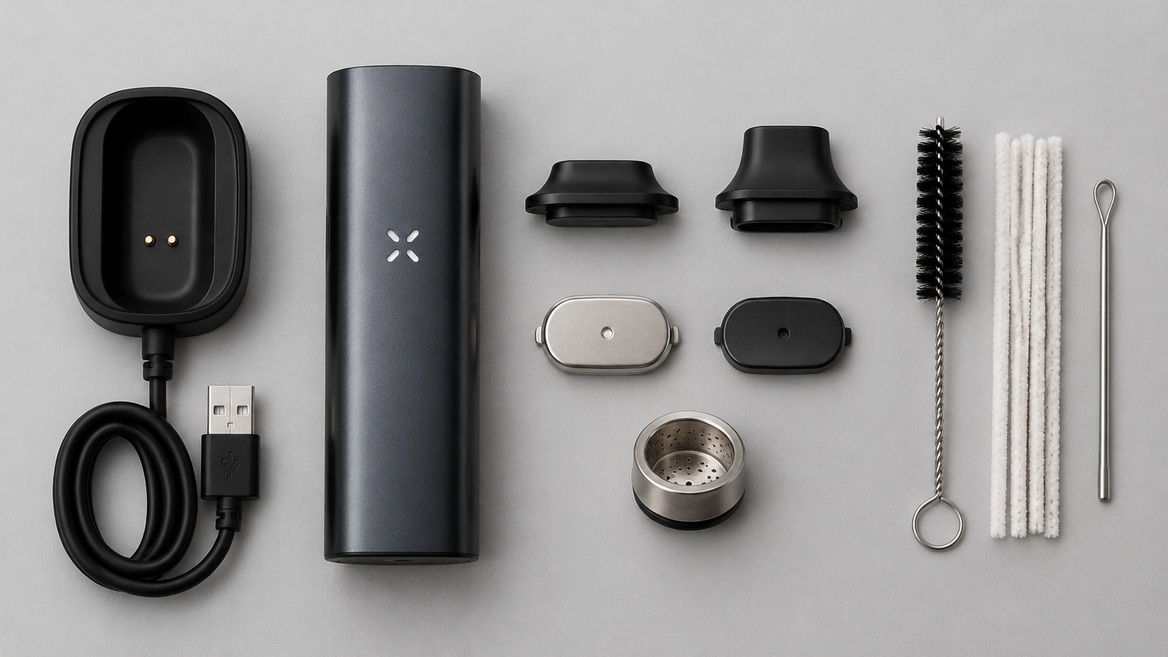
The PAX 3 heats material inside an internal oven. Its primary format is dry herb, while a separate insert accommodates compatible concentrates.
That distinction matters because "vape" is a broad term, not a technical specification. Devices grouped under that label can use different materials, heating systems, consumables, and maintenance procedures.
| Feature | Documented description | Important qualification |
|---|---|---|
| Primary category | Portable dry-herb vaporizer | Not an e-liquid device |
| Additional compatibility | Concentrates with the appropriate insert | Accessories and material compatibility must be verified |
| Heating method | Conduction | Material receives heat through contact with the heated oven |
| Device temperature presets | 180°C, 193°C, 204°C, and 215°C | Presets are not measurements of inhaled aerosol temperature |
| Controls | Mouthpiece button, lights, and vibration | Advanced functions historically involved software |
| Charging | Dedicated charging dock | Requires compatible charging equipment |
| Product status | Discontinued | Historical availability does not establish current support |
The original retailer article explicitly states that its devices are not designed for nicotine liquids or similar liquid products. E-liquid compatibility should never be inferred from the general word "vaporizer."
The source review lists historical Basic and Complete Kit prices. Those figures describe an earlier retail context, not a dependable current market price.
For a discontinued device, the relevant questions extend beyond the advertised amount. They include battery condition, included accessories, proof of purchase, remaining support, and whether replacement components remain available.
A listing described as "new" may still represent older inventory. That description alone does not establish battery health or warranty eligibility.
Planet of the Vapes reports approximately 30-second heating and around 90 minutes of operation during its testing.
These are useful historical observations, but they do not describe every unit. Temperature selection, usage patterns, battery age, ambient conditions, and maintenance can affect results.
Descriptions such as "great vapor," "smooth," or "excellent battery life" also contain subjective judgments. They should remain attributed assessments rather than become universal product facts.
An older review can receive a new publication or modification date without every technical statement being retested.
Software compatibility, charging estimates, warranty conditions, and accessory availability deserve separate verification. A current-looking page should not replace confirmation of the specific fact that matters.
The PAX 3 uses conduction heating. In this arrangement, the heated oven transfers energy to material through physical contact.
This differs from convection systems, which primarily transfer heat through heated airflow. The distinction helps explain why different devices can respond differently to loading, airflow, and pauses between uses.
The original review describes motion and lip-sensing features that adjust heating when the device is inactive. These features change heater behavior, but they do not make the oven cool instantly.
A report about density, flavor, or efficiency reflects more than the heater specification.
Material characteristics, loading consistency, cleanliness, and the reviewer's preferences can influence the experience. Without controlled methods, comparisons between devices should be treated as observations rather than laboratory rankings.
A transparent review explains these variables instead of assigning unsupported precision to subjective impressions.
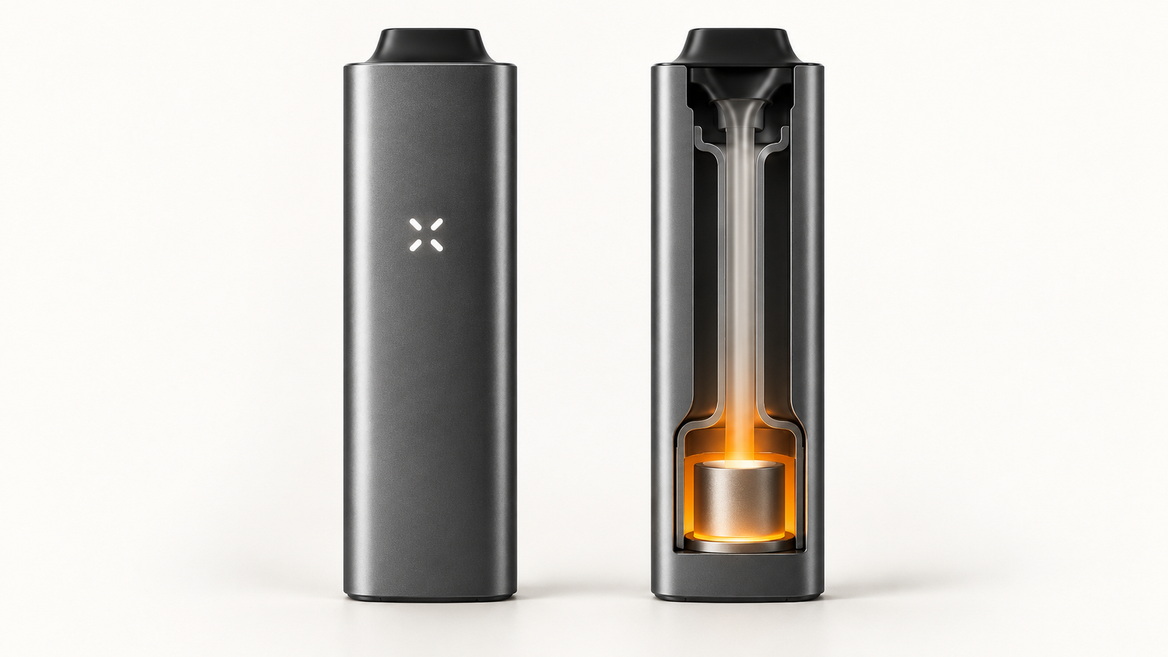
Manufacturer documentation lists four standard settings:
| Indicator | Temperature |
|---|---|
| One green petal | 180°C / 360°F |
| Two yellow petals | 193°C / 380°F |
| Three orange petals | 204°C / 400°F |
| Four red petals | 215°C / 420°F |
These settings describe device controls. They do not establish the exact temperature of inhaled aerosol, the amount of an active compound delivered, or the safety of a particular exposure.
The manufacturer also documented more detailed temperature adjustment through its software ecosystem.
A selected temperature should not be interpreted as a measured dose.
Likewise, a repeatable loading accessory does not, by itself, establish a repeatable delivered dose. Claims about precise dosing would require evidence beyond a device setting or accessory description.
Where a device is used in a prescribed treatment context, treatment instructions should come from the prescribing clinician rather than a general product review.
Battery performance is one of the clearest examples of why evidence needs context.
The manufacturer's guide describes approximately eight to ten sessions, or around 90 minutes of continuous operation. The source reviewer also reports roughly 90 minutes during testing.
Neither figure predicts the condition of an individual device years later.
The original review reports approximately 90 minutes to recharge. Manufacturer support information lists about 2.5 hours for USB charging, while the retailer's separate quick-start article describes an initial charge of around three hours.
These figures should not be blended into one precise promise.
A more useful interpretation is that published charging estimates differ, and owners should consult current manufacturer instructions for their equipment.
Historical specifications describe the original product, not the present condition of every surviving unit.
An ownership assessment should distinguish between:
- Original published battery specifications.
- Historical reviewer measurements.
- Current operating time of the individual device.
- Current manufacturer guidance about charging or service.
A device with an unresolved charging problem should be assessed through appropriate support channels rather than assumed to need only a new accessory.
The PAX 3's basic temperature presets can be accessed through its physical controls.
Historically, the companion software added finer temperature adjustment, heating profiles, lighting changes, and vibration customization.
The source article also describes the removal of vaporizer apps from Apple's App Store and a subsequent browser-based workaround.
Software access depends on more than the hardware model.
Relevant variables include the phone, operating system, browser, permissions, and the manufacturer's continuing support. An old statement that an app "works on iPhone" or "works on Android" does not establish present compatibility.
For existing owners, the practical distinction is straightforward: confirm which functions operate on the device itself and which require a supported software connection.
Do not treat app-dependent features as verified until the current access method has been checked.
The PAX 3 was historically offered in different bundles.
The Basic Kit included the device, charging equipment, mouthpieces, and cleaning supplies. The Complete Kit added accessories such as a concentrate insert, half-pack oven lid, extra screens, and a multi-tool.
| Accessory | Historical Basic Kit | Historical Complete Kit |
|---|---|---|
| Device and charging equipment | Included | Included |
| Flat and raised mouthpieces | Included | Included |
| Cleaning supplies | Included | Included |
| Concentrate insert | Not included | Included |
| Half-pack oven lid | Not included | Included |
| Additional screens and multi-tool | Not included | Included |
This table describes historical configurations, not a guarantee about any current listing or second-hand package.
The condition and compatibility of the actual components matter more than the bundle name. Missing charging equipment or uncertain accessory identification can complicate ownership.
The source article identifies three main cleaning areas: the oven, mouthpiece, and internal vapor path.
That gives readers a useful maintenance overview. However, it is not a complete cleaning procedure.
Different components may have different requirements for cleaning agents, moisture exposure, and reassembly. Instructions for one part should not automatically be applied to the entire device.
Before maintenance:
1. Identify the exact device model and accessory.
2. Consult the manufacturer's instructions for that component.
3. Confirm permitted cleaning materials and handling precautions.
4. Check for damage or abnormal behavior.
5. Contact support when a fault remains unresolved.
This approach avoids turning general cleaning advice into an unsupported repair procedure.
The original article's description of a metal oven and isolated vapor path also does not establish that inhalation is harmless. Construction details and health evidence answer different questions.
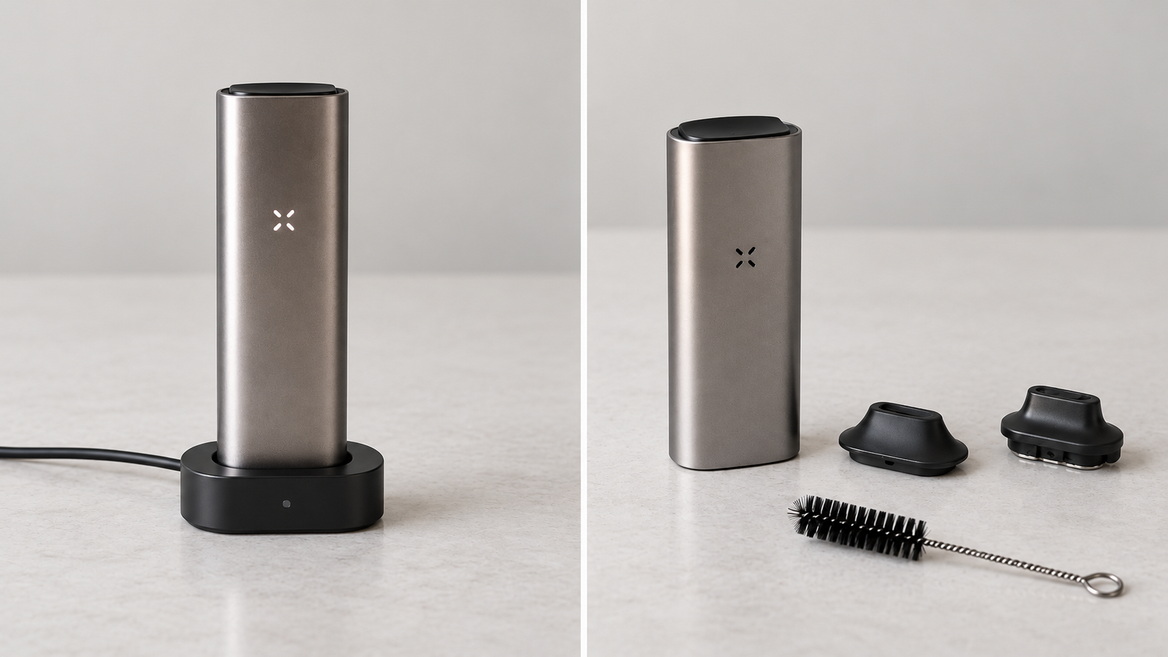
The supplied page contains a named reviewer's account and displays product-review counts. Its extracted content does not provide a usable set of individual customer reviews.
Consequently, it cannot support statements such as "most owners report excellent reliability" or "customers consistently experience charging failures."
Those claims require actual review text, dates, and a defensible method of analysis.
If verified comments become available, a useful analysis would separate:
- First impressions from long-term ownership reports.
- Device faults from setup misunderstandings.
- Battery complaints from software problems.
- Verified purchases from unidentified submissions.
- Manufacturer responses from customer descriptions.
A displayed review count is not a reliability study. It also does not reveal how many owners encountered a particular problem.
Australia regulates vaping goods, with restrictions covering importation, supply, advertising, and other commercial activities unless an exception applies.
However, a general discussion of nicotine vaping rules does not automatically determine the legal treatment of a particular dry-herb device.
The PAX 3 should not be classified solely by its appearance or by the word "vape." Its intended use and the applicable legal framework require consideration.
Readers should distinguish between:
- The legal classification of the device.
- The legal status of the material involved.
- Importation requirements.
- Conditions governing supply or possession.
- Advertising restrictions.
This review does not establish Australian approval, lawful importability, or suitability for a particular medical use.
The manufacturer states that the PAX 3 has been discontinued and replaced in its lineup by the PAX Plus. Older reviews and third-party listings should not be interpreted as evidence of continuing production.
The source retailer states that its dry-herb devices are not designed for e-liquids or nicotine liquids. The PAX 3 should not be treated as an interchangeable substitute for an e-liquid device.
Its standard temperature settings can be controlled on the device. Historically, additional customization involved companion software. Present access to those functions requires separate verification.
Manufacturer guidance and historical testing describe approximately 90 minutes of operation under their respective conditions. That figure is not a guarantee for an individual unit, particularly an older one.
Published estimates differ. The original review reports around 90 minutes, while manufacturer support lists approximately 2.5 hours. Follow applicable manufacturer guidance rather than relying on one historical review.
The source review advertises a ten-year warranty against manufacturing defects. Coverage for a particular unit requires confirmation of the applicable terms, purchase documentation, and manufacturer assessment.
This review provides no evidence supporting that conclusion. Heating design, material descriptions, and subjective impressions do not establish that inhaled emissions are harmless.
1. Planet of the Vapes — "PAX 3 Vaporizer Review: Smarter, Faster & Sleeker." Original review by Jerry Stickstones; used for historical testing observations, bundle descriptions, maintenance areas, and stated warranty information. [planetofthevapes]
2. PAX — "PAX 3 Vaporizer: Complete User Guide." Manufacturer documentation covering discontinued status, temperature settings, controls, and stated battery performance. [pax]
3. PAX — "How To — PAX 3 Support." Manufacturer support information covering charging and software access. [pax]
4. PAX — "Upgrading from PAX 3 to PAX PLUS: What You Need to Know." Manufacturer explanation of product-line changes and differences in software-dependent functionality. [pax]
5. Planet of the Vapes — "How to Use the PAX 3 Vaporizer." Historical quick-start information, including charging estimates and physical controls. [planetofthevapes]
6. Therapeutic Goods Administration — "Possessing and Supplying Vaping Goods in Australia." Official guidance describing restrictions and exceptions under Australia's therapeutic goods framework. [tga.gov]
This website contains products intended for adults only.
Are you 18 years of age or older?
WARNING: This product contains nicotine. Nicotine is an addictive chemical.


