
Language
Views: 246 Author: 7DaysVape Publish Time: 2026-10-20 Origin: Site


Content Menu
● What Is a Nicotine-Free Vape?
>> Understanding Common Label Terms
● Are Nicotine-Free Vapes Safe?
>> Why Eating an Ingredient Differs From Inhaling It
>> Does Less Nicotine Mean Less Overall Risk?
● Can a "Zero Nicotine" Label Be Trusted?
>> How to Read a Laboratory Report Critically
● Nicotine Alternatives Need Separate Scrutiny
>> A Research Example—and Its Limits
● What Nicotine-Free Vape Rules Apply in Australia?
>> Important Conditions for Therapeutic Vapes
● Can Nicotine-Free Vaping Help Someone Quit Smoking?
● What User Reviews Can—and Cannot—Tell You
● A Practical Checklist for Evaluating Product Claims
>> Step 1: Identify the Precise Claim
>> Step 2: Check the Scope of Testing
>> Step 3: Look for Missing Context
>> Step 4: Treat Performance Claims Separately
>> Step 5: Verify Local Requirements
>> Is Nicotine-Free Vaping Just Water Vapour?
>> Can a Nicotine-Free Vape Contain Nicotine?
>> Are Nicotine-Free Disposable Vapes Safer Than Refillable Devices?
>> Does Nicotine-Free Mean Non-Addictive?
>> Can Australian Vape Shops Sell Zero-Nicotine Products?
>> Can Nicotine-Free Vapes Treat Nicotine Withdrawal?
● Take the Next Step: Verify Before Drawing Conclusions
A nicotine-free vape may sound straightforward: an electronic cigarette without nicotine. Yet that description answers only one question about a product that heats liquid into an inhalable aerosol. It does not establish what else the liquid contains, whether its label is accurate, or what repeated exposure could mean for health.
Understanding nicotine-free vapes requires separating ingredient claims from safety claims. "0 mg," "tobacco-free," and "nicotine alternative" are not interchangeable terms. Australian readers also need to distinguish overseas product marketing from local rules, which apply to vaping products regardless of whether they contain nicotine.
This guide explains the terminology, examines important evidence gaps, and outlines how to assess product information without relying on promotional promises.
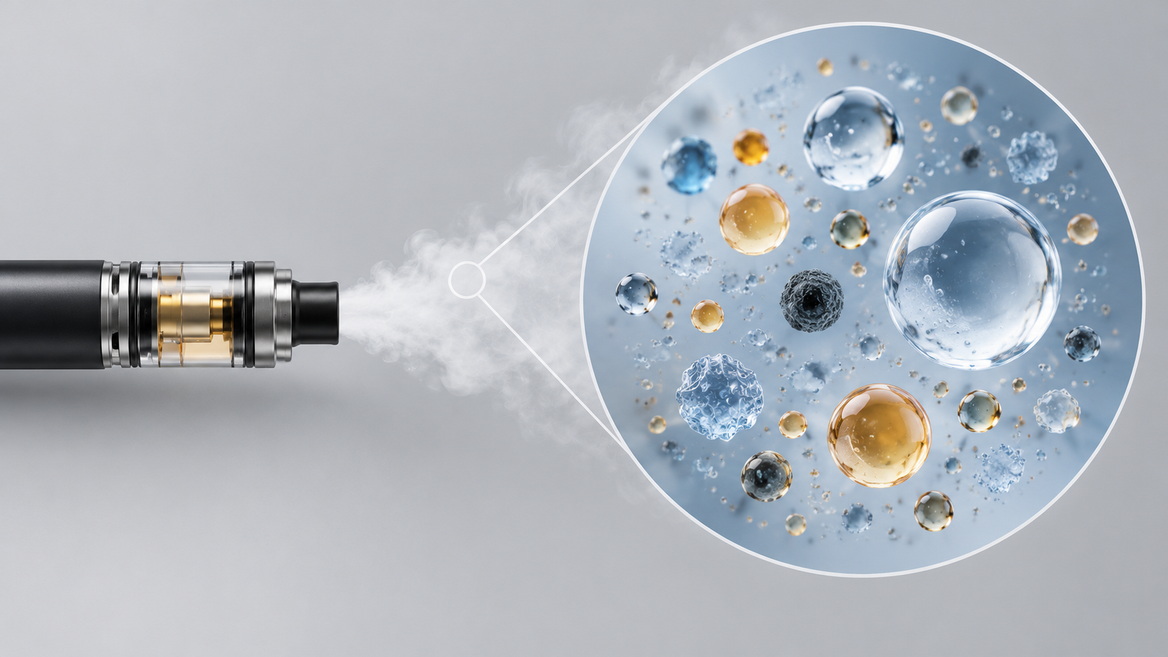
A nicotine-free vape is an electronic cigarette marketed as using e-liquid without nicotine. Like other vaping devices, it uses a battery-powered heating element to generate an aerosol.
The liquid may contain propylene glycol, vegetable glycerin, flavourings, and other additives. Its composition depends on the formulation.
Removing nicotine changes one aspect of exposure. It does not eliminate the other ingredients, the heating process, or substances that may enter the aerosol from the device.
The central distinction is exposure: what someone inhales matters more than the impression created by a product name.
| Label or description | What it generally communicates | What it does not establish |
|---|---|---|
| Nicotine-free or 0 mg/mL | A claim that the liquid contains no nicotine | Independent verification or overall safety |
| Tobacco-free | A claim about the absence or source of tobacco-related material | Absence of nicotine; synthetic nicotine exists |
| Nicotine alternative | Another substance is being presented as a substitute | Absence of biological activity or health risks |
| Food-grade ingredients | Ingredients meet a stated standard for food-related use | Safety when heated and inhaled |
| Laboratory-tested | Some testing is claimed | Which batch, substances, methods, or limits were assessed |
These distinctions help prevent a narrow ingredient statement from becoming an unsupported health conclusion.
Nicotine-free vaping should not be described as harmless. Nicotine is an important source of risk in many electronic cigarettes, but it is not the only relevant substance.
Vaping aerosol is not simply water vapour. Depending on the product and operating conditions, it can contain particles, volatile organic compounds, metals, and other potentially harmful chemicals.
The appropriate conclusion is neither that every product creates identical exposure nor that removing nicotine makes inhalation safe. Product composition and use conditions vary, while long-term evidence remains incomplete.
A familiar ingredient name can create false reassurance.
An ingredient used in food enters the body through the digestive system. An inhaled substance contacts the respiratory system instead. Evidence supporting one route of exposure does not automatically establish safety for another.
Heating adds another consideration. Assessing an unheated liquid is not the same as measuring the aerosol generated during use.
Consequently, an ingredient list is useful, but it cannot replace relevant emissions testing or health research.
If a liquid genuinely contains no nicotine, it removes nicotine exposure from that liquid. That distinction matters, particularly when discussing dependence.
However, overall risk cannot be calculated from nicotine concentration alone. It also depends on other substances, exposure frequency, device characteristics, and the person using it.
A claim such as "nicotine-free means risk-free" skips those questions entirely.
A label is a declaration, not independent proof.
Public-health authorities report that some products marketed as containing no nicotine have nevertheless been found to contain nicotine. This does not establish that every zero-nicotine product is mislabelled. It establishes why the wording on a package should not be treated as conclusive evidence.
The useful question is specific: what evidence supports the claim for this formulation and batch?
A meaningful report should allow readers to identify:
1. The tested product and formulation.
2. The batch or lot number.
3. The testing date and laboratory.
4. The substances measured.
5. The analytical method and reporting units.
6. The detection or quantification limits.
7. Whether the sample was liquid or generated aerosol.
A result of "not detected" means the method did not detect the substance above its stated threshold. It does not prove that no molecule was present.
Likewise, a report measuring nicotine cannot establish that a product is free from metals or other contaminants unless those substances were also assessed.
Consider a fictional example: a certificate covers one unflavoured liquid, but a retailer displays it beside several flavoured devices. Without evidence connecting those products to the tested sample, the certificate cannot verify every device.

Some products use compounds marketed as nicotine substitutes. These should not be grouped automatically with liquids containing neither nicotine nor an active substitute.
One example is 6-methyl nicotine, marketed in some products under the name Metatine. It is chemically distinct from nicotine, but that distinction does not establish harmlessness.
A chemical can differ from nicotine while still having biological effects. Terms such as "alternative" therefore require explanation rather than reassurance.
A 2024 analytical preprint examined selected vaping liquids containing nicotine alternatives. Researchers reported discrepancies between declared and measured ingredients, including undeclared 6-methyl nicotine in some samples.
The cited version is explicitly identified as a preprint; the repository also notes that a peer-reviewed version was subsequently published.
This example supports a limited but useful lesson: ingredient claims require verification. It does not establish the composition of every product currently sold, nor does a chemical analysis alone determine long-term health outcomes.
Good interpretation keeps three questions separate:
- What did researchers measure?
- Which products and batches did they examine?
- What conclusions can those measurements actually support?
Australian regulation does not create a general retail exemption for zero-nicotine vaping products.
Under the national framework described by the Australian Government, vapes and vaping products can only be sold through pharmacies for smoking cessation or managing nicotine dependence, whether or not they contain nicotine.
Other businesses, including vape shops, tobacconists, and convenience stores, cannot legally sell these products.
The government's guidance states that:
- Adults aged 18 or older may access certain therapeutic vapes containing no more than 20 mg/mL nicotine from participating pharmacies without a prescription, subject to conditions and state or territory law.
- A pharmacist consultation is required.
- People under 18 require a prescription where access is clinically appropriate and permitted.
- Higher nicotine concentrations require a prescription regardless of age.
- Permitted flavours are restricted to mint, menthol, and tobacco.
Strengthened product standards took effect on 1 July 2025.
An overseas website's availability, delivery promise, or age-verification process does not demonstrate compliance with Australian requirements. Check current official guidance rather than assuming that an international listing establishes lawful local access.

This question needs a distinction between changing a routine and treating nicotine dependence.
Someone may associate smoking with particular settings, breaks, or hand-to-mouth movements. Replacing an action, however, is not the same as showing that a product effectively treats dependence or improves long-term quit rates.
A genuinely nicotine-free liquid does not deliver nicotine to address withdrawal. Evidence about nicotine-containing electronic cigarettes should not be transferred automatically to zero-nicotine products.
For a person who does not smoke or vape, starting nicotine-free vaping introduces an inhalation exposure they did not previously have.
For someone who smokes, the relevant discussion concerns cessation, continued smoking, and available treatments. Public-health guidance distinguishes completely replacing smoked tobacco from using cigarettes and electronic cigarettes together.
That does not justify a blanket recommendation for nicotine-free devices. A clinician or pharmacist can help evaluate suitable options based on smoking history, withdrawal symptoms, previous attempts, and health circumstances.
User reviews may describe a leaking device, unclear instructions, or a product that differed from its listing. Those observations can identify practical problems worth investigating.
They cannot establish chemical composition or long-term safety.
"I did not cough" does not mean an aerosol contains no harmful substances. "It feels smooth" is a sensory description, not a laboratory result.
Similarly, an individual account of quitting smoking does not establish how reliably the same approach will work for others.
When interpreting reviews, ask:
- Does the reviewer identify the exact product?
- Is the account specific or vague?
- Was the product supplied free or reviewed through an affiliate arrangement?
- Is a personal experience being presented as a universal health claim?
No firsthand testing or customer testimonials are presented in this guide.
Use this sequence to assess information, not to rank products.
Separate "contains no nicotine" from broader statements such as "clean," "healthy," or "safe." Each claim requires different evidence.
Determine whether a report covers nicotine alone, a broader chemical panel, or aerosol emissions. Do not assume that one test answers every question.
Check batch information, test dates, measurement limits, and funding disclosures. A professional-looking certificate can still leave important questions unanswered.
A large advertised puff count is not evidence of safety. Without disclosed testing conditions, it also provides limited grounds for comparing device lifespan.
Consult the relevant health authority. Product legality and access conditions cannot be inferred from an overseas retailer's description.
No. Vaping devices generate an aerosol from heated liquid. Depending on the product, this can contain particles and potentially harmful chemicals. The absence of nicotine does not turn it into plain water vapour.
Some products marketed as zero-nicotine have been found to contain nicotine. That finding does not apply automatically to every product, but it demonstrates why labels alone are insufficient verification.
The device category alone cannot establish safety. Liquid composition, materials, heating conditions, and emissions all matter. "Disposable" and "refillable" describe formats, not verified health outcomes.
A verified nicotine-free liquid without active substitutes would not supply nicotine to sustain nicotine dependence. However, labels require scrutiny, and someone may still find the behaviour difficult to stop. Those are different issues.
Under the national framework described by the Australian Government, non-pharmacy retailers cannot sell vaping products simply because they contain no nicotine. Therapeutic access is pharmacy-based and subject to applicable conditions.
They do not deliver nicotine if their composition matches the claim. Do not assume they are a proven withdrawal treatment. Discuss cessation support with a pharmacist or healthcare professional.
Start with the exact claim, check what the evidence measures, and acknowledge what remains unknown. For Australian readers, confirm current requirements through official guidance.
If the goal is quitting smoking or vaping, seek professional support rather than relying on product descriptions, testimonials, or a "zero nicotine" label alone.
- Centers for Disease Control and Prevention. "Health Effects of Vaping." Updated January 31, 2025. Supports the discussion of aerosol constituents, exposure routes, uncertainty, smoking comparisons, and nicotine dependence. [cdc]
- Centers for Disease Control and Prevention. "About E-Cigarettes (Vapes)." Updated January 7, 2025. Supports the explanation of aerosol and reports of nicotine in some zero-nicotine products. [cdc]
- Australian Government Department of Health, Disability and Ageing. "Vaping Laws." Updated April 16, 2026. Source for pharmacy-only supply, age and prescription conditions, permitted flavours, and nicotine-free product coverage. [health.gov]
- Therapeutic Goods Administration. "New Standards for Nicotine Vaping Products from July 2025." Published June 18, 2025. Source for strengthened therapeutic vaping product standards. [tga.gov]
- Erythropel, H. C., Jabba, S. V., and colleagues. "High Variability in Nicotine Analog Contents, Misleading Labeling, and Artificial Sweetener in New E-Cigarette Products Marketed as 'FDA-Exempt.'" *medRxiv*, April 22, 2024. DOI: 10.1101/2024.04.19.24306019. The cited repository version is a preprint and identifies a subsequent peer-reviewed publication. [pmc.ncbi.nlm.nih]
- National Institute on Drug Abuse. "Vaping Devices (Electronic Cigarettes) DrugFacts." Background source for device operation, liquid ingredients, and chemicals associated with heating and device components. [nida.nih]
This website contains products intended for adults only.
Are you 18 years of age or older?
WARNING: This product contains nicotine. Nicotine is an addictive chemical.


