
Language
Views: 251 Author: 7DaysVape Publish Time: 2026-11-14 Origin: Site


Content Menu
● Suorin's Early History: From Card-Shaped Devices to Distinctive Pod Systems
>> Suorin Air: A Recognizable Starting Point
>> Suorin Drop and Vagon: Different Approaches to Portability
● How Suorin Pod-System Design Became More Varied
>> Edge: Separating the Battery from the Device Body
>> Reno and Elite: Changing the Replacement Unit
>> Screens and Controls: More Information, Not Automatic Protection
● Why the Original Suorin Timeline Needs Updating
● Reading Vape Specifications Without Overinterpreting Them
>> Battery Capacity Is Not a Standardized Runtime Result
>> Coil Resistance Is Not a Health Rating
>> Manufacturer Claims and Independent Findings Are Different
● Three Evidence Gaps in the Original Retrospective
>> 1. Draw Activation Does Not Justify Absolute Safety Claims
>> 2. Flavor Impressions Are Not Controlled Measurements
>> 3. A Hardware Review Is Not a Health Assessment
● Health Context: Electronic Cigarettes Are More Than Their Hardware
>> Smoking Cessation Requires a Separate Evidence Discussion
● What Australian Readers Need to Know
● A More Reliable Way to Read Brand Histories
● Conclusion: Design Evolution Is Not Proof of Reduced Harm
>> When was Suorin established?
>> Is Suorin Elite still the newest Suorin device?
>> Does draw activation make a vape safe?
>> Are replaceable coils necessarily more environmentally friendly?
>> Does this review recommend a Suorin device for quitting smoking?
>> Can Australian consumers treat an overseas listing as proof of lawful availability?
Suorin's evolution illustrates how electronic cigarettes changed from simple, compact devices into more varied pod-system platforms. Early models emphasized distinctive shapes and minimal controls. Later products introduced replaceable coils, different battery arrangements, and screens. However, changes in vape hardware should not be confused with evidence of improved health outcomes.
This review examines Suorin's design history, explains the limitations of common product claims, and adds context for Australian readers. It is a documentary review, not a hands-on test or purchase recommendation. No customer reviews were supplied for this article, so no user experiences or quotations have been invented.
The central question is not which Suorin device is "best." It is what the brand's development reveals about product design—and what specifications cannot tell us.
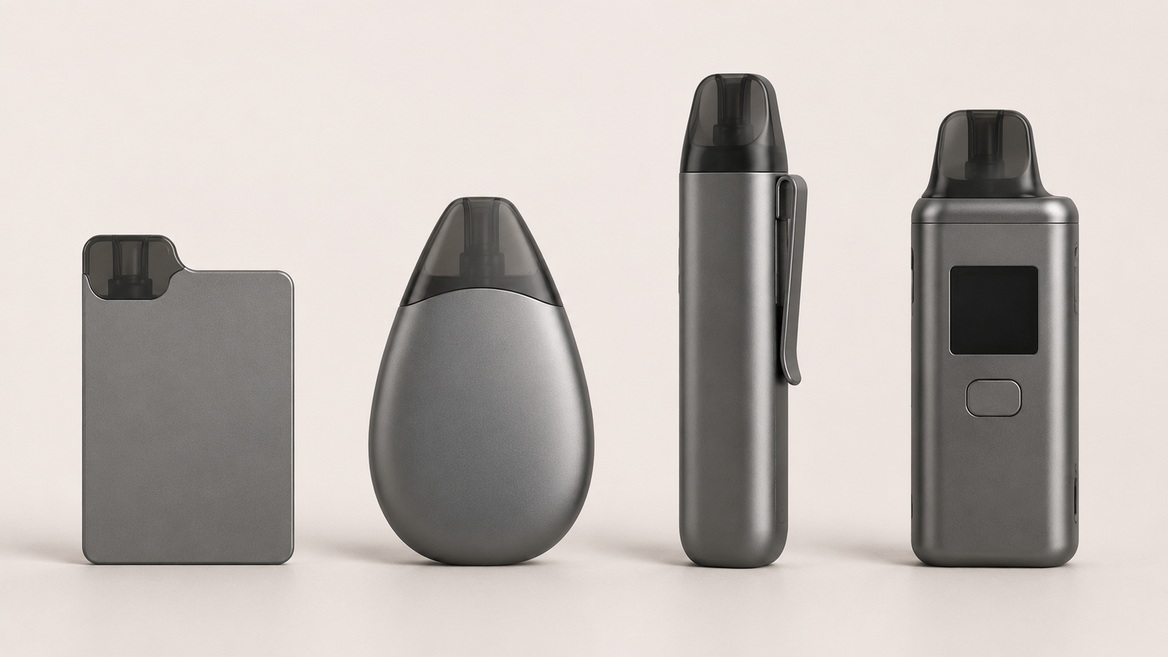
Suorin's corporate history dates the brand's establishment and its first slim, card-shaped Air device to 2016. Its stated early objective was to develop a portable, refillable format.
The original Element Vape retrospective describes the Air as having a 400 mAh battery, a 2 mL cartridge, and an integrated coil. It also highlights draw activation rather than a conventional firing button.
Historically, the Air is notable for its physical format and limited interface. A small number of visible controls helped distinguish this category from larger, more adjustable devices.
That observation is about design, not safety. Fewer buttons do not establish that a product cannot malfunction or that its aerosol is harmless.
Suorin's own timeline places the Drop in 2017 and identifies Vagon among its 2018 developments.
The Drop adopted a rounded, water-drop outline. Vagon used an elongated body with a carrying clip. These changes illustrate how manufacturers experimented with shape and handling while retaining the basic pod-system concept.
The distinction matters when interpreting brand histories: a new silhouette is not necessarily a new heating technology. Changes in appearance, electrical design, and consumable components should be assessed separately.
Element Vape's retrospective follows Air, Drop, Vagon, Edge, Reno, Shine, and Elite. It provides a useful historical overview, but its sequence should not be treated as a fully verified launch chronology.
The more informative comparison concerns the design choices represented by these devices.
| Model or family | Design feature discussed in the historical article | Important limitation |
|---|---|---|
| Air | Card-shaped body and integrated-coil cartridge | Compactness does not establish health protection |
| Drop | Rounded body and draw activation | Shape alone says little about aerosol composition |
| Vagon | Elongated body with carrying clip | Portability is not evidence of reliability |
| Edge | Removable proprietary battery | A spare battery still requires charging |
| Reno | Replaceable-coil format | Component replacement does not prove lower environmental impact |
| Shine | Pen-shaped body and liquid-viewing window | Individual specifications require model-specific verification |
| Elite | Display, adjustment buttons, and replaceable coils | Additional controls do not demonstrate clinical benefit |
The Edge's removable proprietary battery represented a different approach to power management.
However, the original article's suggestion that this eliminated the need for wired recharging is misleading. Exchanging a depleted battery changes when charging occurs; it does not eliminate the need to replenish electrical energy.
This is a useful example of how a practical feature can become overstated in commercial writing.
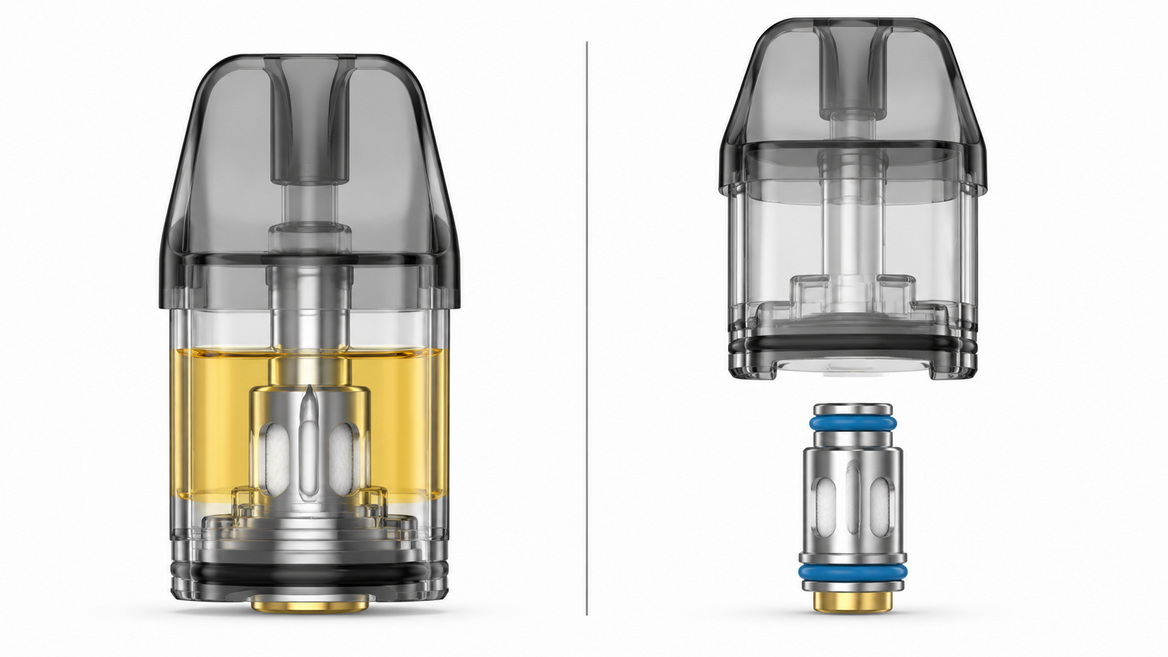
Reno and Elite illustrate a distinction between replacing a complete integrated-coil cartridge and replacing a coil within a retained pod.
That changes which component becomes waste when the heating element reaches the end of its usable life.
It does not, by itself, establish that one system is environmentally superior. A defensible comparison would also need information about materials, packaging, component lifespan, manufacturing, and disposal.
The historical article describes Elite as having a display and adjustment buttons.
A screen can communicate device status. It cannot independently verify aerosol chemistry, nicotine exposure, or the absence of a fault. Interface sophistication and health protection are different questions.
The original retrospective describes Elite as the brand's most recent addition. That wording belongs to the article's historical context, not an indefinitely current product catalogue.
Manufacturer pages now document other families, including Air Mini, Drop 2, and Fero.
For example, Suorin lists Air Mini with a 430 mAh battery, a 2 mL cartridge, and USB-C charging. Its Fero page describes a 1000 mAh battery, a display, and both draw and button activation.
These examples show that the portfolio extended beyond the original retrospective. They do not establish a complete release sequence, and this article does not claim to identify every model.
There is also a chronology issue worth preserving rather than concealing: Suorin's corporate timeline mentions "Drop II" under 2019, while its product-release archive carries a Drop 2 introduction dated July 2024. Those records alone are insufficient to resolve the precise relationship between the names and dates.
Battery capacity, usually expressed in milliamp-hours, is one electrical specification. It is not a controlled measurement of how long every person will use a device between charges.
The historical article describes Elite's 1100 mAh battery as the largest in Suorin's pod range. That was a time-dependent comparison. Suorin's later Fero Box specification lists 1300 mAh.
The broader lesson is simple: statements such as "largest," "latest," and "longest-lasting" need a defined comparison and date.
Resistance figures describe an electrical characteristic of the heating element. They should not be presented as a scale of product safety.
Likewise, a lower resistance value or higher maximum output does not establish better manufacturing quality, fewer harmful emissions, or more effective smoking cessation.
Those conclusions require evidence that measures the relevant outcome, not merely a specification table.
Suorin's pages include claims about leakage prevention, cartridge longevity, and battery duration.
A manufacturer can document what it advertises and how it describes its products. That is different from independent confirmation that the same result occurs across devices, liquids, environments, and users.
A careful review identifies the source of a claim and avoids silently converting it into an established finding.
The original article repeatedly associates draw activation with preventing accidental firing and burnt coils.
That conclusion is too broad for the evidence provided. The absence of a firing button establishes an interface difference, not universal protection against unintended operation.
A technical safety claim would need clearly defined testing conditions and results. The retrospective supplies neither.
Descriptions such as "great flavor" and "exceptional flavor production" express subjective judgments.
Without a documented method, they cannot tell readers how devices were compared, whether the same liquid was used, or whether multiple samples were tested.
Such language should remain attributed opinion rather than becoming an apparently objective performance ranking.
The original article emphasizes portability, battery capacity, and appearance. It does not supply clinical evidence demonstrating that a particular Suorin model improves health outcomes.
The absence of such evidence does not resolve every health question. It does mean that the article cannot support model-specific medical conclusions.
That boundary should remain clear throughout any historical review.
Australia's Therapeutic Goods Administration describes vaping devices as products that heat vaping substances into an aerosol for inhalation.
This distinction matters because a device specification is not a complete description of exposure. Battery capacity, cartridge volume, and exterior materials cannot establish the composition or long-term effects of the inhaled aerosol.
The agency's guidance also warns that exposure to nicotine-containing vaping substances, including ingestion and contact with skin or eyes, can have toxic and sometimes severe effects.
These concerns are not resolved by a newer screen, smaller body, or revised charging connection.
The TGA's clinical guidance states that vapes are not a first-line smoking-cessation treatment under the referenced Australian clinical guidelines.
It also discusses evidence that nicotine vaping products can help some people stop smoking, including comparisons with nicotine replacement therapy.
Those findings should not be stretched into an endorsement of Suorin or any particular retail device. Evidence about an intervention in a clinical study is not proof that every commercially available product produces the same outcomes.
For someone seeking help with smoking cessation, individual clinical assessment is more relevant than a historical hardware ranking.
Australia's regulatory framework materially changes the context of an international vape article.
The TGA states that therapeutic vapes are available through participating pharmacies where clinically appropriate. Other retailers, including vape shops, cannot lawfully sell vapes in Australia, regardless of whether the products contain nicotine.
Under the pharmacist pathway, adults aged 18 or older may be able to access therapeutic vapes containing no more than 20 mg/mL nicotine without a prescription, subject to conditions and applicable state or territory law. Other circumstances require the prescription pathway.
Consequently, appearing on an overseas product page does not establish that a device may lawfully be supplied in Australia. This historical review makes no claim that any Suorin model discussed meets Australian supply requirements.

My editorial approach is to separate four questions that commercial retrospectives often combine:
1. What changed physically? Identify differences in shape, controls, battery arrangements, and replacement components.
2. Who supplied the information? Distinguish manufacturer specifications from retailer descriptions and independent testing.
3. What was actually demonstrated? Do not turn convenience claims into safety or medical conclusions.
4. Where and when does the information apply? Check the date, model version, and relevant jurisdiction.
This framework makes a brand history more useful without turning it into a buying guide. It also leaves uncertainty visible instead of filling gaps with confident language.
Suorin's history documents changes in compact electronic-cigarette design: distinctive early shapes, alternative battery arrangements, replaceable components, and more elaborate interfaces.
The meaningful conclusion is not that each generation was necessarily safer or clinically better. It is that product development and evidence development are separate processes.
Before relying on a historical review for a health or legal decision, consult current public-health guidance and the applicable regulator. Australian readers seeking smoking-cessation support should discuss their circumstances with a qualified healthcare professional or participating pharmacist.
Suorin's corporate history dates its establishment to 2016 and identifies the original Air as its first slim, card-shaped product. This is the manufacturer's account rather than an independently reconstructed company history.
The historical article cannot support that conclusion. Suorin's website documents additional product families beyond those covered in the retrospective. "Newest" requires a dated, current catalogue assessment.
Draw activation describes how a device is triggered. It does not establish protection against every fault, nicotine-related harm, or aerosol exposure. The original article's absolute safety implications exceed its evidence.
Not necessarily. Replacing a smaller component changes the waste stream, but a credible environmental comparison must consider materials, lifespan, manufacturing, packaging, and disposal. The historical article does not provide that assessment.
No. This is a historical and evidence-focused review, not a clinical recommendation. Smoking-cessation evidence must be considered separately from individual product specifications and commercial descriptions.
No. An overseas listing does not establish compliance with Australian requirements. The TGA describes pharmacy-based access pathways and restrictions on non-pharmacy retail supply.
- Element Vape. "Evolution of Suorin." Historical retailer retrospective covering Air, Drop, Vagon, Edge, Reno, Shine, and Elite. Used as the source article, not as independent clinical or safety evidence. [elementvape]
- Suorin. "Know About SUORIN Story." Manufacturer account of its establishment, objectives, and product milestones. [suorin]
- Suorin. "Air Mini." Manufacturer specifications for cartridge capacity, battery capacity, output, and charging interface. [suorin]
- Suorin. "Fero." Manufacturer specifications documenting a product family beyond the original retrospective. [suorin]
- Suorin. "Fero Box." Manufacturer specifications, including its listed 1300 mAh battery capacity. [suorin]
- Suorin. "Product Released Archives." Includes a Drop 2 introduction dated July 18, 2024. [suorin]
- Therapeutic Goods Administration. "Requirements for Unapproved Therapeutic Vapes for Smoking Cessation." Regulatory guidance addressing vaping devices and nicotine-exposure risks. [tga.gov]
- Therapeutic Goods Administration. "Guidance on the Use of Vapes for Smoking Cessation or the Management of Nicotine Dependence." Clinical guidance discussing treatment positioning and cessation evidence. [tga.gov]
- Therapeutic Goods Administration. "Vapes: Information for Individuals and Patients." Australian pharmacy access pathways, nicotine thresholds, and retail restrictions. [tga.gov]
- Therapeutic Goods Administration. "Vaping Hub." Central resource for current Australian therapeutic-vaping regulation and access information. [tga.gov]
This website contains products intended for adults only.
Are you 18 years of age or older?
WARNING: This product contains nicotine. Nicotine is an addictive chemical.


