
Language
Views: 224 Author: 7DaysVape Publish Time: 2026-10-26 Origin: Site


Content Menu
● Is There a Best Temperature for a Dry Herb Vaporizer?
● Dry Herb Vaporizer Temperature: Celsius and Fahrenheit Explained
● Why Boiling-Point Charts Can Be Misleading
>> Evaporation Is Not the Same as Boiling
>> Pressure Changes What a Boiling Point Means
● Why Temperature Does Not Select One Compound at a Time
● What Laboratory Studies Can—and Cannot—Tell Us
>> Device Comparisons Show Why Generalisations Are Difficult
>> Study Design Matters as Much as the Headline
● Does a Lower Temperature Make Vaping Safe?
● Why a Universal Combustion Cut-Off Is Poor Guidance
● Are All Dry Herbs Suitable for Inhalation?
● Australian Readers: Understand the Medical-Device Context
● A Practical Checklist for Assessing Temperature Advice
>> What Is the Best Dry Herb Vaporizer Temperature?
>> Does THC Only Become Available at Its Listed Boiling Point?
>> Can Temperature Reliably Separate THC From CBD?
>> Is Cannabis Vapour Just Water Vapour?
>> Is Vaping Cannabis Safer Than Smoking It?
>> Does Device Approval Mean the Cannabis Product Is Approved Too?
Dry herb vaporizer temperature influences how plant compounds enter an inhalable aerosol, but there is no single setting that guarantees safety, predictable effects, or consistent delivery. Understanding temperature requires more than matching a number on a screen to an online chart. Evaporation, exposure time, product composition, and device design all affect the result. [pmc.ncbi.nlm.nih]
The most important distinction is between controlling heat and controlling health risk. A temperature display describes a device setting; it does not certify the safety of everything inhaled. Public-health guidance acknowledges that cannabis vaping may be less harmful to the lungs than smoking, while stressing that its long-term health effects remain uncertain. [canada]
This guide explains the science behind common temperature claims. It is educational information, not a treatment recommendation or a substitute for device instructions and professional medical advice.
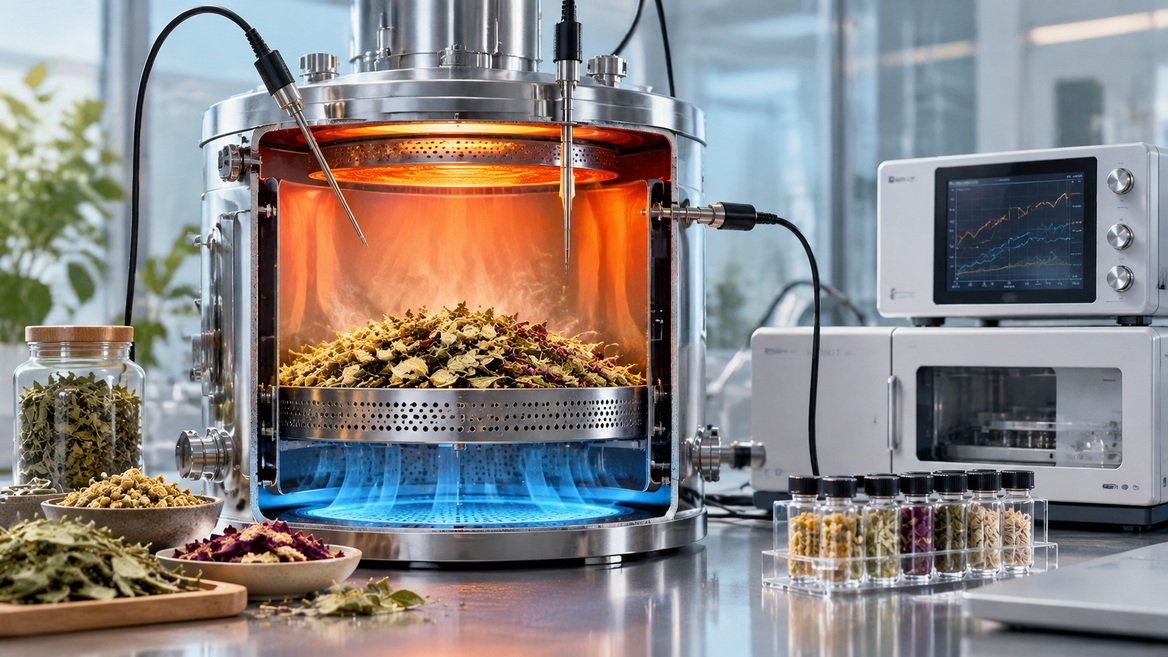
There is no evidence-based universal "best temperature" for every device, botanical material, and person.
Published research discusses operating temperatures commonly associated with cannabis vaporizers, but those descriptions are not personalised prescriptions. A laboratory finding about evaporation cannot establish the safest setting for an individual or predict a particular therapeutic effect. [pmc.ncbi.nlm.nih]
Three different questions often become confused:
- What temperature does the device report?
- What compounds leave the plant material under those conditions?
- What exposure and health effects result in the person inhaling them?
These questions require different evidence. Chemical analysis can help answer the second. It cannot, by itself, establish the third.
For prescribed medicinal cannabis, the relevant starting point is the clinician's treatment plan and the approved device instructions—not a generic temperature chart. Australian regulators explicitly encourage using registered medicinal cannabis devices according to their registration and instructions for use. [tga.gov]
Temperature advice becomes unreliable immediately if its units are wrong.
The original article describes a range of "212 to 410 degrees Fahrenheit" and places "100 to 120 degrees Celsius" beside it. That conversion is incorrect: 212°F equals 100°C, while 410°F equals 210°C. [vaporfi]
The following table corrects several figures appearing in that article. These are conversions, not recommended operating settings.
| Temperature in Fahrenheit | Equivalent in Celsius |
|---|---|
| 212°F | 100°C |
| 360°F | Approximately 182°C |
| 390°F | Approximately 199°C |
| 410°F | 210°C |
| 464°F | 240°C |
A unit error of this size changes the meaning of the advice. It also illustrates why apparently precise numbers deserve scrutiny.
When reviewing any temperature guide, check whether the author identifies the scale, distinguishes measurements from recommendations, and explains the evidence behind the number.
Many online charts present cannabinoids and terpenes as though each compound remains inactive until a specific temperature switches it on.
That is an oversimplification.
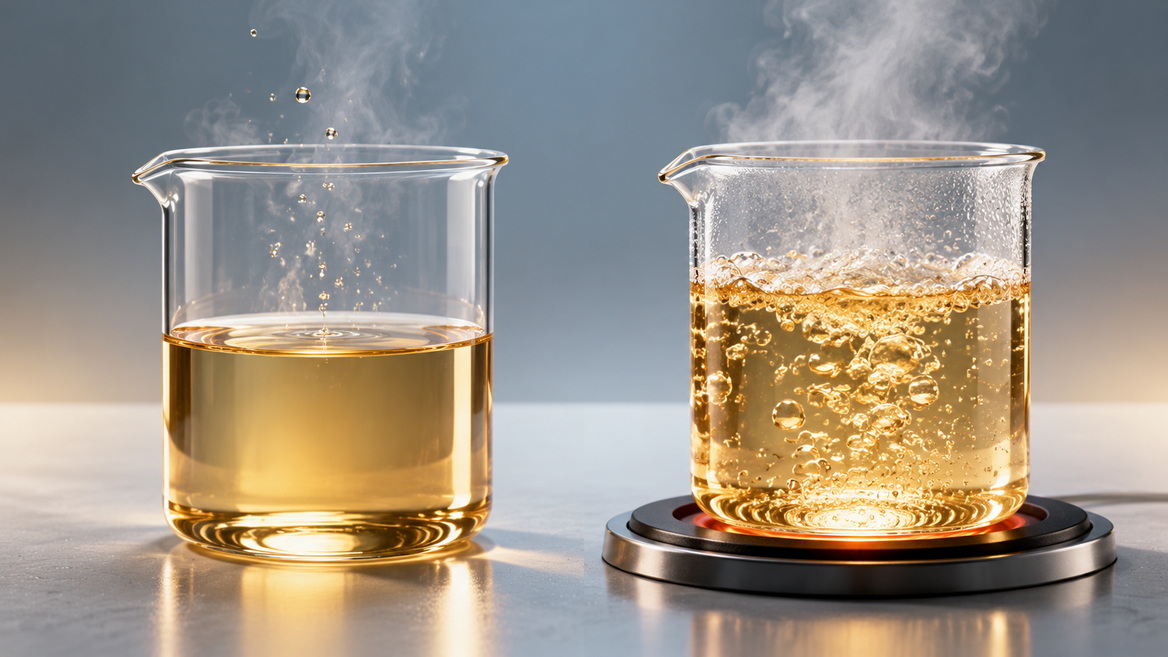
Evaporation can occur below a substance's boiling point. Its rate depends partly on vapour pressure, which changes with temperature. Consequently, a compound does not need to reach its normal boiling point to leave heated plant material. [pmc.ncbi.nlm.nih]
A peer-reviewed paper published in *Cannabis and Cannabinoid Research* examined widespread confusion between evaporation, vaporisation, and boiling. It explains why commonly repeated cannabinoid boiling-point figures can be misleading when their original measurement conditions are omitted. [pmc.ncbi.nlm.nih]
A boiling point measured under vacuum is not equivalent to a boiling point at ordinary atmospheric pressure.
The paper notes that the frequently repeated THC figure of approximately 155°C relates to boiling under a strong vacuum. Presenting that figure as an everyday activation threshold removes crucial scientific context. [pmc.ncbi.nlm.nih]
This does not mean devices should approach the much higher estimated normal boiling points. The authors explain that cannabinoids can decompose at elevated temperatures, making direct measurement problematic. [pmc.ncbi.nlm.nih]
The practical lesson is simple: a chemical reference value is not an operating instruction.
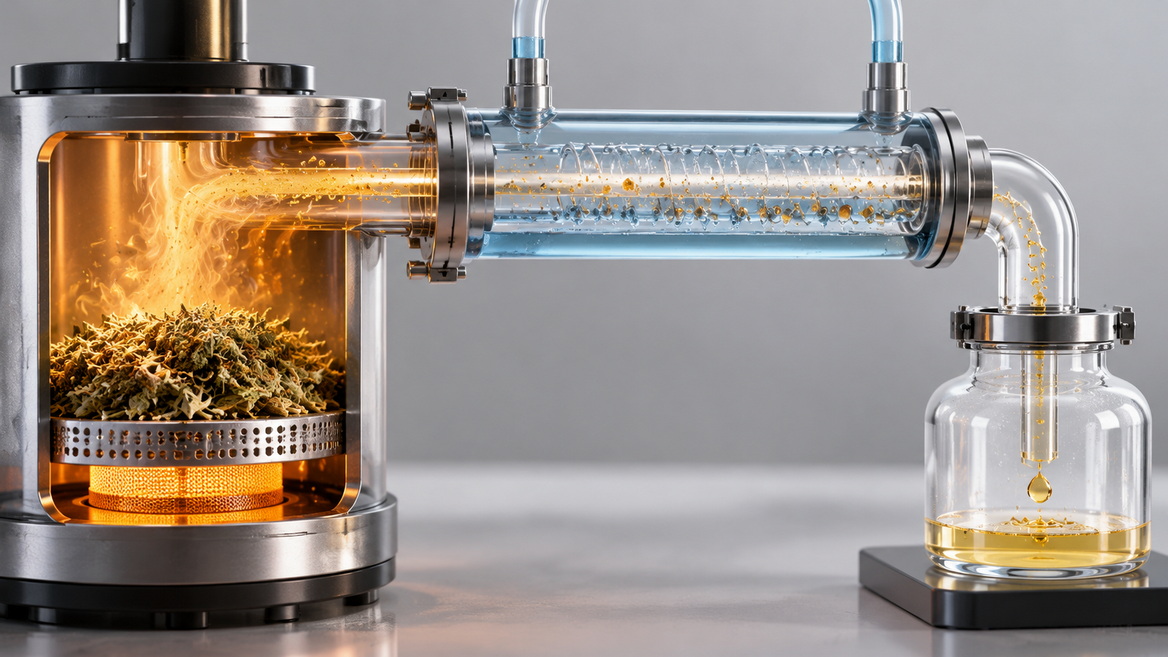
Claims such as "this setting releases THC" or "that setting delivers CBD" imply a level of separation that ordinary temperature charts cannot establish.
Cannabis contains multiple compounds with overlapping evaporation behaviour. The composition of material leaving the plant can also change over time, rather than remaining fixed throughout heating. [pmc.ncbi.nlm.nih]
In the published experiments, many terpenes evaporated earlier than a substantial fraction of the cannabinoids. The authors also noted that cooling and condensation could change what ultimately reached the user compared with what initially left the heated material. [pmc.ncbi.nlm.nih]
This creates an important distinction:
- A compound leaving the plant is not necessarily the same as a compound being inhaled.
- A compound being inhaled is not necessarily the same as a measured absorbed dose.
- An absorbed dose does not establish a predictable benefit for every person.
Temperature therefore should not be presented as a reliable switch for choosing relaxation, alertness, pain relief, or another specific outcome.
The same research paper discusses an earlier comparison of five commercial vaporizers tested under a common protocol. Reported vaporisation results varied between devices, despite the shared experimental conditions. [pmc.ncbi.nlm.nih]
That finding matters because it challenges the idea that a number alone defines the exposure.
However, it should not be stretched into a ranking of all devices or a claim about an individual patient's experience. A controlled experiment uses particular equipment, materials, collection methods, and analytical procedures.
The authors' own experiments used a specified medical vaporizer and analysed plant material before and after heating. That approach provides useful chemical information, but it is not the same as a long-term clinical trial measuring respiratory disease or treatment outcomes. [pmc.ncbi.nlm.nih]
The paper also discloses that several authors worked for a medical cannabis manufacturer. Industry involvement does not automatically invalidate findings, but readers should consider disclosures alongside methods and limitations. [pmc.ncbi.nlm.nih]
A credible explanation separates what researchers measured from what commentators infer.
No temperature setting has been established as a universal guarantee of safe inhalation.
Avoiding combustion can reduce exposure to some substances associated with burning. Nevertheless, "less harmful than smoking" does not mean harmless, and it does not establish the long-term safety of every product or device. Health Canada explicitly identifies continuing uncertainty about the long-term effects of cannabis vaping. [canada]
Temperature also does not eliminate the risks associated with cannabis itself. Higher-THC products can increase the risk of adverse psychological effects, while frequent use can contribute to dependence and other health problems. [canada]
The key word is uncertainty. A responsible guide should acknowledge what a temperature adjustment cannot prove, rather than attaching a safety promise to a preferred number.
The original article treats temperatures above 410°F as a boundary where chemicals start burning, yet it also describes a 464°F device setting. It does not provide sufficient supporting evidence to turn those statements into a universal rule. [vaporfi]
A temperature threshold in a consumer article should not be interpreted as proof that everything below it is safe.
Equally, the absence of obvious smoke does not establish that an aerosol contains no harmful substances. Public-health guidance describes cannabis vaping as a route with its own risks, not a risk-free alternative. [canada]
A better question than "Am I below the magic cut-off?" is "What evidence supports this device, material, and intended medical use?"
The term "dry herb" describes a broad category, not a safety standard.
The source article names several culinary or aromatic botanicals and associates them with particular settings. Those suggestions should not be mistaken for clinical evidence that inhaling each heated botanical is safe. [vaporfi]
Familiarity with a plant as food, tea, or fragrance does not establish the safety of a different exposure route.
Before accepting any botanical temperature recommendation, ask:
- Does the evidence specifically address inhalation?
- Does it concern the same preparation and device?
- Does it measure health outcomes or only chemical behaviour?
- Are contraindications and uncertainties explained?
Without those answers, a temperature recommendation may look more authoritative than the supporting evidence allows.
Australia's Therapeutic Goods Administration maintains information on medicinal cannabis vaping devices included in the Australian Register of Therapeutic Goods.
Its guidance explains that listed devices have been assessed for quality, safety, and performance for their intended purpose. It also directs patients to the relevant instructions for use. [tga.gov]
That is different from saying that every commercially available vaporizer has equivalent evidence or regulatory status.
Device approval should also not be confused with approval of every medicinal cannabis product. The regulator notes that most medicinal cannabis goods are unapproved goods and have not been assessed by it for safety, quality, performance, or effectiveness. [tga.gov]
For patients, device suitability and medicine suitability are separate questions to discuss with a prescriber or pharmacist.
Use this checklist to evaluate information rather than experiment toward a stronger effect.
1. Check the units. Confirm that Celsius and Fahrenheit figures match.
2. Identify the source. Distinguish regulator guidance, research, manufacturer instructions, and personal opinion.
3. Read the measurement context. Look for pressure conditions and the difference between boiling and evaporation.
4. Check the outcome. Chemical release is not automatically absorbed dose, therapeutic benefit, or safety.
5. Look for limitations. Reliable explanations acknowledge uncertainty and avoid universal promises.
6. Follow the clinical context. For prescribed treatment, resolve device or medicine questions with the relevant professional.
This approach is more useful than accepting a colourful chart without knowing how its figures were obtained.
There is no universal setting supported for every device, product, and person. Published operating ranges describe particular contexts, not personalised medical advice. For prescribed treatment, follow professional guidance and the relevant device instructions. [pmc.ncbi.nlm.nih]
No. Evaporation can occur below a compound's boiling point. Frequently repeated THC boiling-point figures may also omit vacuum conditions, making them misleading as everyday temperature thresholds. [pmc.ncbi.nlm.nih]
A simple temperature chart cannot establish selective delivery of one cannabinoid without another. Multiple compounds have overlapping evaporation behaviour, and delivery depends on more than temperature alone. [pmc.ncbi.nlm.nih]
No. Vaporisation is used to transfer plant constituents into an inhalable aerosol. Calling it "vapour" does not mean it is only water or free from substances that may affect health. [pmc.ncbi.nlm.nih]
Health Canada states that vaping may be less harmful to the lungs than smoking. However, it also stresses that long-term health effects remain unknown. That comparison is not a guarantee of safety. [canada]
No. In Australia, medical-device status and medicinal cannabis product status are distinct. A registered device does not mean every product used with it has undergone the same regulatory assessment. [tga.gov]
- VaporFi. Find the Right Temperature For Your Dry Herb Vaporizer. Original article reviewed for temperature claims and conversion errors. [vaporfi]
- Eyal, A. M., Berneman Zeitouni, D., Tal, D., Schlesinger, D., Davidson, E. M., and Raz, N. (2023). Vapor Pressure, Vaping, and Corrections to Misconceptions Related to Medical Cannabis' Active Pharmaceutical Ingredients' Physical Properties and Compositions. Cannabis and Cannabinoid Research, 8(3), 414–425. DOI: 10.1089/can.2021.0173. [pmc.ncbi.nlm.nih]
- Health Canada. Understanding Cannabis Health Effects: How to Reduce Your Risk. Updated September 21, 2026. Public-health guidance on respiratory risks, dependence, impairment, and other harms. [canada]
- Health Canada. Cannabis Accessories for Inhalation: Minimizing Your Risk. Guidance on inhalation accessories and aerosol-related risks. [canada]
- Therapeutic Goods Administration. Medicinal Cannabis Vaping Devices That Are Approved in Australia. Updated June 5, 2026. Information on registered devices and intended use. [tga.gov]
- Therapeutic Goods Administration. Medicinal Cannabis Hub. Guidance on medicinal cannabis regulation and the distinction between approved and unapproved goods. [tga.gov]
This website contains products intended for adults only.
Are you 18 years of age or older?
WARNING: This product contains nicotine. Nicotine is an addictive chemical.


