
Language
Views: 264 Author: 7DaysVape Publish Time: 2026-09-05 Origin: Site


Content Menu
● Nicotine Pouches vs Vaping at a Glance
>> Why adults choose nicotine pouches
>> Who may find pouches less satisfying?
>> Why adults choose vaping products
● Nicotine Pouches vs Vaping: The Health Question
>> Why product quality matters
● Experience: Discretion vs Satisfaction
● Cost, Convenience, and Everyday Use
● Australia: Check the Rules Before Buying
● How to Choose Between Pouches and Vapes
>> Choose nicotine pouches if you prioritise:
>> Choose vaping if you prioritise:
>> Avoid both or seek clinical support if:
● FAQs
>> Are nicotine pouches safer than vaping?
>> Do nicotine pouches help people quit vaping?
>> Can vaping help adults quit smoking?
>> Which is more discreet: a vape or nicotine pouch?
>> Do nicotine pouches damage gums?
>> Are disposable vapes more convenient than refillable vapes?
>> Can I legally buy nicotine pouches or nicotine vapes in Australia?
For adult smokers and existing nicotine users, the nicotine pouches vs vaping decision is not about finding a risk-free option—neither product is risk-free. The more useful question is which format best matches your goals, routine, nicotine tolerance, and local legal requirements, particularly for customers in Australia.
Nicotine pouches are discreet, smoke-free oral products placed between the gum and lip. Vapes, including disposable vapes, pod systems, and refillable electronic cigarettes, create an inhalable aerosol from e-liquid. They provide very different experiences: pouches prioritise discretion and simplicity, while vaping is generally more familiar to adults who miss the hand-to-mouth routine, flavour experience, and inhalation ritual associated with smoking.
> Important: Nicotine is highly addictive. These products are intended only for adults of legal age who already use nicotine. They are not appropriate for young people, non-smokers, pregnant people, or anyone advised by a clinician to avoid nicotine.
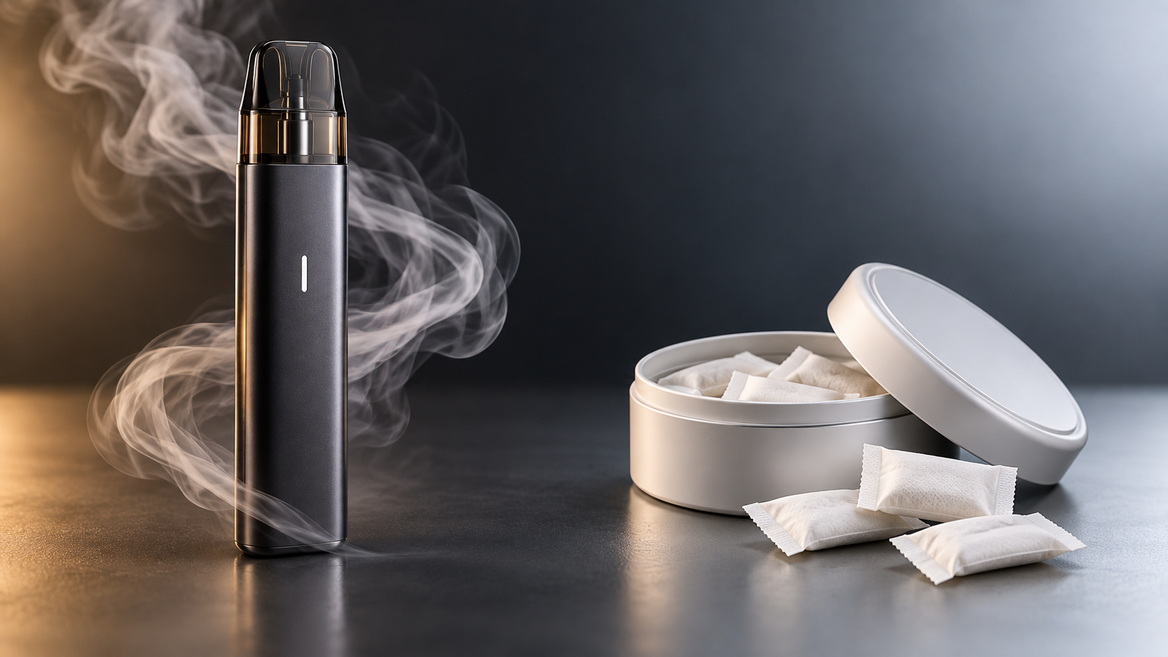
The table below gives a practical, consumer-focused comparison between nicotine pouches and vaping products.
| Comparison factor | Nicotine pouches | Vaping products |
|---|---|---|
| How nicotine is used | Absorbed through the lining of the mouth | Inhaled as an aerosol |
| Device needed | No | Yes, except fully disposable products |
| Visibility | Very discreet; no visible aerosol | Produces visible aerosol in most cases |
| Smell | Usually low odour | Often has a noticeable flavour aroma |
| Hand-to-mouth ritual | Limited | Stronger resemblance to cigarette use |
| Flavour experience | Subtle and mouth-focused | More pronounced and inhalation-focused |
| Lung exposure | No inhalation | Aerosol is inhaled |
| Oral exposure | Direct contact with gum and mouth tissue | May contribute to dry mouth and oral irritation |
| Use in shared spaces | Still subject to venue and local rules | Often restricted by smoke-free or vape-free policies |
| Maintenance | Minimal | Depends on the product type |
| Nicotine control | Depends on pouch strength and use time | Depends on e-liquid concentration, device output, and puff frequency |
| Best suited to | Adults wanting discreet, hands-free nicotine use | Adults who value flavour, ritual, device choice, and a cigarette-like routine |
The "better" option therefore depends on what you value most. A frequent traveller may prefer the compact, odour-light nature of nicotine pouches. An adult smoker transitioning away from cigarettes may find a regulated vape more satisfying because it preserves familiar behavioural cues.
Nicotine pouches are small, usually tobacco-leaf-free sachets that sit under the upper lip. They typically contain nicotine, plant-based fillers, flavouring, moisture agents, and pH-adjusting ingredients. Users do not chew, burn, or inhale them.
A pouch is generally kept in place for a set period, often around 15 to 60 minutes depending on the product and individual preference. Nicotine is absorbed through oral tissue rather than through the lungs.
From a convenience standpoint, nicotine pouches have a clear appeal. There is no charger, tank, coil, atomiser, or e-liquid bottle to manage. They can be carried easily, used without producing vapour, and discarded after use.
Common reasons adults choose pouches include:
- Low-profile use in situations where producing vapour would be impractical or unwelcome.
- No charging or device upkeep, making them straightforward for occasional use.
- No inhalation, which may appeal to people who do not want an aerosol-based product.
- Compact storage for commuting, travelling, meetings, or outdoor activities.
- Minimal scent, compared with strongly flavoured vape aerosol.
However, "simple" does not mean harmless. Nicotine pouches can cause gum irritation, burning sensations, nausea, hiccups, sore mouth or throat, and nicotine dependence. The long-term health effects are still not fully understood because these products are comparatively new. Australian health authorities also warn that some products may contain high or inconsistent nicotine concentrations and may not be assessed for quality, safety, or effectiveness as cessation aids. [tga.gov]
Nicotine pouches may be less suitable for adults who strongly associate nicotine use with inhalation, flavour clouds, or the hand-to-mouth action of smoking. They also require tolerance for the sensation of a pouch resting against the gum.
For example, a former smoker who craves a quick break, a familiar draw, and a sensory routine may feel that a pouch delivers nicotine but not the full behavioural experience. That difference matters. Nicotine dependence involves both the drug itself and the patterns people build around using it.
Vaping involves using an electronic cigarette, vape pen, pod kit, mod, or disposable vape to heat e-liquid into an aerosol that is inhaled. E-liquid often contains propylene glycol, vegetable glycerine, flavourings, and may contain nicotine.
The category includes several formats:
- Disposable vapes: Ready to use, prefilled, and designed for single-product use.
- Closed-pod systems: Rechargeable devices that use compatible prefilled pods.
- Refillable pod kits: Rechargeable devices filled with bottled e-liquid.
- Advanced devices: Adjustable systems intended for experienced adult users.
For many adult smokers, the defining attraction of vaping is not nicotine alone. It is the combination of draw resistance, throat sensation, flavour, visible aerosol, hand movement, and the ability to choose device formats.
Vaping can offer greater personalisation than nicotine pouches. Adult users can choose from different device sizes, airflow styles, nicotine strengths where legally available, flavour profiles, and rechargeability options.
The most commonly cited reasons include:
- A familiar routine for adult smokers who miss the physical act of smoking.
- Broader flavour and device choice, from compact pod devices to more customisable kits.
- Potentially faster perceived nicotine delivery because nicotine is inhaled.
- Adjustable use patterns, including device power, airflow, and e-liquid selection in refillable systems.
- A social and lifestyle dimension, particularly for users who enjoy trying different vape formats.
Evidence reviews have found that nicotine-containing e-cigarettes can help some adult smokers quit combustible cigarettes, and may outperform conventional nicotine replacement products in smoking-cessation trials. That evidence applies to adult smokers seeking to stop smoking—not to people who do not already use nicotine, and not as a reason for youth uptake. [finance.yahoo]
At the same time, vaping has real risks. Vape aerosol can contain harmful chemicals and contaminants, while nicotine-containing products can cause dependence and short-term increases in heart rate and blood pressure. Reported short-term effects can include cough, throat irritation, dry mouth, headache, nausea, and dizziness. [hhs]
The health comparison requires careful language. It is not accurate to say that either nicotine pouches or vaping is "safe." It is also misleading to assume every product in a category carries identical risk.
The most important distinction is exposure route:
- Nicotine pouches do not involve inhalation, so they avoid direct exposure of the lungs to vape aerosol.
- Vaping does involve inhalation, meaning aerosol constituents enter the respiratory system.
- Nicotine pouches expose oral tissues directly, so mouth, gum, and throat effects are particularly relevant.
- Both may sustain nicotine addiction, especially when high-strength products are used frequently.
For an adult smoker who would otherwise continue smoking cigarettes, switching completely away from combustible tobacco can reduce exposure to the toxins created by burning tobacco. But a person who does not smoke or use nicotine should not start vaping or using pouches. There is no health benefit in initiating nicotine use.
The product itself matters as much as the category. Poorly made, incorrectly labelled, counterfeit, or informal-market products can create additional uncertainty around nicotine concentration and ingredients.
A more cautious adult-use approach includes:
1. Buy only from reputable, age-restricted retailers.
2. Check the product label, nicotine information, and local compliance status.
3. Avoid unverified products with unclear ingredients or implausible claims.
4. Do not modify devices or mix substances not intended for vaping.
5. Keep all nicotine products away from children and pets.
6. Stop use and seek medical advice if you experience chest pain, severe nausea, breathing difficulty, palpitations, or symptoms of nicotine poisoning.
The safest choice for health remains avoiding nicotine altogether. For adults who smoke cigarettes, a healthcare professional can help compare evidence-based quitting options based on medical history, dependence level, and personal preferences.

The largest practical difference between nicotine pouches and vaping is the type of satisfaction they offer.
Pouches are quiet, compact, and mostly invisible to others. They fit well into routines where a person does not want a device in hand or a visible cloud of aerosol. For an adult working long shifts, attending meetings, or travelling, that discretion can be the deciding factor.
The trade-off is that pouches usually deliver a less expressive sensory experience. You may taste flavour and feel a tingling or warming sensation in the gum, but there is no draw, no vapour, and no hand-to-mouth ritual.
Vaping is more immersive. A vape can recreate parts of the cigarette routine that oral nicotine products cannot: holding a device, drawing in, exhaling, and selecting a preferred flavour or airflow.
This is why some adult smokers find vaping more behaviourally satisfying than pouches. The experience may make it easier for certain people to replace the ritual of smoking, but it can also make regular, frequent use easier to maintain. That is why setting personal boundaries matters.
A simple example: an adult who only wants a discreet nicotine option during a long flight or a business meeting may prefer pouches where legal. An adult smoker who struggles most with the break-time ritual of cigarettes may be more likely to prefer a vape format—provided it is legal, appropriate, and used as part of a deliberate plan rather than an automatic habit.
Price varies significantly by country, brand, nicotine strength, device type, and frequency of use. Instead of comparing only the sticker price, compare the cost per day based on your real usage pattern.
| Daily-use consideration | Nicotine pouches | Vaping |
|---|---|---|
| Up-front cost | Usually low | Can range from low for disposables to higher for rechargeable kits |
| Ongoing cost | Repeated pouch purchases | Replacement devices, pods, coils, or e-liquid, depending on format |
| Charging | Not required | Required for rechargeable products |
| Refill needs | Not required | Required for refillable systems |
| Mess risk | Very low | Possible leaking or e-liquid handling with refillable products |
| Travel simplicity | Often simple, subject to destination rules | Requires attention to battery, airline, and local restrictions |
| Waste profile | Used pouches and packaging | Disposable devices can create electronic waste; rechargeables can reduce device turnover |
For adults concerned about waste, a rechargeable device may be preferable to repeatedly purchasing single-use electronic products. Used vaping devices should never be placed casually in general rubbish if a suitable battery or e-waste collection route is available. Lithium-ion batteries can create fire risks when damaged or improperly discarded.
Australian customers should be particularly cautious because nicotine-product rules can differ from many other markets. Australian authorities state that nicotine vaping products are subject to strict controls, and importing nicotine vaping products from overseas may require a valid prescription. Rules can change, and state or territory restrictions may also apply. [tga.gov]
Australian health guidance also states that nicotine pouches are not approved nicotine replacement therapies and that evidence is currently insufficient to establish their effectiveness for quitting smoking or vaping. [health.gov]
Before purchasing, travelling with, importing, or using any nicotine product in Australia:
- Check current federal requirements.
- Review the rules in your state or territory.
- Do not rely solely on a retailer's product listing.
- Confirm whether a prescription, pharmacy supply route, or other condition applies.
- Check airline and destination-country restrictions before travelling.
Legal compliance is not a minor detail. It affects whether a product can be lawfully obtained, carried, used, or imported.
Use this practical decision framework instead of asking which product is universally best.
- Discretion during adult-only situations where you do not want visible aerosol.
- No device maintenance or charging.
- No inhalation of aerosol.
- Portability and a hands-free format.
- A simpler routine with less equipment.
- A cigarette-like behavioural routine and hand-to-mouth action.
- More noticeable flavours and sensory feedback.
- Device choice and customisation.
- A potentially more satisfying substitute for the rituals associated with smoking.
- A structured transition away from combustible cigarettes, where legal and appropriate.
- You do not currently use nicotine.
- You are under the legal purchase age.
- You are pregnant or breastfeeding.
- You have had a serious reaction to nicotine.
- You experience persistent mouth sores, gum pain, chest symptoms, or breathing problems.
- You want to quit nicotine completely and would benefit from an evidence-based cessation plan.
There is no single winner in the nicotine pouches vs vaping comparison. Nicotine pouches are generally more discreet and avoid inhalation, but they can irritate the mouth, maintain dependence, and have uncertain long-term effects. Vaping offers more flavour, ritual, and choice for adult smokers, but it involves inhaling aerosol and carries its own health and dependence risks.
For adults who already smoke cigarettes, the most meaningful goal is to avoid returning to combustible tobacco and, ideally, to reduce and eventually stop nicotine dependence. Choose only legal, properly labelled products from responsible retailers, use the lowest practical nicotine strength, and do not treat either product as harmless.
Explore adult-only vape options responsibly, compare product information carefully, and confirm the rules that apply in your location before making a purchase.
Nicotine pouches avoid lung exposure because they are not inhaled, but that does not make them safe. They can cause nicotine dependence, gum irritation, nausea, mouth discomfort, and possible long-term risks that are still being studied. Vaping has different risks because aerosol is inhaled. [health.gov]
There is currently limited evidence that nicotine pouches are effective for helping people quit vaping. Australian health guidance does not consider them approved nicotine replacement therapy products. [health.gov]
Research reviews indicate nicotine-containing e-cigarettes can help some adult smokers stop smoking and may produce higher quit rates than traditional nicotine replacement therapy in controlled studies. They are not risk-free, and the evidence does not support nicotine use by non-smokers or young people. [finance.yahoo]
Nicotine pouches are generally more discreet because they do not produce visible aerosol and can be used without holding a device. However, use may still be prohibited by a workplace, venue, school, airline, or local law.
Some users report gum burning, soreness, mouth lesions, and throat discomfort. Persistent oral symptoms should be assessed by a dental or healthcare professional. [health.gov]
Disposable vapes are convenient because they are ready to use, but they create more single-use electronic waste. Rechargeable pod systems and refillable devices require more upkeep but can reduce the number of devices discarded over time.
Rules are strict and subject to change. Australian consumers should check current federal, state, and territory requirements before buying, importing, carrying, or using nicotine products. The Therapeutic Goods Administration states that importing nicotine vaping products from overseas websites requires a valid prescription from an Australian medical practitioner. [tga.gov]
1. [Therapeutic Goods Administration — New regulations strengthen controls on nicotine pouches]
2. [Australian Government Department of Health, Disability and Ageing — Questions and answers on vaping]
3. [NSW Health — Nicotine pouches]
4. [Health Canada — Risks of vaping]
5. [U.S. Department of Health and Human Services — Youth Vaping Can Harm]
6. [Cochrane evidence coverage: Nicotine e-cigarettes and smoking cessation]
This website contains products intended for adults only.
Are you 18 years of age or older?
WARNING: This product contains nicotine. Nicotine is an addictive chemical.


