
Language
Views: 253 Author: 7DaysVape Publish Time: 2026-10-25 Origin: Site


Content Menu
● SOFI Surge 25K Specifications: What the Source Page Reports
● What Does the SOFI Surge 25K Puff Count Actually Mean?
>> Advertised Maximums Are Not Guaranteed Results
>> Operating Modes Need More Than Names
● Understanding the Nicotine Label
>> Concentration Is Not the Same as Exposure
● Battery, Charging, and Display: What the Features Do Not Prove
>> USB Type-C Does Not Establish Fast Charging
>> Display Readings Need Validation
● Dual Mesh Coils and Adjustable Airflow: Features Versus Evidence
● Flavor Names Are Not Ingredient Disclosures
● Health Context: Electronic Cigarette Aerosol Is Not Harmless Water Vapor
● What Australian Readers Need to Know
>> An Overseas Listing Does Not Establish Australian Eligibility
>> Pharmacy Access Is a Separate Framework
● Child Locks, Storage, and Disposal
>> Why Ordinary Bins Are Inappropriate
>> Use Local Collection Guidance
● What an Independent Review Would Still Need
>> Is the SOFI Surge 25K independently verified to deliver 25,000 puffs?
>> What nicotine strength does the source list?
>> Does rechargeable mean refillable?
>> Does the USB Type-C port prove fast charging?
>> Is the SOFI Surge 25K established as compliant for Australian supply?
>> Are there verified user reviews in this article?
>> How should an unwanted device be discarded?
The SOFI Surge 25K is a rechargeable, prefilled disposable electronic cigarette. Its published specifications include a 22 mL e-liquid capacity, a 600 mAh battery, three operating modes, and a claimed maximum of 25,000 puffs. Those figures describe the product as presented by a retailer; they do not establish independently verified performance.
The most important distinction is between claims and demonstrated results. A product description can identify advertised features, but it cannot replace controlled testing, complete nicotine labeling, or a current assessment of local regulations.
This article examines the available specifications, explains the limitations of the supporting information, and addresses health, disposal, and Australian regulatory considerations. It does not report hands-on testing, laboratory analysis, or verified customer experiences.
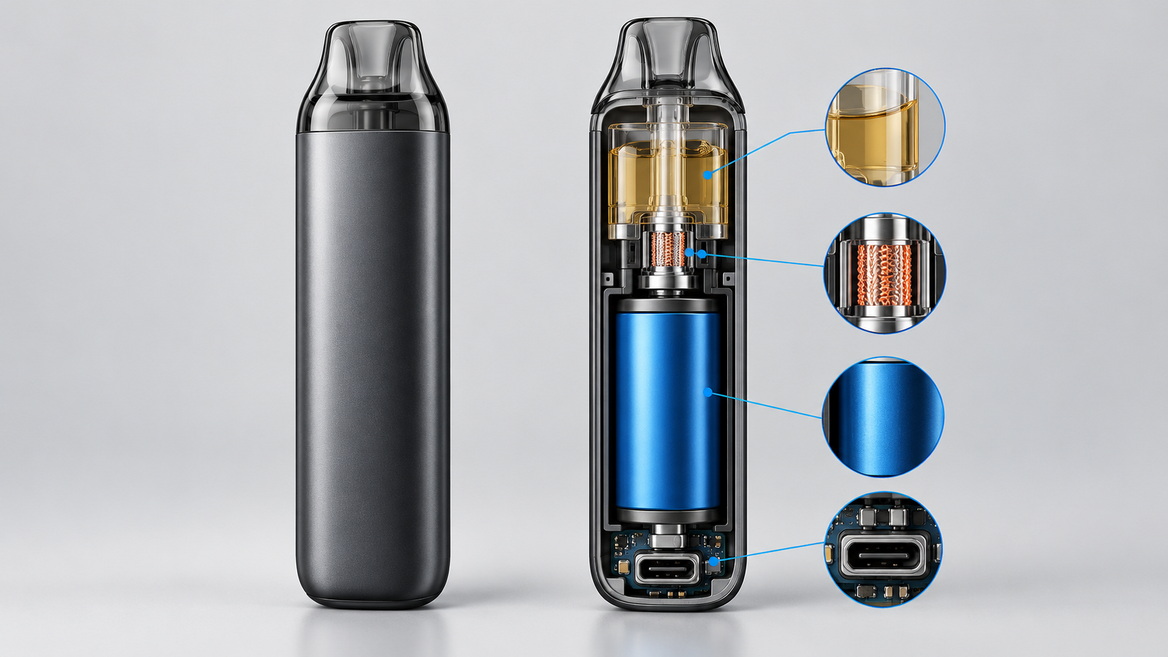
The following table summarizes the retailer's published information. These details have not been independently confirmed against manufacturer documentation, packaging, or a physical sample.
| Specification | Published information | Important limitation |
|---|---|---|
| Product format | Prefilled disposable electronic cigarette | Rechargeability does not establish refillability or reusability |
| E-liquid capacity | 22 mL | No independent capacity measurement provided |
| Battery capacity | 600 mAh | No measured runtime or charging results |
| Soft mode | Up to 25,000 puffs | Test conditions not disclosed |
| Normal mode | Up to 20,000 puffs | Test conditions not disclosed |
| Surge mode | Up to 15,000 puffs | Test conditions not disclosed |
| Nicotine strength | "5% (50mg)" | The milligram figure lacks a clear concentration unit |
| Activation | Draw activated | Activation sensitivity not tested |
| Heating element | Dual mesh coils | No supporting temperature or emissions data |
| Airflow | Adjustable | Adjustment range not quantified |
| Display | Battery and e-liquid indicators | Indicator accuracy not established |
| Charging connection | USB Type-C | Charging time and electrical requirements not specified |
| Additional controls | Child lock and on/off switch | Operating instructions and validation not supplied |
A specification table is useful for documenting what is advertised. However, it should not be treated as a certification of quality, safety, durability, or regulatory compliance.
The "25K" name refers to the highest advertised puff count, associated with Soft mode. The source lists lower maximum figures for Normal and Surge modes.
The source does not disclose puff duration, airflow settings, intervals between puffs, sample size, or the point at which a device was considered exhausted.
Without those details, the figures cannot support a reliable estimate of how many days a device will last. Nor can they establish a meaningful comparison with another product tested under different conditions.
The appropriate interpretation is narrow: 25,000 is a published maximum claim, not an independently demonstrated result or a promise of real-world longevity.
Soft, Normal, and Surge suggest different operating settings, but the article does not provide wattage, voltage, temperature, or activation details for each mode.
It would therefore be speculative to assign precise power levels or explain exactly how the coils operate in each setting.
A technically useful assessment would document:
- The electrical output associated with each mode.
- The method used to count puffs.
- Consistency across multiple devices.
- Battery and liquid conditions at the end of testing.
- Any changes in performance during the test.
Until such evidence is available, the mode names remain descriptive labels rather than complete technical specifications.
The nicotine entry deserves particular attention because the source writes it as "5% (50mg)."
That wording does not clearly distinguish concentration from total nicotine content. A milligram value without a denominator does not, by itself, specify how much nicotine is present per unit of liquid.
The source page alone does not establish:
1. The basis used for the percentage.
2. The intended unit behind "50mg."
3. Whether the label matches current packaging.
4. Whether the stated concentration has been independently tested.
These gaps should not be filled with assumptions. Clear packaging and reliable product documentation are necessary before presenting a more precise interpretation as verified fact.
A concentration statement does not establish how much nicotine a person absorbs during use. Likewise, a puff-count claim is not a nicotine-dose measurement.
Nicotine is highly addictive. Its presence is a central health consideration, not simply another specification alongside battery size or display type.
The SOFI Surge 25K is described as having a 600 mAh rechargeable battery, a USB Type-C connection, and a digital display.
These features identify aspects of the device's design. They do not establish charging speed, battery longevity, or the accuracy of the displayed information.
A connector type is not a charging-time result. The source does not provide input requirements, a supported charging specification, or measured time from an empty battery to a full charge.
Consequently, descriptions such as "recharges quickly" cannot be independently assessed from the information supplied.
Any charging instructions should come from documentation for the exact device, rather than assumptions based on its connector.
The source says the screen reports battery and e-liquid levels. However, it does not explain how those values are calculated or measured.
For example, the information does not establish whether the liquid indicator uses direct sensing or an estimate based on device activity.
A display may communicate status, but its presence alone does not prove measurement accuracy. A rigorous assessment would compare the readings with independently measured battery and liquid conditions.
The source associates dual mesh coils with consistent heating and flavor delivery. It also describes adjustable airflow as a way to change the draw.
Neither description is accompanied by test results.
The coil configuration does not, on its own, establish temperature uniformity, resistance to overheating, emissions composition, or stable performance throughout the device's lifespan.
Similarly, adjustable airflow does not demonstrate a safety benefit. It identifies an available control, not a verified reduction in exposure.
A neutral evaluation should record these features without turning them into unsupported conclusions such as "cleaner aerosol," "safer heating," or "superior performance."
The source lists eight flavor names, including fruit, mint, and cooling-themed varieties. Those names identify marketed variants; they are not complete ingredient lists.
A flavor description cannot establish which compounds are present, their concentrations, or what substances may be generated when the liquid is heated.
Nor should sensory language be confused with evidence. Terms such as "smooth," "refreshing," or "clean" describe impressions or promotional positioning, not toxicological findings.
Without authenticated ingredient documentation and relevant testing, it is not possible to assess the specific formulation of each listed variant from its name.
Electronic cigarettes generate an aerosol. Public health guidance identifies substances that may be present in that aerosol, including nicotine, volatile organic compounds, heavy metals, and particles that can enter deep into the lungs.
This general evidence does not establish the exact emissions profile of the SOFI Surge 25K. No product-specific laboratory report was available in the material reviewed.
Two distinctions matter:
- General evidence about electronic cigarettes should not be presented as a laboratory finding about this particular device.
- The absence of product-specific testing should not be interpreted as evidence that the device is harmless.
Young people and pregnant individuals face particular nicotine-related risks. People who do not use tobacco products should not interpret a feature-rich product description as a reason to begin vaping.
Questions about nicotine dependence or smoking cessation are better addressed with a qualified healthcare professional than through a retail product description.
Australia's regulatory framework is materially different from the availability implied by an overseas retail listing.
The Therapeutic Goods Administration states that Australian law prohibits the importation, domestic manufacture, supply, commercial possession, and advertising of disposable single-use and non-therapeutic vapes.
Therapeutic vaping products remain available through regulated pharmacy pathways when applicable requirements are met.
A product appearing on an international website does not demonstrate that it can lawfully be sold, supplied, advertised, or imported into Australia.
The SOFI Surge 25K source page does not establish that the product meets Australian therapeutic vaping requirements.
It should therefore not be presented as an ordinary Australian retail option simply because the page is accessible to Australian readers.
Official guidance describes circumstances in which participating pharmacies may supply eligible therapeutic vapes containing 20 mg/mL nicotine or less to adults without a prescription, following a pharmacist consultation.
Other circumstances require a prescription. These pathways do not make every commercially available vaping device eligible.
Readers should consult current official guidance and an Australian pharmacist or medical practitioner rather than infer eligibility from an overseas specification sheet.
The source lists a child-lock function and an on/off switch. However, it does not provide operating instructions, an applicable testing standard, or independent evidence of child resistance.
A listed lock should not be described as "childproof." Its presence does not justify leaving a nicotine-containing device accessible to children.
Disposal also requires attention. Electronic cigarettes combine batteries with potentially hazardous nicotine residue.
Environmental guidance warns that lithium batteries can be damaged during waste collection and processing, creating a fire risk. Nicotine residue presents additional hazards.
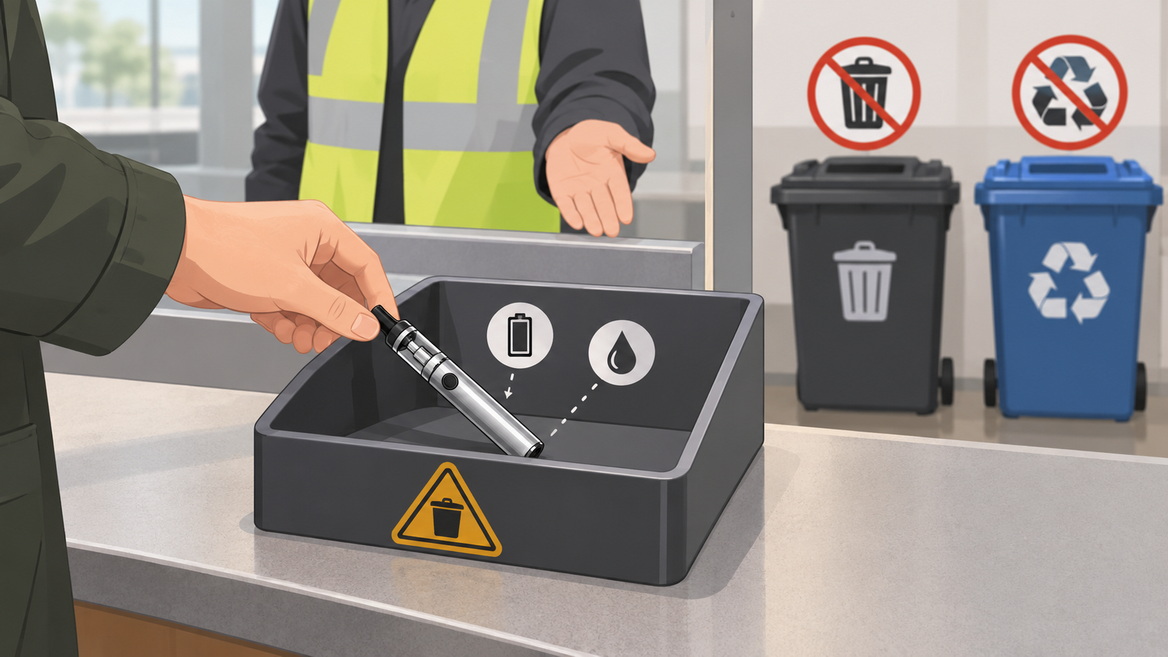
Electronic cigarettes should not be placed in ordinary household rubbish or mixed recycling, and residual liquid should not be poured down a drain.
Disposal arrangements vary by location. Australian readers should contact their council or an appropriate hazardous-waste service to confirm whether it accepts complete vaping devices containing batteries and residual liquid.
Acceptance should be confirmed before taking the device to a collection point. Do not assume a standard battery collection bin accepts a complete electronic cigarette.
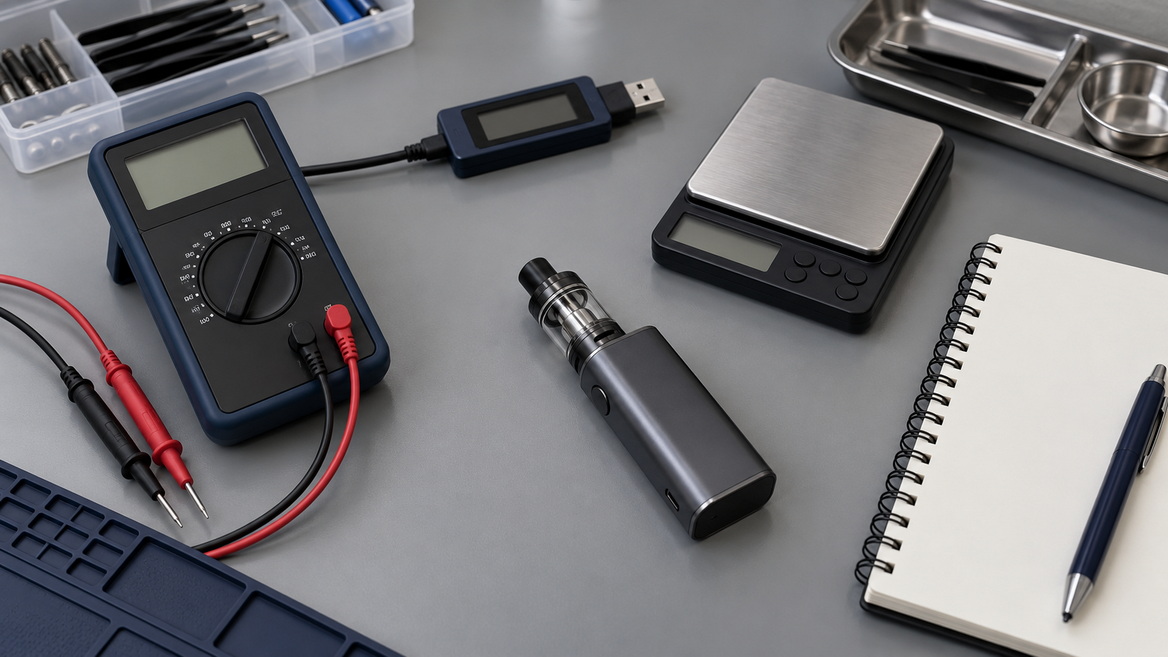
A credible hands-on review would require more than a rewritten specification list.
At minimum, it should identify:
- Who performed the assessment and when.
- How the tested samples were obtained.
- Whether commercial relationships influenced the review.
- Which measurements were taken and with what equipment.
- How puff counts and charging times were evaluated.
- Which findings were repeatable across samples.
- What the assessment could not establish.
The material reviewed contains no verified customer-review dataset. It therefore cannot support claims about average satisfaction, common failure rates, or typical longevity.
Individual comments, if later supplied, should be identified as anecdotal and kept separate from measured findings.
Not in the material reviewed. The retailer lists up to 25,000 puffs in Soft mode but does not disclose a test protocol or independent results.
It states "5% (50mg)." Because the milligram figure lacks a clear concentration unit, that wording should not be silently rewritten as a verified specification.
No. The source describes a rechargeable battery in a prefilled disposable device. It does not establish that the liquid reservoir is designed for refilling.
No. The source provides no measured charging duration or detailed charging specification.
No. The source page does not establish Australian compliance. Official guidance prohibits disposable single-use and non-therapeutic vapes and sets separate requirements for therapeutic pharmacy supply.
No. No authenticated customer-review material was provided. This article does not invent user quotations or present promotional statements as consumer evidence.
Follow local hazardous-waste guidance and confirm that the collection service accepts complete electronic cigarettes. Do not place the device in household rubbish or mixed recycling.
1. Element Vape. "REVIEW: SOFI Surge 25K Disposable." Source for the advertised specifications, operating modes, controls, and flavor listings discussed above; not independent performance verification. [elementvape]
2. Therapeutic Goods Administration, Australian Government. "Changes to the Regulation of Vapes." Source for Australian restrictions and the distinction between prohibited products and regulated therapeutic pharmacy supply. [tga.gov]
3. Centers for Disease Control and Prevention. "Health Effects of Vaping." Source for general nicotine-related risks and potentially harmful aerosol constituents; not a product-specific emissions assessment. [cdc]
4. Centers for Disease Control and Prevention. "E-Cigarettes (Vapes)." Source for general public health guidance concerning electronic cigarettes. [cdc]
5. United States Environmental Protection Agency. "How to Safely Dispose of E-Cigarettes: Information for Individuals." Source for battery, nicotine-waste, and household-disposal precautions. Local collection requirements must be checked separately. [epa]
This website contains products intended for adults only.
Are you 18 years of age or older?
WARNING: This product contains nicotine. Nicotine is an addictive chemical.


