
Language
Views: 267 Author: 7DaysVape Publish Time: 2026-10-08 Origin: Site


Content Menu
● White Nicotine Pouches vs Fruit Nicotine Gum: Comparison at a Glance
● What Are White Nicotine Pouches and Fruit Nicotine Gum?
>> White Nicotine Pouches: "White" Does Not Mean Whitening
>> Fruit Nicotine Gum: Medication With a Flavour Option
● Do Nicotine Pouches or Nicotine Gum Stain Teeth?
>> Smoking-Related Discolouration Has Several Causes
>> There Is No Defensible "Stain-Free Winner"
>> Neither Product Removes Existing Stains
● Oral Health Matters More Than Packaging Colour
>> What the Nicotine-Pouch Research Actually Shows
>> Nicotine Gum Has Precautions Too
● Workplace Convenience: Speaking, Meetings, and Coffee Breaks
>> Discretion Is Not the Same as Suitability
>> Coffee Timing Can Affect Gum Use
● Australia: Current Nicotine-Pouch Rules Change the Comparison
● A Practical Smile-and-Craving Plan for Customer-Facing Professionals
>> Step 1: Identify the Main Problem
>> Step 2: Match Treatment to Your Workday
>> Step 3: Use Gum Correctly if Recommended
>> Step 4: Treat Dental Appearance Separately
>> Step 5: Review Comfort and Progress
● The Best Decision Is Not a Nicotine-Based Beauty Purchase
>> Do White Nicotine Pouches Keep Teeth White?
>> Is Fruit Nicotine Gum Better Than Mint Gum for Tooth Stains?
>> Can Nicotine Gum Whiten Teeth?
>> Can I Use Nicotine Gum With Dental Restorations?
>> Can Australians Import Pouches With a Prescription?
>> What if I Vape Rather Than Smoke?
White nicotine pouches vs fruit nicotine gum is a comparison that matters to professionals who spend their working day speaking, smiling, and meeting clients. If you smoke and worry about yellowing teeth, both products may look like convenient alternatives. However, neither is a teeth-whitening treatment, and a white pouch or fruity flavour does not guarantee stain-free teeth.
The practical verdict: for adults trying to quit smoking, approved nicotine gum has an established treatment role. Nicotine pouches have greater uncertainty around oral health and quitting effectiveness. For existing stains, dental assessment—not switching nicotine products—is the appropriate starting point. Australian readers must also consider current restrictions: consumers can no longer lawfully buy or import nicotine pouches. [nhs]
This comparison separates appearance, nicotine management, workplace convenience, and dental health. It is educational information, not an individual treatment recommendation.

| Comparison point | White nicotine pouches | Fruit nicotine gum |
|---|---|---|
| Product format | Tobacco-leaf-free nicotine sachets placed between the lip and gum | Flavoured medicated gum, when supplied as an approved nicotine-replacement product |
| Main distinction | Consumer nicotine products with uncertain long-term oral-health effects | An established smoking-cessation treatment category |
| Removes existing stains? | Not established as a stain-removal treatment | Not established as a stain-removal treatment |
| Workplace consideration | No chewing required, but local tissue irritation is a concern | Requires intermittent chewing and parking; may be inconvenient during conversation |
| Oral-health concerns | Placement-site lesions, soreness, and dry mouth reported in limited research | Mouth or jaw soreness, irritation, and problems with some dental work |
| Australian position | No lawful consumer purchase or import pathway from 24 July 2026 | Approved nicotine-replacement therapies remain available |
The important distinction is treatment purpose, not flavour or packaging. These products should not be treated as interchangeable merely because both deliver nicotine through the mouth. [nhs]
Nicotine pouches contain nicotine, fillers, flavourings, and other ingredients inside a small sachet. They do not contain tobacco leaf and are different from snus, which contains tobacco. Nicotine may be extracted from tobacco or produced synthetically. [tga.gov]
"White" describes the product's appearance or market category. It does not establish a dental benefit. A tobacco-leaf-free product can still expose oral tissues to nicotine and other substances, and its long-term effects require further investigation. [tga.gov]
Fruit nicotine gum is nicotine-replacement therapy when the particular product is authorised as a medicine. Fruit flavour is a taste preference, not a separate whitening technology.
Nicotine gum helps manage cravings during smoking cessation. Common strengths include 2 mg and 4 mg, but the appropriate strength and schedule depend on smoking patterns, the product instructions, and professional advice. A fruit-flavoured product should still be treated as medication rather than ordinary chewing gum or confectionery. [cdc]
Smoking can produce yellow or brown tooth stains. Tobacco tar is naturally dark, while nicotine can become a yellowish, surface-staining substance when exposed to oxygen. Coffee, tea, and red wine can also contribute to discolouration. [mouthhealthy]
That creates an important distinction: avoiding cigarette smoke is not the same as proving that an alternative nicotine product cannot stain teeth.
For a professional who smokes and drinks coffee throughout the day, changing nicotine products would not address every possible source of staining.
The evidence reviewed here does not establish a reliable clinical ranking between white nicotine pouches and fruit nicotine gum for long-term tooth staining. The pouch systematic review examined oral-health effects, while gum guidance addresses smoking cessation and correct use—not comparative whitening performance. [link.springer]
Consequently, claims such as "pouches never stain teeth" or "fruit gum keeps teeth white" go beyond the evidence.
The more useful question is whether an adult smoker can stop smoking with an appropriate treatment plan while separately addressing existing dental discolouration.
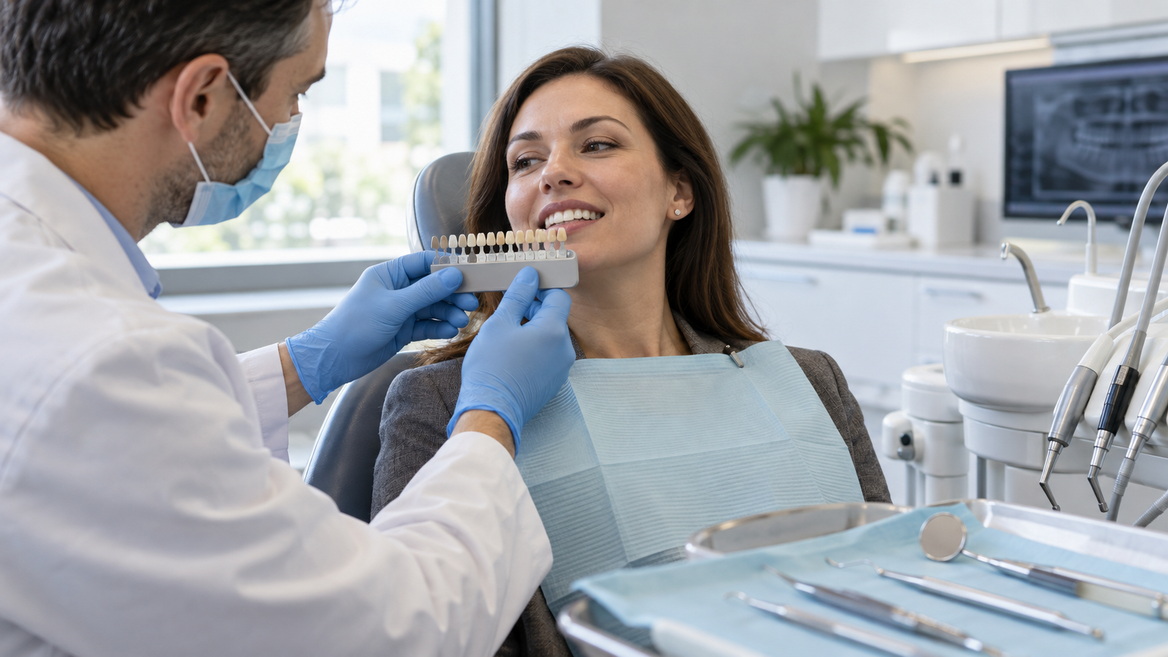
Neither nicotine pouches nor nicotine gum should be presented as a teeth-stain remover. Dental whitening uses bleaching agents such as hydrogen peroxide or carbamide peroxide. Whitening toothpastes work differently, helping remove surface stains through their cleaning action. [mouthhealthy]
A dentist can assess the cause of discolouration and whether whitening is appropriate. Whitening also does not change the colour of crowns, veneers, or fillings, which matters if your visible smile includes restorations. [mouthhealthy]
A 2024 systematic review included three studies involving 190 participants. All three studies had a high risk of bias. Reported findings included changes in the oral lining at pouch-placement sites, soreness, dry mouth, and gingival blisters. [link.springer]
These figures are useful mainly because they reveal how limited the evidence remains. They do not prove that every pouch user will develop an oral problem.
Some research combined snus and pouch users, making product-specific conclusions difficult. The review could not definitively determine the full impact of nicotine pouches on oral health. That uncertainty should prevent confident "gum-safe" or "dentist-approved" marketing claims. [link.springer]
Nicotine gum can cause mouth or jaw soreness, hiccups, stomach discomfort, nausea, and irritation. Incorrect chewing can increase problems. It may also stick to dentures, dental caps, or partial bridges. [cdc]
For customer-facing professionals, these effects can matter as much as tooth colour. A product that causes discomfort during conversation is not automatically a good workplace fit.
People with significant jaw pain, certain heart conditions, pregnancy, or breastfeeding should seek healthcare advice before using nicotine gum. People who do not use nicotine should not begin using it for cosmetic reasons. [cdc]
Pouches do not require chewing, while gum requires a specific chew-and-park technique. This creates different practical experiences during meetings. However, the absence of chewing does not establish that pouches are healthier or more appropriate. [tga.gov]
As a workplace-planning principle, assess:
- Whether the treatment fits your scheduled breaks.
- Whether oral discomfort could interfere with speaking.
- Whether your workplace permits gum during customer interactions.
- Whether you need a treatment that does not occupy the mouth.
A pharmacist can discuss approved alternatives, including patches or other nicotine-replacement formats, when gum is unsuitable. [nhs]
Do not eat or drink for 15 minutes before using nicotine gum or while using it. Acidic drinks, including coffee and soft drinks, can reduce how well the gum works. [cdc]
This is particularly relevant to professionals who sip coffee continuously. Rather than using gum alongside every drink, build suitable treatment windows into your day.
Coffee also has a separate role in tooth staining. Managing treatment timing and managing dental discolouration are related workplace tasks, but they are not the same intervention. [nhs]
As of October 2026, Australia's regulatory position makes this more than a preference-based comparison.
From 24 July 2026:
- Consumers can no longer lawfully buy or import nicotine pouches.
- Online sellers and other retailers cannot lawfully sell them in Australia.
- A prescription no longer provides access through the previous consumer pathways.
- Travellers cannot bring nicotine pouches into Australia under the traveller's exemption. [tga.gov]
No nicotine pouch product is currently included on the Australian Register of Therapeutic Goods. Advertising nicotine pouches is also unlawful, including promotion for smoking or vaping cessation. Approved nicotine-replacement therapies remain available. [tga.gov]
For an Australia-focused retailer such as 7DaysVape, this comparison should therefore remain educational. It should not imply local pouch availability, encourage overseas ordering, or present importation as a workaround.
Readers elsewhere should check their own jurisdiction rather than assuming that an overseas product listing establishes local legality.
The following workflow is a planning framework, not a clinically tested programme. It separates dental care from nicotine treatment so that one goal does not obscure the other.
Decide whether your priority is:
- Existing tooth discolouration.
- Smoking cessation.
- Cravings during work.
- Oral soreness or discomfort.
Book a dental assessment for discolouration or oral symptoms. Speak with a pharmacist or clinician about an appropriate smoking-cessation plan. These services address different parts of the problem. [tga.gov]
Bring your actual schedule to the consultation: meeting blocks, meal breaks, coffee habits, and any restrictions on chewing.
Also mention dentures, bridges, caps, or jaw pain. Nicotine gum may be inconvenient or unsuitable in these circumstances, and another approved treatment may fit better. [cdc]
The general chew-and-park method is:
1. Chew slowly until you notice tingling.
2. Park the gum between your cheek and gum.
3. Wait until the tingling fades.
4. Repeat the cycle according to the product instructions.
A session commonly lasts around 30 minutes. Do not chew continuously like ordinary gum. Follow the local product label and your healthcare professional's advice for dosing. [cdc]
Maintain your dental-care routine and discuss stain management with your dentist. Ask whether your concern involves surface staining, natural tooth colour, or restorations that will not respond to whitening.
Do not expect a nicotine-product change to bleach existing stains or replace dental treatment. [mouthhealthy]
Keep a simple record of cravings, smoking, treatment use, and oral discomfort. Use it to make the next consultation more specific.
If gum causes problems, seek advice about technique or alternatives rather than simply increasing use. Keep nicotine products away from children and pets, including used gum. [cdc]

From a consumer-information perspective, I would not choose either product primarily for a brighter smile. That framing confuses nicotine delivery with dental treatment.
For adults who smoke, approved fruit nicotine gum can be considered within a supported quit plan. Pouches do not have an equivalent established treatment position in the sources reviewed, and Australian consumer access is prohibited. [nhs]
Your next step: book a dental assessment for staining and ask a pharmacist about an approved cessation option suited to your workday. In Australia, Quitline is available on 13 7848. This addresses both professional confidence and nicotine dependence without promising cosmetic results that the evidence cannot support. [tga.gov]
There is no established guarantee. "White" describes the product, not a proven whitening effect. Limited oral-health research does not establish long-term stain prevention or overall dental safety. [link.springer]
The sources reviewed do not establish that fruit flavour prevents stains better than mint. Choose an approved product based on treatment suitability and tolerability, not an assumed cosmetic advantage. [cdc]
No established whitening role is identified in the treatment guidance. Nicotine gum manages smoking-related cravings; whitening products use different ingredients and mechanisms to address tooth colour. [mouthhealthy]
It may stick to dentures, dental caps, or partial bridges. Ask a pharmacist or dental professional whether another approved smoking-cessation treatment would be more suitable. [cdc]
No. From 24 July 2026, the previous personal-importation pathway no longer applies, even with a prescription. Travellers are also affected by the removal of the traveller's exemption. [tga.gov]
Do not copy a cigarette-based gum schedule without advice. Discuss your vaping pattern and nicotine dependence with a healthcare professional so that treatment can be tailored appropriately. [cdc]
1. Therapeutic Goods Administration. ["Nicotine pouches."] Published 17 July 2026. Australian access, importation, advertising, and treatment guidance.
2. Rungraungrayabkul, D., Gaewkhiew, P., Vichayanrat, T., et al. ["What is the impact of nicotine pouches on oral health: a systematic review."] *BMC Oral Health*, 24, 889 (2024). DOI: 10.1186/s12903-024-04598-8.
3. Centers for Disease Control and Prevention. ["How to Use Nicotine Gum."] Reviewed 4 October 2024. Administration, precautions, dental-work considerations, and adverse effects.
4. NHS. ["Quit smoking with nicotine replacement therapies."] Nicotine-replacement options and limitations of pouch evidence.
5. American Dental Association, MouthHealthy. ["Teeth Whitening."] Staining mechanisms, whitening methods, and treatment limitations.
6. NHS. ["Teeth whitening."] Dental assessment, causes of discolouration, and suitability considerations.
This website contains products intended for adults only.
Are you 18 years of age or older?
WARNING: This product contains nicotine. Nicotine is an addictive chemical.


